When a Sex Doll Fooled the NSW Police: The Forensics Lesson That Could Reshape Crime-Scene Tech
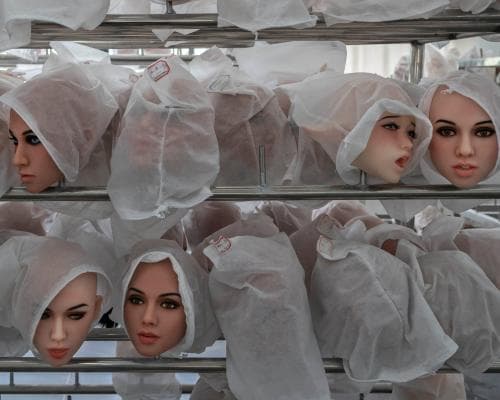
It was a Sunday call that would make any detective's stomach drop: a suitcase dumped by a rural roadside near Goulburn, containing what looked like human remains. The NSW police did everything by the book — sealed the bag, sent it to forensics, and told the press they believed the victim was female. Headlines blazed. The public braced for another grim murder. Then came the twist: the 'body' was a life-like sex doll, dressed in clothes, complete with hair, a nose piercing, and markings that mimicked bruises and grazes. The police had been fooled by a silicone stand-in. But here's the thing — the experts say they did everything right. And that's precisely the problem.
Let's unpack the embarrassment. The officers didn't unzip the suitcase fully at the scene, a move that seems cautious but actually was the correct forensic protocol. Opening a bag fully risks destroying trace evidence — hair, fibers, fluids — that could be crucial in a genuine homicide. So they shipped the whole thing to the lab, where techs could open it under controlled conditions. The doll was so realistic that even the forensic team initially believed it was a body. The mistake wasn't carelessness; it was the limits of human perception under pressure. But that's the real story here: we still rely on eyeballs and gut instinct to make split-second calls about life and death. In an age of AI and sensor fusion, that's archaic.
This incident is a goldmine for the deep-tech crowd. Think about it: a portable Raman spectrometer, no bigger than a flashlight, could have identified the silicone polymer in seconds. Or a thermal imaging drone flyover could have flagged that the 'corpse' wasn't emitting a heat signature. Even a simple ultrasound device — the kind now used in remote medicine — could have detected the absence of internal organs. These aren't sci-fi gadgets; they're off-the-shelf components waiting to be integrated into a crime-scene kit. The market for forensic technology is already booming, with companies like Bruker and Thermo Fisher pushing handheld analyzers, but the adoption in rural police forces is painfully slow. This case is a perfect case study for why that needs to change.
The capital angle is clear. Governments are pouring billions into 'smart policing' — from predictive algorithms to body cameras — but the physical forensics layer remains underfunded. A single misidentification like this costs public trust and taxpayer money in wasted investigations. The NSW police spent hours, and the media cycle, on a doll. Imagine the efficiency gain if a $10,000 handheld device could have resolved it in 30 seconds. For startups, this is a beachhead: build a rugged, foolproof sensor that police can trust, and you're not just selling a gadget — you're selling certainty. VCs have already backed companies like Kanarys and Othram in forensic genomics, but the 'materials identification' niche is wide open.
But the deeper signal is about how we train officers. The police superintendent's 'no regrets' stance is telling — it's not stubbornness, it's a recognition that the protocol worked as designed. The problem is the design itself. We're asking humans to do what machines do better: classify materials under stress. The future of crime-scene tech isn't about replacing detectives; it's about giving them a second set of eyes that never blinks. Imagine a wearable AI that flags 'suspected silicone' before the officer even kneels down. That's not fantasy — that's a product roadmap.
So what does this mean for the sector? Expect a push toward multi-sensor fusion in forensic kits — combining optical, spectral, and thermal data into a single handheld. And expect the procurement cycle to shorten. When a police force gets publicly embarrassed by a sex doll, the next budget meeting tends to be more receptive to tech upgrades. This is a niche but telling moment: the gap between our forensic tools and the physical world is wider than we think. Closing it is not just a matter of efficiency — it's a matter of credibility. The next time a suitcase gets dumped, the world will watch. Let's hope the tech can keep up.
For the billionaires and elite capital circling the public-safety market, this is a quiet invitation. The smart money isn't on another social media app; it's on the unglamorous hardware that makes sure a mistake like this never makes headlines again. The doll was a fake, but the lesson is real: in the race to build tomorrow, the most valuable breakthroughs often hide in the most embarrassing failures.