Tui's Turbulent Skies: How Geopolitics and Fuel Costs Are Rewriting Travel's Future
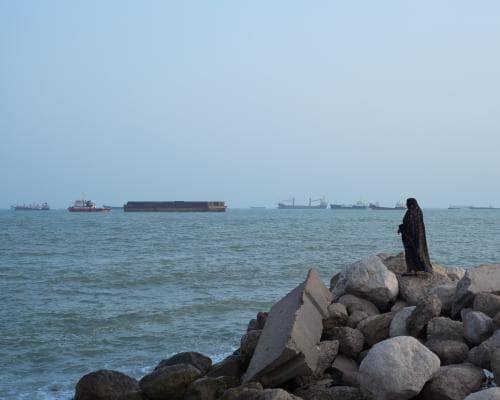
The travel industry has always been a barometer for global stability, but the mercury is now stuck in stormy weather. Tui Group, Europe's largest tour operator, just posted a 27% drop in Q3 operating profits to €234.6 million, and the culprit isn't a lack of wanderlust—it's a war. The Iran conflict has become a silent tax on every flight, every cruise, and every sun-soaked hotel booking. As oil prices climb on fresh attacks in the Strait of Hormuz and Bab al-Mandeb, Tui's story is a stark reminder that the future of travel is no longer just about destinations—it's about navigating geopolitical fault lines.
Tui's numbers tell a tale of two worlds. On one hand, the company's hotels and resorts division saw profits fall 6.2% to €122.7 million, with occupancy down 5% as cautious travelers shied away from the eastern Mediterranean, Mexico, and the Caribbean. On the other, its cruises business took a €20 million hit directly from the Iran war, dragging profits down 7.2% to €132.4 million. The company had already slashed its profit forecast and suspended revenue guidance in March, as jet fuel costs spiraled. CEO Sebastian Ebel's statement that 2026 "is no ordinary year" feels like an understatement—this is a company fighting a two-front war: one against fuel prices, the other against traveler psychology.
The ripple effects extend far beyond Tui. Rivals Lufthansa, Air France-KLM, and IAG are all either cutting or holding capacity to shield their bottom lines. This is a coordinated retreat, not a panic. The industry is learning to operate in a world where a single strait closure can rewrite profit margins overnight. But here's the twist: Tui's "resilient" business model—its integrated ecosystem of hotels, cruises, and flights—is proving to be a buffer. While the timing of travel decisions has shifted, the desire to travel hasn't vanished. It's a demand that's been deferred, not destroyed.
The real story is the market's new calculus. Oil prices are climbing because every tanker attack raises the risk premium on fuel. For airlines and tour operators, that means hedging strategies are becoming as critical as route planning. The winners in this new era won't be the ones with the most destinations, but those with the most flexible cost structures. Tui's ability to hold its own, despite a 27% profit hit, suggests that scale and diversification still matter. But the company's experience also signals a broader shift: geopolitical risk is now a permanent line item in travel's P&L.
For the sector, this is a wake-up call. The days of predictable summer peaks and stable fuel costs are gone. Instead, we're seeing a new playbook where capacity is managed like a portfolio, and demand is chased with agility. The Houthi attacks and Iran's threats to close the Strait of Hormuz aren't just headlines—they're variables that can swing a quarter's earnings by double digits. Tui's decision to maintain its guidance, even as it cuts, is a bet that the traveler's appetite will outlast the instability. It's a bold wager, but one that could define the industry's next decade.
Looking ahead, the travel industry must build for turbulence. That means investing in fuel-efficient fleets, diversifying routes away from conflict zones, and using AI to predict demand shifts in real time. Tui's resilience is a case study, but it's also a warning: the companies that thrive will be those that treat geopolitics as a core operational metric, not an external shock. As oil prices continue to climb and the Iran talks remain at an impasse, the industry's future is being written in real time. The question isn't whether travel will recover—it's who will be left standing when it does.
For now, Tui is holding its ground, but the horizon is anything but clear. The company's next moves—whether to cut more capacity, renegotiate fuel contracts, or double down on safer markets—will be watched closely. The broader lesson is that in a world of perpetual uncertainty, the only constant is change. And for travel, that change is arriving at the speed of a jet fuel price spike.
More in INNOVATION