The 39% Ceiling Just Broke: What the FCC's Local TV Cap Repeal Means for Media's Billionaire Class
Forget the stock ticker for a second. The most consequential move in media wealth this week didn't happen on Wall Street—it happened in a stuffy Washington hearing room where five commissioners decided that the old rules of broadcast physics no longer apply. On Thursday morning, the Federal Communications Commission voted along party lines to obliterate a two-decade-old firewall: the rule that no single company could own TV stations reaching more than 39% of American households. That number—39%—was the ceiling that kept the biggest names in local broadcasting from becoming true national titans. Now, it's just a historical footnote.
This is a direct transfer of power and potential profit from regulators to the balance sheets of a handful of media conglomerates. The immediate winners are conservative-leaning operators like Sinclair Broadcast Group and Nexstar, the aggressive consolidators who have spent the last decade buying up local affiliates in mid-sized markets. For them, the cap was an artificial glass ceiling on scale. Scale, in the broadcasting business, is everything: more stations mean more leverage when negotiating retransmission fees with cable and satellite providers, and more inventory to sell to national advertisers. The FCC's media bureau made the case plainly in its presentation: the cap, it argued, wasn't promoting competition—it was constraining local networks from bulking up to fight the real giants: streaming platforms and Big Tech.
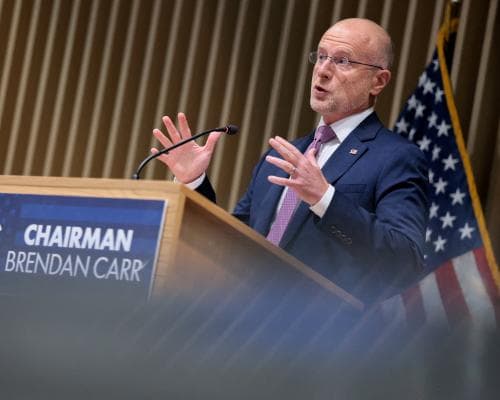
Let's get into the mechanics, because the numbers here are brutal and beautiful. The 39% cap was born from a 2003 congressional compromise, a political patch that was supposed to balance localism against corporate reach. By repealing it, the FCC has essentially told Sinclair, Nexstar, and their peers: go ahead, buy that station in Phoenix or Tampa or Charlotte. The only limit now is your own debt capacity and antitrust law, which for media has been enforced with a wink for years. FCC Chair Brendan Carr, a Trump appointee, framed the decision as a rescue mission for local news. "Repealing the national cap will provide essential relief for local broadcasters by restoring a healthy counterbalance for the growing leverage and power of national programmers," he said. But make no mistake—this is a wealth event. The immediate beneficiaries are the shareholders and billionaire families who control these conglomerates. When you remove a regulatory ceiling on asset accumulation, the value of existing portfolios tends to jump, and the appetite for M&A goes into overdrive.
The lone Democrat on the commission, Anna M. Gomez, voted against the repeal, calling it a giveaway that would accelerate a wave of consolidation that has already hollowed out local newsrooms. She's not wrong about the trend. But for the money crowd, this is about scarcity and control. Local TV stations are still cash cows—they generate reliable, recession-resistant revenue from political advertising (a record $10 billion-plus cycle in 2024) and auto dealerships. They also own the airwaves, which gives them a distribution moat that pure-play digital media can't replicate. The rarity here isn't the asset itself; it's the permission to own more of it. The 39% cap was the last meaningful brake on broadcast empire-building. With it gone, the race is on to see who can snap up the remaining independent stations before the next regulatory cycle flips the switch back.
What does this signal for the wealthy and for markets? First, expect a wave of mid-cap media M&A announcements in the next 12 to 18 months. Private equity firms and family offices that have been quietly accumulating stakes in broadcasting groups are now sitting on a catalyst. Second, this is a clear directional signal on regulatory risk: the current administration is pro-consolidation, and that's bullish for any sector burdened by size limits—whether that's radio, newspapers, or even data centers. Third, it tells you something about the shifting sands of the media landscape. The FCC's argument is that broadcasters need scale to fight Netflix and YouTube. That's a plausible thesis, but it's also a convenient one for billionaires who want to get bigger. The smart money is already modeling what a Sinclair-Nexstar tie-up would look like; the combined entity would reach nearly every TV household in America, giving it unprecedented pricing power.
So, what's the play going forward? For investors, the move is to watch the secondary markets—the small-cap station owners who suddenly look like acquisition targets. For the wealthy who own media assets, this is a moment to hold, not sell, because the value of your license is no longer capped by a Washington formula. But there's a cautionary tailwind here, too. Consolidation breeds political backlash. The next Democratic administration could reinstate a cap or, worse, impose a windfall tax on spectrum. The billionaires who win this round will be the ones who scale up quickly, lock in long-term retransmission contracts, and don't get greedy with local news cuts. The airwaves are now a playground for the rich—but as any good capital allocator knows, the best returns come from buying when the rulebook is torn up, and selling before the next one is written.