The Former President’s Bookshelf: Barack Obama’s New Podcast Turns Literature into the Ultimate Status Symbol
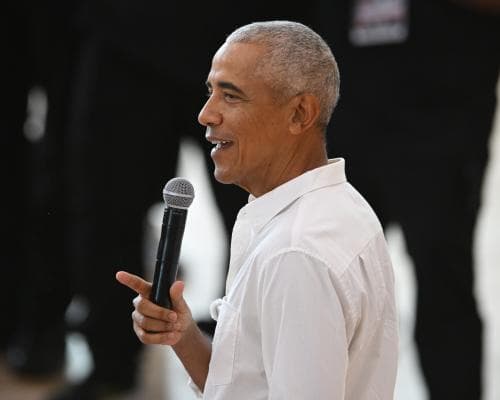
In the rarefied circles where the ultra-wealthy trade in private islands and vintage Bugattis, there is a quieter currency that moves with equal power: the bookshelf. And no bookshelf in the world is more closely watched than Barack Obama’s. This September, the former president is turning his literary taste into a podcast, A Great Book with Barack Obama, launching on Audible on the 24th. Six episodes, six books, and a masterclass in how to curate not just a library, but a worldview.
The titles Obama has chosen are not the sort of airport thrillers one might expect from a public figure courting mass appeal. Instead, they read like a syllabus for a graduate seminar in moral imagination: Toni Morrison’s Song of Solomon, John le Carré’s Tinker Tailor Soldier Spy, James Baldwin’s The Fire Next Time, Cormac McCarthy’s All the Pretty Horses, Marilynne Robinson’s Gilead, and Robert Penn Warren’s All the King’s Men. These are books that have “profoundly shaped his worldview and our society,” as the former president puts it. They are also, tellingly, all published in the 20th century—except Robinson’s Gilead, which slipped into the early 2000s—a deliberate nod to an era when the novel still held a kind of cultural authority that feels almost antique today.
For the luxury market, this is more than a podcast; it is a signal. Obama’s summer reading lists have long been a barometer for the literary tastes of the global elite, and this series elevates that ritual to a new plane. Each episode will feature Obama in conversation with a guest, though the names remain tantalizingly under wraps. One imagines a Nobel laureate, a titan of finance, a Hollywood A-lister who can quote Baldwin from memory. The production comes via Higher Ground, the Obamas’ company, in partnership with Amazon-owned Audible—a pairing that marries cultural gravitas with the kind of distribution muscle that makes a book a phenomenon overnight.
What makes this particularly fascinating for collectors is the implicit curation. These are not just books; they are artifacts of a certain kind of intellectual provenance. A first edition of The Fire Next Time, inscribed by Baldwin, has sold at auction for upward of $15,000. A signed copy of Song of Solomon can fetch $8,000. But the podcast’s real value is not in the physical objects—it is in the association. When Obama says that “great books have always helped me figure out who I am and what I believe,” he is offering a glimpse into the private thinking of a man who has been both a head of state and a cultural icon. For the ultra-wealthy, who often collect experiences more than objects, this is the ultimate insider access: a chance to sit in on a conversation with one of the most well-read men in public life.
The market context is equally telling. In an era of digital distraction, the luxury publishing world has seen a resurgence in beautifully bound editions, from Folio Society to private press runs. The podcast taps into that same desire for depth, for something that cannot be skimmed or scrolled. It also signals a shift in how the wealthy consume culture: not as passive entertainment, but as active self-improvement. The books Obama has chosen are not escapist; they are demanding. They ask questions about race, power, identity, and morality—questions that the privileged often prefer to leave unexamined. By embracing them, Obama is making a statement that true luxury is the capacity to engage with complexity.
What this means for the rest of us is a recalibration of taste. The yacht crowd may still obsess over the latest 80-meter superyacht, but the real conversation starter at the next dinner party in St. Barts will be whether you have read Gilead, and what you made of it. Obama’s podcast is not just a literary event; it is a social one. It tells us that the most exclusive club in the world is not defined by net worth, but by the books you can discuss with eloquence and insight. As the former president himself puts it, “literature matters now more than ever.” For the ultra-wealthy, who have everything else, this is the one acquisition that can never be criticized as ostentatious—only admired as profound.