Oil's Geopolitical Premium: Why the Gulf Escalation Is Already Priced Into Your Portfolio
A Chinese subcontractor's vehicle gets hit in northern Kuwait. A Nepalese driver dies. And somewhere in a trading desk in London or Singapore, a portfolio manager barely flinches. That's the strange reality of today's oil markets: the Middle East is on fire, and crude is trading like it's a contained brushfire—not a five-alarm blaze.
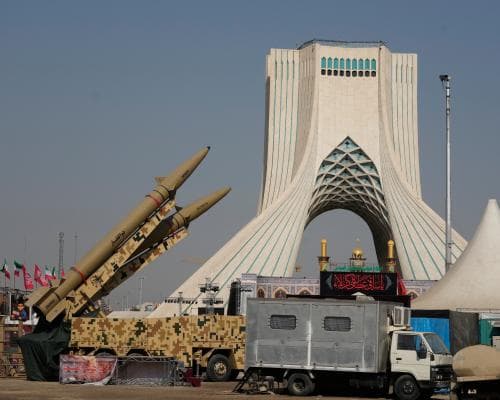
This is the disconnect that matters for anyone building or protecting capital right now. The US launched 'heavy' strikes on Iran. Iran's proxies have struck a Chinese-linked project in Kuwait. Lebanon's president is shuttling between Ankara and Washington. And yet Brent crude has been oscillating in a range that suggests traders have already baked in a certain level of chaos. The question is whether that pricing is smart—or dangerously complacent.
The mechanics here are brutally simple. The Strait of Hormuz sees about 20 million barrels of oil pass through daily—roughly a fifth of global consumption. Every time a missile flies near that chokepoint, the risk premium on crude should jump. But it hasn't, not sustainably. Why? Because the market is betting that no major producer wants $150 oil. Saudi Arabia, the UAE, and even Iran need revenue, not war. So the 'fear premium' gets capped by the 'self-interest discount.'
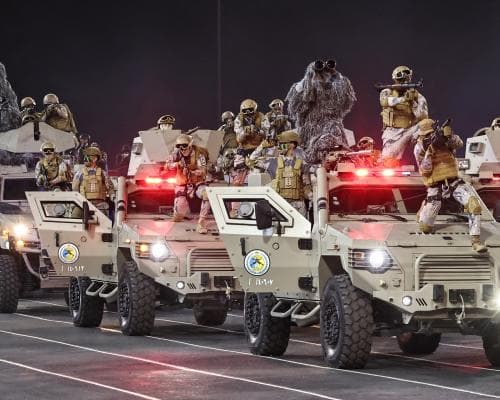
But here's where it gets interesting for wealth builders. The proposed multinational maritime defence coalition—backed by Saudi Arabia and discussed by 43 states—is essentially a financial instrument disguised as a military alliance. It's designed to insure the flow of oil through the Bab al-Mandeb strait, the Red Sea, and the Gulf of Aden. Think of it as a collective insurance policy for the world's energy supply chain. If it holds, it caps volatility. If it frays, we're looking at a 20% spike overnight.
The Chinese angle is the underappreciated variable. A Chinese company's subcontractor being hit in Kuwait is not an accident. Beijing has been the quiet stabiliser in the region, buying Iranian crude at a discount and keeping Tehran afloat financially. Now its own assets are getting singed. That changes the calculus. If China starts demanding de-escalation more forcefully—or if it pulls back its infrastructure investments—the entire risk profile of Gulf energy shifts. The market hasn't priced that yet.
For the ultra-wealthy, this is a moment to revisit portfolio construction. The classic '60/40' stock-bond split has been battered by inflation and rate hikes. Energy and commodities have been the outperforming hedge. But the play now isn't to buy crude futures—it's to own the infrastructure that moves oil and gas. Pipelines, tankers, and storage terminals. Those assets collect tolls regardless of whether the headline says 'strike' or 'ceasefire.'
What about the Unifil mandate ending in Lebanon? That's a slow-burn risk. UN peacekeepers have been a buffer since 1978. Their departure opens space for Hezbollah and Israel to escalate. The Turkish interest in a new security initiative is a signal that regional powers are jockeying for influence. For markets, this means the 'Lebanon risk' is a tail event—low probability, but catastrophic if triggered. Smart allocators are buying out-of-the-money call options on gold and oil as a cheap hedge.
The bottom line: The Middle East crisis is not a flash crash waiting to happen. It's a slow-motion repricing of geopolitical risk that has been artificially suppressed for a decade. The US strikes, the Chinese casualty, the maritime coalition—these are not one-off events. They are data points in a new regime where the cost of insuring against chaos is going up. For the wealthy, the move is not to panic. It's to own the assets that benefit from volatility—and to recognise that the era of 'cheap oil and cheap peace' is over.
The smartest capital is already rotating. Are you?