The Anti-Nightclub: Inside Sydney’s New Study Sanctuary Where Matcha Flows and Lo-Fi Beats Replace the Bass
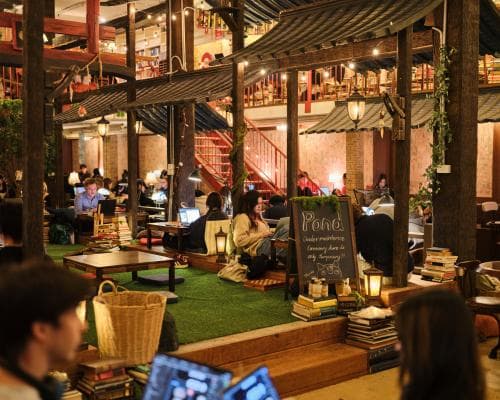
At 6pm on a Wednesday, the lights are dimmed, laptops glow like fireflies, and the only bass in the room is the soft thump of lo-fi beats. You’d be forgiven for thinking you’d stumbled into a particularly well-curated silent retreat—but this is Sydney’s newest nightlife sensation, and its patrons are not here to dance. They’re here to study. O3 Space, a 24/7 study cafe that just opened its first Sydney outpost on King Street, has turned the city’s nocturnal energy on its head, and the queues outside rival those of any velvet-rope club.
The venue occupies a cavernous space that once housed a radical bookshop—a fitting ghost for a place that’s quietly revolutionising how the city’s young elite spend their evenings. Founder Luca Yang, a soft-spoken entrepreneur with a background in design, says the concept is simple: create a space that feels nothing like work, even when you’re grinding through a thesis. “The whole point of it is that we don’t want to remind you of work,” Yang explains, gesturing to the sloping roofs that line the centre of the room, a plot of astroturf underfoot, and an upside-down Japanese torii gate suspended from the ceiling. It’s whimsical, yes, but also deliberate—every element is engineered to lower cortisol and raise focus.
The experience begins before you even step inside. To enter, you must scan a QR code on the O3 app—a friction point that author Annie McCann found “a bit strange,” but one that quickly fades once you’re enveloped in the warmth. The app tells you how many people are inside (on this night, 126), and the space hums with a quiet intensity. There are no rowdy groups, no phone calls, no espresso machines shrieking. Instead, there’s a steady flow of matcha, poured from ceramic pitchers into glass cups, and the soft click of keyboards. It’s a study sanctuary, but one that feels more like a members-only lounge than a library.
Yang’s vision is rooted in Asian study culture, where 24/7 study cafes are commonplace—places where students and freelancers can work in comfort without the pressure to buy endless coffees. Australia has been slower to catch on, but O3 is leading the charge. Yang opened his first cafe in Auckland in 2024, followed by two in Melbourne’s Southbank and Brunswick. The Sydney launch, just one week old, has been his biggest yet. “The first weekend’s queues rivalled those of a nightclub,” he says, a note of surprise in his voice. The demand speaks to a broader shift in how the ultra-productive spend their leisure—not in pursuit of hedonism, but of self-optimisation.
For the collector of experiences, O3 represents a new kind of luxury: the luxury of focus. In a world where attention is the most scarce commodity, a space that promises uninterrupted flow is worth more than any limited-edition watch. The app-based entry system, while initially annoying, adds a layer of exclusivity—a digital velvet rope that filters out the merely curious. The astroturf and torii gate are not just Instagram fodder; they’re cues to the subconscious that this is a place apart, a pocket of calm in a city that never sleeps. The result is a study session that feels less like obligation and more like a ritual.
What’s striking is how O3 has tapped into a zeitgeist that extends far beyond students. Freelancers, writers, and remote workers have all flocked to the space, drawn by the promise of a third place that isn’t home or office. McCann, who visited for a writing session, noted that the app requirement was a small price for the atmosphere. “You don’t even need an app to enter a library,” she mused, “but here, it feels like you’re part of something.” That sense of belonging is the real product—and it’s why O3 is more than just a cafe. It’s a glimpse into the future of hospitality, where the value isn’t in what you consume, but in the state of mind you leave with.
As Sydney’s nightlife evolves, O3 is a harbinger of a quieter, more intentional kind of after-dark culture. Yang plans to extend hours to true 24/7 access, and the app will soon offer booking for private pods and even virtual study rooms. For now, the matcha flows, the lo-fi beats loop, and the students of Sydney have found their new favourite haunt—one where the only hangover is the glow of a well-spent evening. In a city that’s always chasing the next thrill, O3 offers something rarer: the luxury of a clear mind.