A Revolution in Ruins: The Unraveling of Chávez’s Dream on Venezuela’s Gold Coast
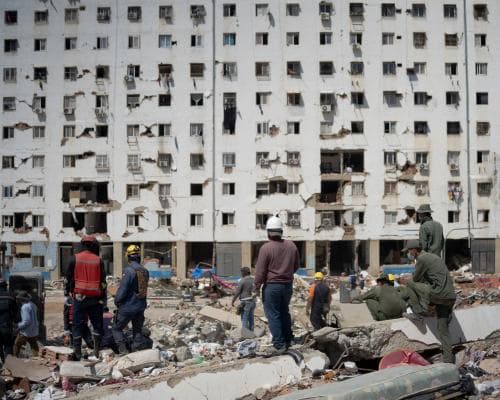
Gabriel González still remembers the day he received the keys. It was 2013, and the 12-floor towers of OPPE 25 gleamed fresh against the Caribbean sky, a short walk from the beach in the affluent resort town of Caraballeda. For González, a construction worker who had lost everything in deadly mudslides two years earlier, the apartment was more than shelter—it was proof that Hugo Chávez’s Bolivarian revolution could deliver on its promise to lift the poor. “It was wonderful,” he recalls, standing by a donated tent pitched on a golf course near his obliterated home. “The Chávez government helped the poor so much.” Today, that same stretch of coastline—once a playground for Venezuela’s elite, dotted with yacht clubs and gated villas—offers a different view: mountains of shattered concrete, exposed rebar, and the quiet fury of displaced families. The twin earthquakes that struck last month did not just topple buildings; they exposed the hollow core of a political dream that, for a time, seemed as solid as the towers themselves.
OPPE 25 was never meant to be just a housing project. It was a statement—a vertical monument to Chávez’s ambition to reclaim prime real estate from the wealthy and redistribute it to the faithful. The complex sat on land that once belonged to the country’s old-money elite, in a corner of Caraballeda where ocean views and manicured lawns were the birthright of a few. By planting 12-story towers there, Chávez was rewriting the geography of power. The apartments themselves were modest by luxury standards—two- and three-bedroom units with basic finishes—but their location was a coup: a beachfront address for families who had never owned so much as a balcony. For a few years, it worked. Residents like González felt a surge of pride, a sense that the revolution had finally reached their front door. But the foundations were already shaking. Chávez died in 2013, and the project’s caretakers—Nicolás Maduro’s regime—let the dream slip into neglect, corruption, and decay.
Craftsmanship was never the point of OPPE 25, but its failure is a masterclass in what happens when ideology outstrips engineering. The buildings were rushed, built during the oil boom years when Venezuela’s construction sector was awash in petrodollars and political pressure. Concrete was poured fast; inspections were cursory. When the first quake hit, the towers didn’t stand a chance. González describes the sound as a deep groan, followed by a cascade of cracking that seemed to last minutes. “It was like the building was breathing its last,” he says. Now, the site is a graveyard of rebar and dust, with only the occasional glint of a kitchen tile or a child’s toy to remind you that people once lived here. For collectors of architectural folly, OPPE 25 is a cautionary artifact—a reminder that even the most visionary development is only as strong as the hands that build it and the government that maintains it.
In the world of high-end real estate, location is everything. Caraballeda’s coastline remains one of Venezuela’s most coveted stretches, with neighboring properties still commanding premium prices among the wealthy who fled the country’s chaos. But the collapse of OPPE 25 has sent a chill through the market. Private investors, already wary of Maduro’s regime, are now questioning whether any structure built in the past two decades can withstand the next quake—or the next political tremor. For the ultra-wealthy, the lesson is clear: a beachfront address is worthless without a stable foundation, both literal and legal. The ruins of OPPE 25 are now a kind of open-air museum, visited by journalists and foreign diplomats who come to gawk at the failure of a revolution. But for the families who lost everything, it is not a spectacle—it is a home that never was.
What does this say about luxury taste in 2025? Perhaps that true luxury is not a penthouse or a private island, but the quiet assurance that your home will still be standing tomorrow. The residents of OPPE 25 had that assurance for a few fleeting years, until they didn’t. For the global elite who collect estates like art, the story of this project is a stark reminder that the most valuable asset is not a view or a square footage—it’s governance. A well-run country, a transparent legal system, and a building code that is actually enforced: these are the ultimate luxury goods. As González puts it, standing by his tent on the golf course where he now sleeps, “We don’t have a government.” In the world of curated living, that is the one thing money cannot buy.
The future of Caraballeda’s coastline remains uncertain. Some developers are already circling, dreaming of replacing the rubble with luxury condos for the Venezuelan diaspora that fled to Miami and Madrid. But for now, the ruins stand as a monument to a promise broken. González and his neighbors wait for aid that may never come, while the golf course—once a symbol of the old elite’s leisure—has become a makeshift camp. The revolution is in ruins, but the land remains. And somewhere, a collector is taking notes.