The £11 Billion Underworld: Why the Ultra-Wealthy Are Watching Britain’s Most Audacious Tunnel
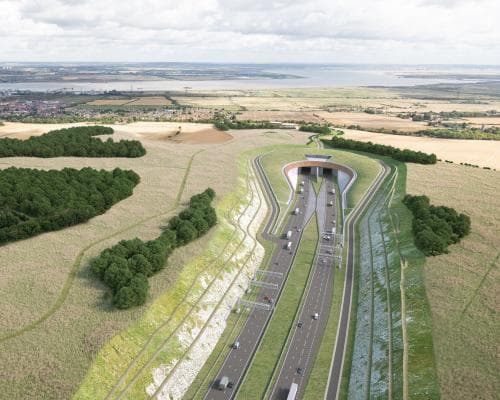
Picture this: You’re in the back of a chauffeur-driven Maybach, the Dartford Crossing snarled in its usual gridlock of lorries and hatchbacks. The Thames glints through the tinted window, but you’re not moving. Now imagine plunging beneath that river at 70 mph, through a tunnel so vast and expensive it makes HS2 look like a garden shed project. That’s the promise of the Lower Thames Crossing — a £11 billion, 2.6-mile twin-bore road tunnel linking Kent and Essex. And right now, it’s the most fascinating, fractious, and financially audacious piece of civil engineering in Britain.
For the readers of *The Curated Life*, this is not merely a transport scheme. It is a barometer of how the world’s wealthy move — not just their cars, but their capital. The tunnel is designed to siphon traffic away from the Dartford Crossing, that perennial bottleneck where minutes bleed into hours. For anyone with a private aviation schedule, a country estate in Kent, or a weekend home in Suffolk, the stakes are personal. A seamless Thames crossing means the difference between a leisurely drive to a grouse moor and a missed connection to St. Moritz.
Let’s talk about the numbers, because the ultra-wealthy love a number that makes the rest of the world blink. £11 billion. That’s more per mile than HS2, the high-speed rail line that itself became a byword for overruns. The government has already committed £3.1 billion of public money, with the rest expected from private finance. But here’s the detail that makes a collector’s pulse quicken: over £1 billion has been spent before a single shovelful of earth has been turned. The National Audit Office, Britain’s public spending watchdog, has now announced it will investigate the project, responding to campaigners who have watched costs climb like a vintage Bugatti at auction. The head of the NAO, Gareth Davies, wrote to opponents that his teams are “tracking activity on the programme,” a phrase that in luxury terms sounds like a curator examining a disputed provenance.
The craftsmanship — or rather, the engineering — is staggering. Twin tunnels, each 2.6 miles long, bored through London clay and chalk, with state-of-the-art ventilation, lighting, and safety systems. It is the kind of infrastructure that whispers permanence and power, like a bespoke yacht slip or a private airstrip. The project was spared from recent government cuts, even as defence spending rose by £15 billion, a political survival that signals its importance to the corridors of Whitehall — and to the developers, hedge fund managers, and landowners who stand to benefit.
In the collector and investor community, infrastructure of this scale is a quiet asset class. The tunnel will unlock land values in Kent and Essex, making rural estates more accessible and waterfront property more desirable. Think of it as a hard asset with a yield: time saved. For the owner of a classic Ferrari collection or a stable of thoroughbreds, every minute not spent at the Dartford queue is a minute of life reclaimed. The project has also become a litmus test for Britain’s planning system, which Labour ministers have called “sclerotic.” The super-rich, who often build their own private roads and helipads, watch with a mixture of amusement and impatience as the state wrestles with its own bureaucracy.
What does this say about luxury taste in 2025? It says that the truly discerning no longer just buy objects — they buy access. A tunnel is not a watch or a wine; it is a conduit. It is the ultimate statement of quiet control over time and geography. The Lower Thames Crossing is not yet built, and it may never be — the NAO investigation could stall it further. But in its ambition, its cost, and its controversy, it has already become a symbol of how the wealthy think: not about traffic, but about the frictionless movement of life itself.
As the project inches forward — or stalls — one thing is certain: the next time you’re stuck at Dartford, remember that beneath the river, a billion-pound dream is waiting. And if it ever opens, the first cars through won’t be hatchbacks. They’ll be Bentleys.