Europe's Wildfire Season Is Now a Climate-Supercharged Weapon — and It's Only Getting Started
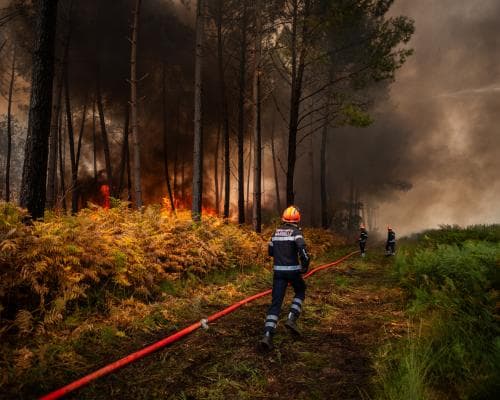
The smoke had barely cleared over the charred hillsides of Spain and France when the scientists delivered their verdict: this wasn't just a bad fire season. It was a climate-supercharged preview of the new normal. A rapid attribution study from the World Weather Attribution (WWA) consortium found that global heating made the hot, dry, and windy conditions behind July's blazes at least 20 times more likely in Spain and twice as likely in France. The numbers are stark, but the real shock is the timing. These fires erupted in early summer, before the traditional peak — and with another heatwave already looming, the researchers used words like 'extremely scary.' That's not hyperbole. It's a warning that Europe's fire season is no longer a summer nuisance; it's a year-round, climate-amplified weapon.
The WWA's work is the latest in a string of attribution studies that are turning climate science from a theoretical model into a courtroom-grade forensic tool. They've already shown that the June heatwave — which killed an estimated 20,000 people across the continent — was impossible without carbon pollution. Now they've connected the dots to fire: searing heat and parched land are pushing the 'daily severity rating' — a metric that predicts how explosive a fire will be if ignited — to levels that were once rare. The culprit isn't just heat. It's a 'whiplash' effect: a wet winter and spring supercharged vegetation growth, then a brutal summer dried it into perfect kindling. Europe is literally growing its own fire fuel, then lighting it with a heatwave.
This isn't an abstract, far-off problem. It's happening in the heart of the developed world, in countries with advanced firefighting fleets and well-funded emergency services. And it's happening despite those advantages. The WWA team, led by researchers like Dr. Clair Barnes at Imperial College London, is part of a growing movement that uses real-time data to quantify how much climate change is loading the dice for extreme events. Their methods are becoming more precise, more rapid, and more damning — and they're increasingly being used by insurers, city planners, and even litigators to assign responsibility and demand action.
The market implications are huge. Europe's fire season is now a first-order threat to energy infrastructure, agriculture, and real estate — and that's a fact that investors and insurers are starting to price in. The 2025 fires, already more severe than last year's, are a stress test for the continent's climate resilience. We're seeing the same pattern in California, Australia, and the Mediterranean: fire seasons are lengthening, the area burned is expanding, and the cost of inaction is compounding. The question is no longer whether climate change is making fires worse — it's how fast we can adapt to a world where 'fire weather' is the new baseline.
For the deep-tech and innovation community, this is a call to arms. The tools to fight this exist — satellite-based early detection, AI-driven fire behavior modeling, and fire-resistant building materials — but they're not deployed at the scale or speed required. The WWA's findings are a reminder that the most valuable technology in the coming decade won't be a new app or a faster chip; it will be the systems that let us anticipate, survive, and rebuild in the face of a climate that's actively trying to burn us down. The billionaires and venture funds pouring into climate tech have focused on energy and mobility — but fire resilience is the underfunded, under-appreciated frontier that's about to explode.
So what does the future hold? If current trends hold, Europe's fire season will start earlier, end later, and burn hotter. The wet-winter-dry-summer whiplash is projected to intensify, meaning more vegetation growth and quicker desiccation. The WWA's 'extremely scary' finding is a preview of the data we'll see more of — and it's a signal that the old playbook of reactive firefighting is obsolete. The next breakthrough won't be a bigger hose; it'll be a predictive platform that tells you where the fire will be a week before it starts, or a material that doesn't ignite. The question is whether we'll invest in that future before the next fire season proves us wrong. The clock is ticking — and the fires are already at the door.