The New Currency of Trust: Why the Ultra-Wealthy Are Betting on Verified Reality
Imagine this: you're at a private dinner in Geneva, and someone across the table mentions a video of a rival CEO doing something utterly undignified. Everyone laughs. Then someone else says, 'It's AI, of course.' And suddenly, the room goes quiet. The laughter fades into a shared, unspoken question: what can we actually believe anymore? That moment, my friends, is the new luxury problem. For centuries, wealth bought certainty—certified diamonds, authenticated art, verified provenance. Now, the most valuable asset on earth isn't gold or prime real estate. It's the truth. And as of this Sunday, the European Union has decided that truth gets a label.
The EU's landmark AI Act, which takes effect for new systems on August 2nd, is a quiet revolution dressed in bureaucratic clothing. From now on, any artificially generated image, audio, or text designed to look authentic must be visibly marked as AI-generated, complete with a digital watermark. Existing AI systems get a four-month grace period, but the message is clear: the Wild West of synthetic media just got a sheriff. The rules apply to everything from deepfake political speeches to AI-generated news articles on matters of public interest—unless a human editor has signed off. And if companies fail to comply? Fines up to €15 million, or 3% of global turnover. That's not pocket change, even for a tech titan. The EU executive has even created simple black-and-white labels, though companies can design their own—a subtle flex of brand identity in compliance.
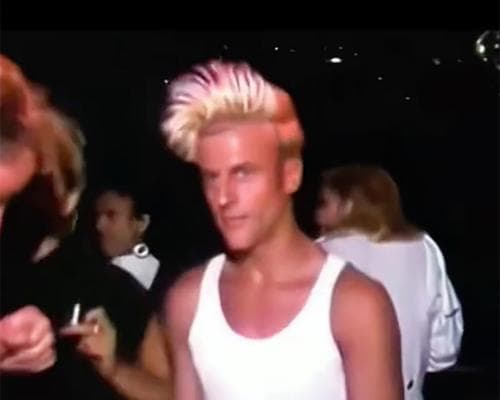
But let's be honest: the real drama isn't in the fine print. It's in what this means for the upper echelons of society. Deepfakes have already targeted world leaders—Slovakian opposition leader Michal Šimečka caught in a fabricated audio conspiracy, French President Emmanuel Macron awkwardly dancing in a 1980s nightclub, UK Labour leader Keir Starmer allegedly abusing staff. These aren't just pranks; they're weapons. And for the ultra-wealthy, who move in circles where reputation is everything, the threat is existential. A single convincing fake video could tank a merger, unravel a family office's legacy, or turn a boardroom into a battlefield. The EU's new rules are a first attempt to restore order—a digital certificate of authenticity for the internet age.
Now, here's where it gets interesting for those with taste. The tech industry, predictably, is grumbling. The Computer and Communications Industry Association argues that the EU's guidelines expand the definition of a deepfake far beyond the original law, meaning everything from a landscape in an advert to a manipulated political speech gets the same label. As Boniface de Champris, CCIA Europe's AI policy lead, puts it: 'Like cookie banners, once labels are everywhere, users stop noticing them. That doesn't protect anyone, it just burdens commercial activity.' He's not wrong. But for the discerning eye, this over-labeling is actually a gift. It forces a new kind of discrimination—not just between real and fake, but between meaningful and trivial. The wealthy have always paid for curation. Now, they'll pay for clarity.
What does this signal about wealth and taste? In a world where anyone can generate a photorealistic image of you doing something you'd never do, the ultimate status symbol is no longer a limited-edition Patek or a private island. It's the ability to say, with absolute confidence, 'That's not me.' It's having a team of lawyers and technologists who can prove it. It's the quiet power of authenticity in a sea of synthetic noise. The EU's AI Act doesn't just protect consumers; it protects the very concept of reality—and for those who operate in the rarefied air of billion-dollar deals, reality is the only currency that matters. The watermark isn't a nuisance; it's a badge of honor for the genuine.
Looking forward, this is just the opening act. The EU's rules will likely become the global template, much like GDPR did for data privacy. Smart money is already moving: expect a rise in 'authenticity consultants,' blockchain-based verification services, and private 'human verification' protocols for high-stakes communications. The personal exemption for satirical and artistic works means there's still room for play, but the lines are being drawn. For the ultra-wealthy, the message is simple: in a world of fakes, the real thing—whether a person, a piece of art, or a statement—is the ultimate luxury. And now, it comes with a label. But the most discerning among us will always know the difference without needing to be told. That's the true mark of class.
The Experience
To experience the new standard of verified authenticity, consider engaging a private digital forensics firm to audit your online presence and secure your personal brand against deepfakes. For a truly exclusive touch, commission a bespoke 'authenticity passport' for your family office's communications.
More in INNOVATION