The PIF Playbook: How a 38-Year-Old German Became the Saudi League's Hottest Coaching Asset — and Why Newcastle Is Betting on Him
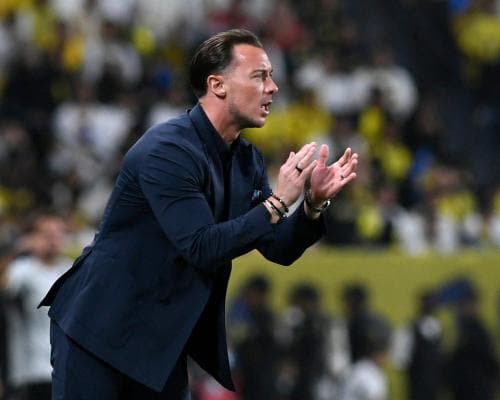
Here's a name you probably don't know yet, but you will: Matthias Jaissle. He's the 38-year-old German coach who took a Saudi club from the second division to Asian football's biggest stage — and now he's reportedly heading to the Premier League to take over Newcastle United. That's not just a sports story. It's a capital story, and it's worth reading closely if you want to understand how the world's most powerful sovereign wealth fund operates.
Jaissle's rise is the kind of thing that makes fund managers sit up. Three years ago, he was a virtual unknown in Jeddah, arriving from Austria's Bundesliga after two titles with Red Bull Salzburg. Most Al-Ahli fans had never heard of him. But he didn't just survive in the Saudi Pro League — a league that chews through coaches like a hedge fund churns through analysts — he thrived. He took a club that had been relegated and then re-promoted, and turned it into a winner. Now, with the same owners — Saudi Arabia's Public Investment Fund — both Al-Ahli and Newcastle share a direct line to Riyadh's deep pockets. That's not a coincidence. That's a strategy.
The mechanics are simple, but the implications are huge. PIF owns Al-Ahli, Al-Hilal, Al-Nassr, and Al-Ittihad in Saudi Arabia, plus an 80% stake in Newcastle United. When Jaissle moves from one to the other, he's not just changing jobs — he's being redeployed across a portfolio. Think of it like a star portfolio manager being moved from one fund to another within the same asset management group. The underlying investor is the same; the goal is to maximize returns across the whole book. Newcastle fans may be nervous about losing Eddie Howe, but the PIF calculus is cold: if Jaissle can win in Jeddah, where pressure is intense and expectations are high, he can win in the north-east.
The numbers tell the story. Al-Ahli's only domestic league win since 1984 came under Jaissle. In Asia, the club had suffered two comprehensive Champions League final defeats before he arrived. Yet he turned them into a side that reached the Asian Champions League final and won the domestic league title. That's not just a good coach — that's a value-creator. And in a world where football clubs are increasingly treated as alternative assets, that kind of track record is worth real money. Jaissle's playing career was cut short by injury, but his coaching career has been a masterclass in turning underperforming assets into winners.
For the wealthy and the institutional investors watching, this move signals something bigger: sovereign wealth funds are no longer just buying clubs — they're building ecosystems. PIF is not just buying trophies; it's buying talent pipelines, coaching trees, and competitive advantages that can be deployed across multiple markets. The same logic applies to tech, real estate, and infrastructure. If you're looking at where the smartest capital is going, you should be looking at how PIF is moving people and ideas between its assets, not just at the headline acquisitions.
What does this mean for Newcastle? It's a bet on a different kind of leadership — younger, more adaptable, and already battle-tested in a high-pressure environment. Jaissle is a decade younger than Howe, and he's spent the last three years managing under the intense scrutiny of Saudi football's spotlight. He's also managed big-name players like Riyad Mahrez, Roberto Firmino, and Édouard Mendy — stars who arrived in Jeddah when PIF acquired the club. That experience managing egos and expectations is directly transferable to the Premier League, where Newcastle's own stars like Sandro Tonali and Anthony Gordon are already on their way out.
The forward-looking angle is this: watch how PIF deploys Jaissle's success across its portfolio. If he wins at Newcastle, it validates the fund's approach of moving talent internally rather than always paying top dollar for external hires. That's a lesson for any investor: sometimes the best asset is the one you already own, but you have to be willing to move it to where it can generate the highest returns. Jaissle's move is a small, human detail in a massive financial story — but it's the kind of detail that separates sharp capital from dumb money.