The Restaurateur Who Bowls for Pakistan: Chico’s Unlikely Ascent to the Green
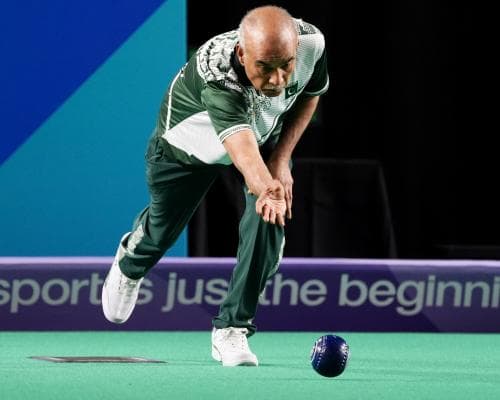
The invitation has already been extended. Even if Australia beat Pakistan in their men’s pairs match at the Commonwealth Games, they are still welcome to dinner afterwards. There is just one small catch. “If we lose, they are still invited to the restaurant, but I will probably give them a spicy vindaloo as revenge,” Mohammed Ayub Qureshi says with a smile. For the ultra-wealthy, revenge is a dish best served cold — with a side of private jet. For Chico, it comes as a fiery curry, ladled out in a Glasgow tandoori house that has become an unlikely epicentre of lawn bowls diplomacy.
Qureshi, better known around Glasgow’s bowls community as “Chico”, has spent decades serving lamb rogan josh at Alishan Tandoori while quietly becoming Pakistan’s most recognisable lawn bowler. On Wednesday, the restaurateur swaps his shirt and tie for Pakistan colours as he and his teammate, Maqsood Waseem Khan, face one of the toughest assignments in the sport. Standing across the rink will be Australia’s Corey Wedlock and Aaron Teys. Wedlock is a three-time world champion; Australia have already stamped their authority on these Games, leading the medal table with over 60 medals overall. It is the kind of mismatch that would make a hedge fund manager short the underdog. But Chico is not here to be a footnote. “I feel excited. I feel excited to be playing with the best,” he says. “Hopefully we’ll learn something and we’ll take something home. The experience, I mean, these guys, are the creme de la creme.”
What makes this story so compelling — and so utterly unlike the usual luxury-travel dispatch — is the sheer improbability of the journey. Chico’s path to the green began almost accidentally, nearly three decades ago, when he wandered into a Glasgow bowling club looking for a quiet afternoon. He found a community, a sport, and eventually a calling. Today, he and Khan — the secretary of the Pakistan Lawn Bowls Federation, who lives and trains in Faisalabad — represent a nation from two continents. “We make it work, it is not that difficult,” Khan says. “I play and train in Faisalabad or Lahore and he is here but it does not come to mind.” Their partnership is a masterclass in logistical elegance: no private terminals, no concierge teams, just a shared love for a game where the ball rolls slower than a Gulfstream taxis.
For the reader accustomed to $50,000-a-night overwater villas and helicopter ski access, the appeal here is not the absence of luxury but the presence of something rarer: authenticity. Lawn bowls is a sport of quiet precision, played on manicured greens that feel like private gardens. The dress code — whites, flat-soled shoes — is a uniform of understated elegance. And the stakes, while not financial, are deeply personal. Chico is not playing for a bonus or a sponsorship deal. He is playing for the joy of competing against the best, with a tandoori dinner waiting at the end. It is a reminder that the most memorable journeys are often the ones that cannot be booked through a travel agent.
What does this signal about luxury travel? That the wealthy are increasingly seeking experiences that feel earned, not purchased. The rise of “slow travel” — extended stays, cultural immersion, genuine connection — mirrors the pace of bowls itself. A game can last hours. A conversation over curry can stretch into the night. The ultra-wealthy, tired of curated itineraries, are beginning to understand what Chico has known all along: the best stories happen when you stop trying to optimise the schedule. They are booking stays at working farms, joining local cricket clubs in Goa, learning to roll a bowl in a Glasgow park. The price of admission is not a credit card; it is curiosity.
Where do the wealthy go next? They go to the unexpected corners where passion lives. They go to Alishan Tandoori on a rainy Glasgow evening, where the vindaloo is spicy and the host might just be a Commonwealth Games athlete. They go to the bowling greens of Faisalabad, where the grass is kept short and the dreams run long. They go, in other words, to places where the creme de la creme is not a designation of wealth but of spirit. Chico’s match may end in victory or defeat. But the dinner invitation stands. And that, in the end, is the kind of luxury that cannot be bought — only earned, one bowl at a time.