The Quiet Revolution: Inside the Dance That Changed Everything
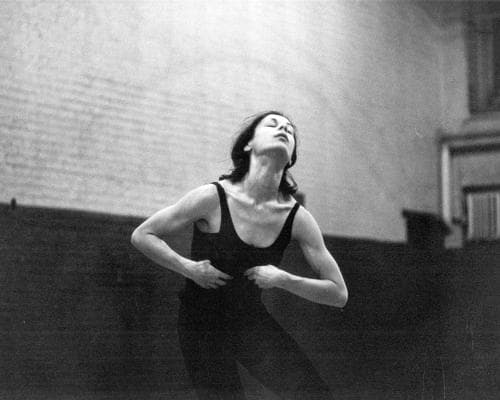
On a Friday afternoon at the Tate Modern, three people are moving on a vinyl dancefloor. They are not spinning or leaping. They roll, stretch, sink, touch their toes. The babies in pushchairs screech. Schoolkids heckle from the mezzanine. No one seems to notice. It is, in the most refined sense, a quiet revolution. This is Yvonne Rainer’s Trio A, a work so radical that six decades after its premiere it still feels like a secret whispered among the initiated. To watch it for free, in the cathedral-like space of the Turbine Hall, is to feel an enormous privilege — the kind that money cannot buy but taste can recognize.
Trio A is not a spectacle. It is an anti-spectacle. Rainer stripped dance of its traditional drama, its narrative arc, its virtuosic leaps. Instead, she introduced everyday movements: a foot drag, an arm swing, a slow descent to the floor. The dancers appear lost in their own bodies, indifferent to the audience. This is the point. The piece asks us to see movement as itself, not as a vehicle for emotion or story. For the collector who has everything — the vintage Ferrari, the Banksy, the first-edition Hemingway — Trio A offers something rarer: a moment of pure, unmediated presence. It is the art of subtraction, and in a world of excess, that is the ultimate luxury.
The staging at Tate marks the 60th anniversary of Trio A’s first recital, performed by Rainer alongside David Gordon and Steve Paxton in a New York loft in 1965. Rainer, now 90, continues to instruct new dancers in the work, passing on a tradition that is less about steps than about attitude. The piece emerged from the Judson Dance Theater, a collective of artists and choreographers who rejected the formalism of ballet and modern dance. They wanted movement that was ordinary, democratic, real. Trio A became their manifesto. Its influence echoes through contemporary performance, from the work of Anne Teresa De Keersmaeker to the choreography of fashion shows at Prada and Dior. To see it live is to witness the DNA of modern cool.
For the collector, the value of Trio A lies not in its price tag — it is free to the public — but in its scarcity and cultural weight. This is not a work that tours stadiums or auctions for millions. It is performed by rotating trios of dancers, each iteration slightly different, each a living document. The Turbine Hall setting amplifies the experience: the raw concrete, the vast scale, the hum of the museum. It is the antithesis of the velvet-rope gallery opening. There is no champagne, no VIP section. Just bodies moving in space. That is precisely why it matters. In an era of hyper-curated luxury, the ability to appreciate something so unadorned signals a sophistication that no watch or automobile can convey.
What Trio A signals about luxury taste is a shift from accumulation to attention. The ultra-wealthy have long collected objects — cars, houses, wines. The new frontier is collecting experiences that require patience, knowledge, and a willingness to be still. Rainer’s work demands that you watch without expectation. It rewards the eye that notices the micro-gesture: the way a hand hovers before a turn, the breath that precedes a fall. This is connoisseurship of a different order. It is not about owning the rarest bottle of Burgundy; it is about knowing how to taste it. Trio A is that kind of taste: austere, demanding, and deeply satisfying.
Looking forward, the legacy of Trio A is secure, but its relevance is growing. As the art world becomes ever more commercial — with NFTs, branded installations, and auction-room blockbusters — Rainer’s work stands as a quiet rebuke. It reminds us that the most profound art can happen anywhere, for anyone, for free. For the reader of The Curated Life, the takeaway is this: the next time you find yourself in London, skip the private view and head to the Turbine Hall. Sit on the floor. Watch. Let the movement wash over you. You will leave with something that no amount of money can buy: a new way of seeing. And that, in the end, is the rarest luxury of all.