War's New Calculus: How the Beaufort Ridge Tunnel Demolition Redraws the Risk Map for Gulf Capital
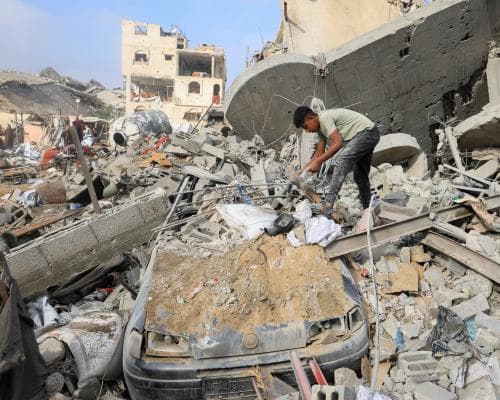
At midnight, the ground shook from the Litani River to the Israeli border town of Metula. Windows shattered in al-Qlailah, and the smell of cordite drifted across the ridge where Crusaders once watched for Saladin's armies. But this was no medieval siege—it was the Israeli Defense Forces detonating a multi-level Hezbollah tunnel network that had been 20 years in the making, a subterranean command city carved into the limestone beneath a 900-year-old castle. For the wealth desk, the blast was more than a tactical victory; it was a violent repricing of geopolitical risk in a region where capital flows are as volatile as the front lines.
The IDF's operation on the Beaufort Ridge, captured in May and now fully secured, destroyed what it called a 'central terror headquarters' for Hezbollah's Badir unit, funded and planned by Iran. The tunnel complex, located just four miles from Metula, consisted of several levels and was built over two decades—an engineering feat that rivaled the Swiss Alps in complexity, but with a purpose far darker. The explosions, described by Lebanon's National News Agency as 'tremendous and unprecedented,' sent shockwaves through the southern Lebanese towns of Yahmar al-Shaqif, Arnoun, and Kfar Tebnit. The IDF's post on X claimed the network posed a direct threat to northern Israeli residents and its own forces, and its destruction was a prelude to what may come next.
For investors, the numbers matter as much as the munitions. The tunnel network was a fixed asset on Hezbollah's balance sheet, a sunk cost of Iranian patronage estimated in the hundreds of millions of dollars, built with concrete, steel, and encrypted communications. Its destruction is a write-down for Tehran's proxy strategy, but also a signal that Israel is willing to escalate beyond air strikes into ground operations that hold territory—a shift that changes the risk calculus for energy infrastructure, shipping lanes, and sovereign wealth funds parked in Gulf petrodollars. The Beaufort Ridge, a strategic high ground that has changed hands from Crusaders to Ottomans to Israelis, now hosts a permanent IDF presence, and that presence has a price.
The heritage angle is not lost on the region's elite. Beaufort Castle, a 12th-century fortress that has watched over the Litani River for centuries, is now a frontline observation post. Its capture and the tunnel demolition are a reminder that in the Levant, history is not a museum exhibit—it's a collateral asset. For wealthy families with stakes in Lebanese real estate, the blast radius extends beyond shattered windows; it undermines property values, insurance premiums, and the very notion of safe haven. The smell of gunpowder in the air is a market signal, and it's not bullish.
What does this mean for the world's smartest capital? In the short term, expect a flight to quality—US Treasuries, gold, and the Swiss franc—as geopolitical risk premiums widen. In the Gulf, sovereign wealth funds are recalibrating their exposure to regional defense stocks and Israeli tech, which have rallied on the back of conflict. But the deeper play is in energy: the Beaufort Ridge overlooks no oil fields, but its strategic position near the Israeli-Lebanese maritime border, where natural gas reserves are contested, makes it a chess piece in the Eastern Mediterranean's energy game. The IDF's hold on the ridge is a de facto guarantee for Israel's gas platforms, and that's a bullish signal for investors in those assets.
For the wealthy, the takeaway is not just about geopolitics—it's about the architecture of risk. The tunnel network was an underground asset built to outlast air campaigns, and its destruction proves that even the most fortified positions are vulnerable to persistence. That lesson applies to portfolios: diversification is not enough; you need redundancy, flexibility, and a clear-eyed view of the map. The Beaufort Ridge is now a symbol of how quickly the ground can shift, both literally and metaphorically. As the IDF consolidates its hold and Hezbollah regroups, the next move will be watched not just by generals in Tel Aviv or mullahs in Tehran, but by asset managers in Dubai, London, and New York. The blast echoed across the south, but its financial aftershocks will ripple through every portfolio that touches this volatile region.
In the end, the tunnel demolition is a reminder that capital flows are not just about yields and multiples—they're about security. The wealthy have always known that the best investments are in places where the rule of law is strong and the ground is stable. The Beaufort Ridge is neither, and its latest chapter is a warning to those who mistake temporary calm for permanent safety. The smell of gunpowder will fade, but the risk map has been redrawn. For the smartest capital, the question is not whether to avoid the region—it's how to hedge it, how to price it, and how to stay ahead of the next explosion, wherever it may come.