The Billion-Dollar Governance War: How Football's Rebels Are Rewriting Fifa's Future
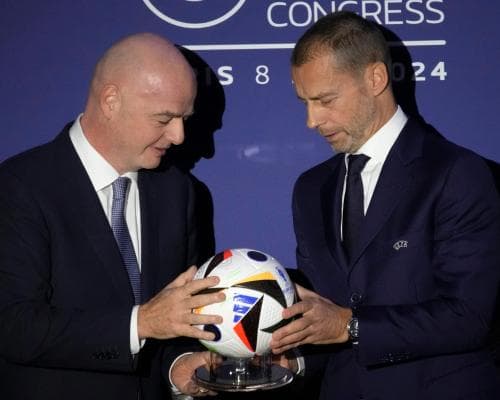
The most powerful men in football are not fighting over a penalty call. They're drafting a constitution. Behind closed doors, the leaders of Uefa, Concacaf, and the Asian Football Confederation are writing a policy document that could dismantle Fifa's century-old power structure—and they're doing it because Gianni Infantino, the man who runs the world's game, has refused to answer their calls.
The trigger? A quiet financial maneuver that became a public bombshell a fortnight ago: Fifa's plan to sell a 21% stake in the World Cup itself. For Infantino's opponents, this was the last straw in a decade of what they call a 'system of patronage'—a governance model that rewards loyalty over merit. The three confederations have repeatedly asked for an independent review of Fifa's governance. Infantino has ignored them. So they've taken matters into their own hands, and the stakes could not be higher.
This is not a typical sports dispute. It's a governance crisis with existential questions at its core: What should Fifa actually do? How should it be structured? Who gets the money? The rebels have empowered themselves to ask these questions, and they're not just theorizing. They're preparing a framework that could replace Fifa entirely—either through a challenger at next year's presidential election or, more dramatically, as the blueprint for a breakaway organization.
The financial stakes are staggering. Fifa sits on an estimated $5bn in reserves, and the new framework is already eyeing how to deploy that war chest. But the real prize is control over the world's most popular sport—a $270bn global industry that spans everything from grassroots development to the World Cup's broadcast rights. The confederations' joint statement on Monday was blunt: they want 'leadership that serves football, not seeks to command it.' That's not diplomatic language. That's a declaration of war.
The immediate flashpoint is the Under-20 Women's World Cup next month, where Uefa is threatening a boycott if Fifa doesn't move quickly to address governance concerns. European teams may not show up. That would be a symbolic disaster for Infantino, but it's just the opening salvo. The confederations have also begun preliminary talks about organizing their own competitions—a direct challenge to Fifa's monopoly on global tournaments.
This power struggle is happening against a backdrop of broader institutional upheaval. From the UN to the IOC, legacy governance bodies are being questioned by younger, more agile stakeholders who demand transparency and accountability. Football's rebels are tapping into that zeitgeist, positioning themselves as reformers against a status quo that has grown increasingly autocratic under Infantino. The fact that they're willing to risk a breakaway shows how deep the distrust runs.
What happens next will define the sport's future for decades. If Infantino engages, we could see a genuine restructuring of Fifa—a move toward a more distributed model where confederations have real power. If he digs in, the rebels' framework becomes a rival constitution, and the world's game could split into competing factions. Either way, the era of a single, all-powerful football czar is ending.
The quiet work being done now—the policy documents, the existential questions, the alliances being forged—is the real game. It's a battle over governance architecture, not tactics. And its outcome will determine whether football's next decade is shaped by collaboration or conflict. The rebels are betting on the former. But they're prepared for the latter. And they've already shown they're not afraid to rewrite the rules of the game.