The $0-to-Europe Playbook: How a Ukrainian Football Club Defied War and Gravity
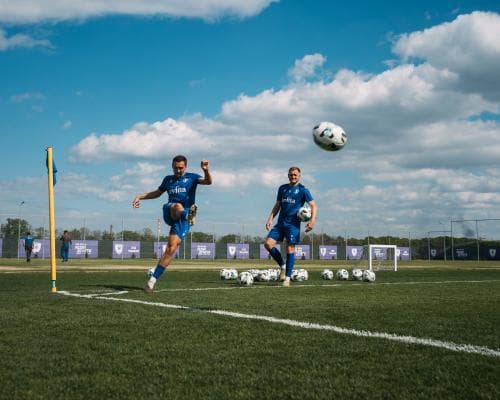
Picture this: a football club that turned professional in 2021, was playing in Ukraine's fourth division, and is now about to walk onto a pitch in Belgium to face Gent in the UEFA Conference League. That is not a Hollywood script. That is LNZ Cherkasy, and it is happening this week.
It is a story that would be remarkable in peacetime. In wartime, it is almost unbelievable. And for anyone who thinks about how capital — human, financial, or otherwise — can be built from nothing, this is a case study worth studying.
Let's start with the numbers. LNZ Cherkasy finished runners-up in the Ukrainian Premier League last season, behind only Shakhtar Donetsk, a club with a global brand and a war chest of talent exports. LNZ were top of the table at the halfway point. They did this while the country is at war, while the club's home city of Cherkasy sits in Ukraine's geographic heart, a stone's throw from the Dnipro River. The club's rise from obscurity to European competition in four years is, as the Guardian notes, a feat with "few modern-day parallels."
How did this happen? The mechanics are a mix of smart ownership, local pride, and a willingness to invest when others are retreating. Vasyl Kayuk, at 26 the youngest CEO in Ukrainian top-flight history, is the face of that ambition. He and the club's backers saw an opportunity: a region hungry for identity, a league disrupted by war, and a pathway to Europe that was suddenly more open. They poured capital into infrastructure — a smart training facility, a city-centre headquarters — and into a squad that could compete. The result is a club that now has a billboard outside town reading "Cherkasy, football centre of Ukraine" in purple.
For the wealthy and their advisors, this is not just a feel-good story. It is a reminder that extreme volatility creates extreme mispricings. When everyone else is fleeing a market, the smartest capital often moves in. Think of how private equity firms bought distressed assets in the aftermath of the 2008 financial crisis, or how venture capitalists funded startups during the dot-com bust. LNZ Cherkasy is the sports-world equivalent: a bet on a region, a culture, and a team that everyone else had written off.
The rarity angle is critical. There are very few clubs anywhere in the world that have gone from fourth-tier to European competition in four years. In a normal market, that trajectory would take a decade, if it happened at all. But war, disruption, and a shift in the competitive landscape compressed the timeline. For investors, that compression is where the alpha is.
What does this signal for markets and the wealthy? First, it underscores the value of local knowledge and conviction. The people behind LNZ Cherkasy saw something that global scouting networks and data models missed. Second, it highlights the growing importance of non-traditional assets — sports clubs, cultural institutions, regional infrastructure — as stores of value and identity. In a world where sovereign wealth funds and billionaires are buying everything from Premier League teams to pickleball leagues, LNZ Cherkasy represents the frontier: a small, high-upside bet with deep local roots.
Looking forward, the real test is sustainability. Can LNZ Cherkasy hold onto its talent, its momentum, and its financial footing? The club's European debut is a milestone, but it also brings new costs: travel, scouting, player wages, and the pressure to repeat. The smart money will watch how the club manages that transition. If they can build a lasting institution, this will be remembered as one of the great wealth-building stories in modern sports. If they flame out, it will still be a hell of a story.
For now, the message is clear: in markets, in war, in life, the biggest opportunities often come when everyone else is looking the other way. LNZ Cherkasy is living proof.