The Flamingo Revolution: Albania’s Pristine Coast and the Clash Between EU Ambitions and a Billion-Dollar Kushner Resort
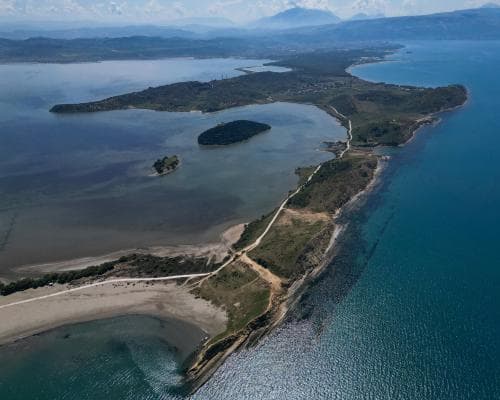
In the glittering firmament of luxury travel, the next great destination is often the one that has remained stubbornly unseen—a blank canvas of raw beauty, free from the gilded fingerprints of mass tourism. For the moment, that canvas is the southern coast of Albania, a stretch of virgin shoreline where the Ionian Sea meets limestone cliffs and the last wild flamingos still trace their ancient migratory arcs. But a battle is brewing that will determine whether this becomes a sanctuary for the ultra-wealthy or a cautionary tale of overreach. At its heart lies Sazan, Albania’s only island, and a €1.4 billion resort plan backed by Jared Kushner, Donald Trump’s son-in-law, that has triggered what locals are calling the “flamingo revolution.”
Sazan is not just any island. For decades, it served as a Cold War military outpost—a forbidden, windswept fortress whose very inaccessibility preserved its ecological integrity. Now, Kushner’s vision promises to transform it into a mega-resort: private villas, a marina for superyachts, and a slice of paradise for those who have already seen everywhere else. The development would also stretch along a pristine stretch of the Albanian Riviera, an area that environmentalists compare to the pre-development Amalfi Coast. For the ultra-wealthy traveler, this represents the ultimate prize: a genuinely undiscovered corner of Europe, just a short flight from the capitals of the continent, yet still raw and untamed. But the price of entry may be more than monetary.
The project has ignited an unprecedented political firestorm. Dutch MEP Tineke Strik, leading a European Parliament fact-finding mission, warned that Albania’s leadership is “playing with fire.” The stakes could not be higher: 92% of Albanians support EU membership, and Prime Minister Edi Rama has staked his legacy on joining the bloc by 2030. The Kushner-backed venture, with its promise of jobs and prestige, now threatens to derail that timeline. For the discerning traveler, this is a rare glimpse into the machinery of luxury development—a reminder that every new private island or secluded resort is born not just from architectural vision, but from a delicate negotiation between ambition, politics, and the land itself.
What makes this saga particularly compelling for the luxury set is the sheer audacity of the access it promises. Sazan is not merely an island; it is a narrative of exclusivity. During the Cold War, it was a forbidden zone; today, it is a blank slate for a developer who understands that the rarest luxury is the story of having been there first. The proposed resort would offer guests the kind of seclusion that money can rarely buy: a private island with a history of secrecy, surrounded by waters that have seen few swimmers and fewer yachts. Yet the opposition has been fierce, with protesters decrying the environmental destruction of protected dunes and nesting sites. The “flamingo revolution” is a reminder that even the most carefully curated paradise has a political ecology.
This clash signals a broader shift in luxury travel’s moral geography. The ultra-wealthy are no longer content with the Maldives or St. Barts; they crave the frontier—places where the infrastructure of indulgence is being invented from scratch. Albania, with its rugged coastline, ancient ruins, and bargain real estate, has become the latest frontier. But the battle over Sazan reveals the tension: can a destination welcome the ultra-rich without sacrificing the very wildness that attracted them? For now, the answer is uncertain. The EU’s warning may force Rama to choose between the Trump clan and Brussels, but for the traveler who values discretion and authenticity, the real question is whether the flamingos will survive the construction cranes.
Where the wealthy go next is often where the political winds are shifting. If Albania’s EU path is blocked, the resort may still rise—but it will do so in a country that has traded its collective future for a private playground. For the luxury traveler, that may be the ultimate irony: the most exclusive destination is not the one with the highest price tag, but the one that still belongs to the world. Until the flamingos leave, Sazan remains a place of possibility—a last wild island on the edge of Europe, waiting to see if it will be loved or bought.