The Odyssey, Reimagined: Richard E Grant’s Sun-Soaked Mediterranean Escape
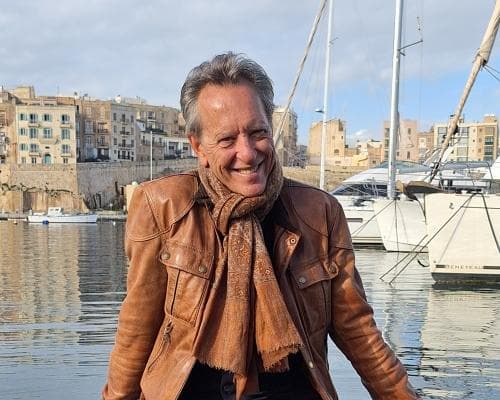
There is a moment in the first episode of *Richard E Grant’s Very Modern Odyssey* when the actor, resplendent in a leather jacket that seems to have been painted on, stops mid-stride in the middle of Valletta’s cobbled streets and gasps, “Wow. Look at that.” He is pointing at Malta’s Grand Harbour, a sweep of honeyed stone and sapphire water that has been welcoming sailors for millennia. It is the kind of view that makes you want to drop everything, book a flight, and stand very still for a very long time. Grant, of course, does not stand still. He is a man possessed, a human whirlwind in increasingly voluminous linen trousers, chasing the ghost of Odysseus across the Mediterranean with the glee of a child let loose in a sweetshop.
This is not your typical celebrity travelogue. There are no furrowed brows, no scholarly scowls, no attempts to settle the great Homeric debates that have recently consumed the internet (yes, we are all tired of the Christopher Nolan discourse). Instead, Grant embraces the glorious uncertainty of it all. “Essentially,” he says, grinning like a man who has just discovered the secret to eternal youth, “we’re dealing with an act of the imagination.” And so we are. The journey is loose-limbed, easygoing, and utterly charming—a reminder that the best travel is not about ticking off historical sites but about letting a place seep into your bones. It is the difference between a checklist and a love affair.
Malta, it turns out, is the perfect opening act. The island may not have featured on Odysseus’s actual itinerary, but it has something arguably better: a Michelin-starred restaurant serving butter-basted pigeon with sage and rosemary. Grant is beside himself. He licks the plate with the enthusiasm of a man who has just survived a siege, and we, the viewers, are right there with him. This is luxury travel at its most elemental—not about thread counts or private jets, but about the sheer, uncomplicated pleasure of a perfect meal in a beautiful place. The episode also takes us to the Phoenicia Hotel, a grand dame of Maltese hospitality, where Grant sips a lime mocktail and muses on the island’s colonial past. It is a moment of quiet reflection, a chance to catch your breath before the next leg of the journey.
What makes this series so compelling is its refusal to take itself too seriously. Grant is not here to lecture us on the finer points of Homeric scholarship. He is here to marvel, to laugh, to eat, and to occasionally get lost. And in doing so, he captures something essential about the way the ultra-wealthy travel today. It is not about ticking off the greatest hits—though a private yacht charter through the Aegean certainly helps—but about crafting a narrative of one’s own. The Odyssey, after all, is a story about a man trying to get home. But for the modern traveler, the journey itself is the destination. It is about the unexpected detour, the unplanned meal, the conversation with a stranger that changes how you see the world. Grant understands this instinctively. He is not tracing a route; he is following a feeling.
The series also signals a shift in luxury travel’s relationship with history. Gone are the days when the wealthy wanted a dry, factual account of a place’s past. Now, they want a story—one that is personal, evocative, and unafraid of ambiguity. The Phoenicia Hotel, with its colonial-era grandeur and modern amenities, is a perfect example of this trend. It is a place that wears its history lightly, offering guests the chance to step back in time without sacrificing the comforts of the present. And in an era where authenticity is the ultimate luxury, that is worth its weight in gold. Grant’s approach—equal parts reverence and irreverence—is a masterclass in how to engage with the past without being weighed down by it.
So where does the wealthy traveler go next? If *A Very Modern Odyssey* is any indication, the answer is: anywhere the imagination leads. It might be Malta, with its sun-drenched harbors and Michelin-starred surprises. It might be the coast of Turkey, where the ruins of ancient Troy still whisper to the wind. Or it might be somewhere entirely off the map, a place that exists only in the mind’s eye. The beauty of the odyssey, ancient or modern, is that it is never really about the destination. It is about the transformation that happens along the way. And if you can do it in a pair of voluminous linen trousers, all the better.
For those who prefer their travels with a side of myth, this series is essential viewing. But for those who simply want to be transported—to feel the sun on their face and the salt on their lips—it is something even rarer: a reminder that the greatest adventures are the ones we carry with us, long after we have returned home.