The Valley of the Fallen: A Journey into Spain's Mountain of Memory
There is a place in the Sierra de Guadarrama where the mountains themselves seem to hold their breath. Above Madrid, at the end of a winding road cut through pine and granite, a colossal cross rises 150 metres into the sky, its shadow falling over a basilica carved deep into the rock. This is the Valle de los Caídos, the Valley of the Fallen, and for decades it has been Spain's most uncomfortable monument—a mausoleum built by the Franco regime to 'reconcile' a nation that was still bleeding. But beneath its stone floors, in a crypt designed to be all but impenetrable, lie the bodies of tens of thousands of Republican victims, executed during the White Terror and secretly transferred from mass graves across the country. They were never meant to be found. They were never meant to be named.
For the luxury traveller, the Sierra de Guadarrama is usually a place of weekend escapes—of paradores with stone fireplaces, of hiking trails that open onto views of the capital's distant skyline, of Michelin-starred restaurants serving roast suckling pig in Segovia. But the valley's true pull is darker, and far more profound. Manuel Correa's new documentary, Atlas of Disappearance, reframes this landscape as a site of pilgrimage, not for saints, but for the disappeared. It follows three families who have spent years fighting to reclaim the remains of their loved ones from the monument's crypt—a fight that has turned the mountain itself into a character, its granite walls and iron gates becoming the last barrier between the dead and the living.
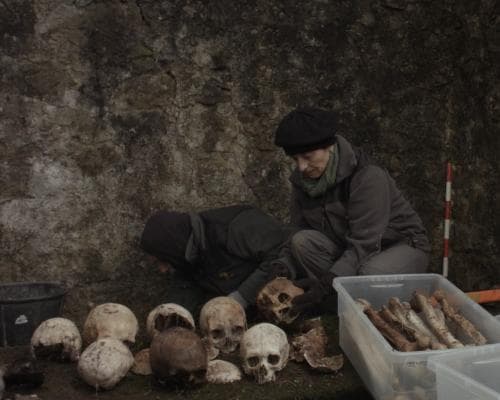
The film's most startling achievement is its forensic intimacy. Correa, who founded the Office of Documentary Research, brings together architects, geographers, and activists who use cutting-edge technology—digital mapping, 3D renderings, ground-penetrating radar—to pierce the fog of official secrecy. The same blueprints that were used to design the crypt for maximum inaccessibility are now being re-read as maps to liberation. The contrast is stark: the clinical precision of the data on screen, the cold lines of architectural drawings, and the raw, trembling voices of the relatives, who speak of their fathers and grandfathers as if they were still alive. One woman describes the last time she saw her grandfather's face, through the bars of a prison van. Another holds a faded photograph, worn soft at the edges, and says, 'I just want to give him a proper grave.'
This is not a story of luxury in any conventional sense, yet it speaks directly to the values of the new luxury traveller—the one who seeks meaning over mere beauty, who understands that the most profound journeys are often those that disturb. The Valle de los Caídos is not a hotel, not a resort, not a place of comfort. But it is a place of truth, and that, in an age of curated experiences and sanitised narratives, is the rarest commodity of all. The documentary reveals how the crypt was engineered as a political weapon, its labyrinthine corridors and reinforced doors designed to ensure that the bodies would languish, hidden, in perpetuity. The water that now seeps through its crevices, causing internal structural damage, is a fitting metaphor: nature itself is refusing to let the past stay buried.
For those who wish to visit, the valley is accessible by road, about an hour's drive from Madrid, and the contrast between the serene mountain landscape and the weight of the monument is almost unbearable. The basilica is still consecrated, and the Benedictine monks who once ran the site have been replaced by a foundation that manages the visitor experience. But there is no gift shop for the disappeared, no audio guide that tells their story. To understand them, one must watch Correa's film, or seek out the families' testimonies, or simply stand in the cold, echoing nave and imagine the thousands of unmarked coffins stacked in the crypt below. It is a pilgrimage that asks more than it gives, and that is precisely its power.
What Atlas of Disappearance signals about the future of travel is a shift away from the merely scenic and toward the reckoning. The ultra-wealthy have always collected places—private islands, ski chalets, desert camps—but the next frontier is the collection of stories, particularly those that have been suppressed. From the killing fields of Cambodia to the memorials of Rwanda, there is a growing appetite for journeys that confront rather than console. The Sierra de Guadarrama, long overshadowed by the glamour of the Costa del Sol and the cultural cachet of Barcelona, is emerging as a destination for this new kind of traveller: one who comes not to escape, but to remember. And as the water continues to seep, and the stone continues to crack, the valley offers a lesson that no five-star resort can: the most enduring monuments are not those built of marble, but those built of memory.