The Most Coveted Cleaner in the World: Bea Elton and the Art of Extreme Restoration
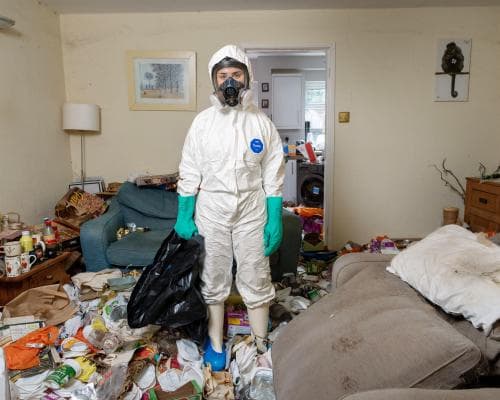
The first thing you notice is the smell. Not the sweet, cloying scent of bleach you might expect, but something deeper — a dense, mineral tang of decay, mixed with the faint, acrid ghost of old cooking oil. Bea Elton, zipped into a hazmat suit that crinkles with every step, doesn’t flinch. She’s seen worse. Much worse. “There might be a dead bird in the box room,” she says, her voice muffled through a respirator. “We think it has been there for a couple of years.” She finds it minutes later: a tiny, desiccated body, still covered in downy grey feathers, stuck to a sheet of kitchen paper. “She tried to look after it,” Elton says softly. “Poor thing.”
This is not a crime scene. It is a home. And Elton, 28, is the woman the ultra-wealthy call when their lives have quietly collapsed into hoarding, neglect, or simply the kind of profound exhaustion that turns a living room into a landfill. Her platform, CleanWithBea, has amassed over six million followers across YouTube, TikTok, and Instagram, who watch her wade through waist-deep garbage, scrape decades of grime from Victorian tiles, and excavate kitchens that have not seen a clean surface in years. The appeal is not schadenfreude. It is the opposite: a kind of aspirational relief. In a world that feels increasingly out of control, here is someone who can walk into absolute chaos and, over hours or days, coax it back into order. It is the ultimate luxury service — not a new handbag or a private jet, but the restoration of a functional, peaceful home.
Elton is careful with her language. “I refer to myself as a cleaner. I would never refer to myself as a cleanfluencer,” she says. But the slick, cinematic quality of her videos — the slow pans across mountains of trash, the dramatic reveal of a clean floor — suggests a craftsman’s eye. She approaches each job like a restoration expert. The tools are industrial: heavy-duty vacuums, enzyme cleaners, respirators rated for particulate matter. But the technique is almost surgical. She never shames the homeowner. She never films their face. She treats each object — even the dead bird — with a strange, quiet reverence. “No matter how bad, it is always fixable,” she says. That mantra, spoken through a mask, is the closest thing to a mission statement in her world.
The market for such services is growing, quietly, among those who can afford discretion. Elton’s clients are often referred by therapists, social workers, or family lawyers. They are people who have the resources to hire help but have been too ashamed to ask for it. The price is steep — a full deep clean can run into the thousands, depending on the severity — but it is not the cost that matters to her clientele. It is the anonymity. Elton never shares addresses, never shows identifying details, and never judges. “She could mean the homeowner,” she says, after discovering the dead bird. And she does. The baby bird is a metaphor for the person who tried to care for it, and then stopped being able to care for anything at all.
What Elton offers is not just a clean home. It is a reset button. For the ultra-wealthy, who can buy almost anything, the one thing that remains elusive is peace of mind. A house filled with unopened boxes, expired food, and forgotten pets is not a sign of poverty — it is a sign of a life that has become unmanageable. Elton steps into that breach with a mop and a mission. She is the anti-Marie Kondo: she does not ask if something sparks joy. She asks if it can be removed without causing more pain. Her followers, many of whom are not wealthy at all, watch her work as a form of therapy. But for the clients themselves, the experience is transformational. After she leaves, they often cry. Some start cleaning on their own. Others call her back for maintenance.
In the rarefied world of luxury services — where you can hire a personal chef, a yacht captain, a private art curator — the cleaner has always been invisible. Bea Elton has made the invisible visible. She has turned the most intimate, humiliating kind of domestic failure into a story of redemption. And she has done it without ever showing a face, without a single product placement, and without pretending that a clean floor can solve everything. It can’t. But it can be a start. As she packs up her gear and steps back into the overgrown garden, the house behind her is silent. The air smells different now. Lighter. The baby bird is gone. The garbage is gone. And somewhere inside, a person is sitting on a clean chair, staring at a clean wall, breathing for the first time in years. That, in the end, is the ultimate luxury.