The Original Bad Boy: How Anthony Bourdain's Myth Became the Ultimate Status Symbol
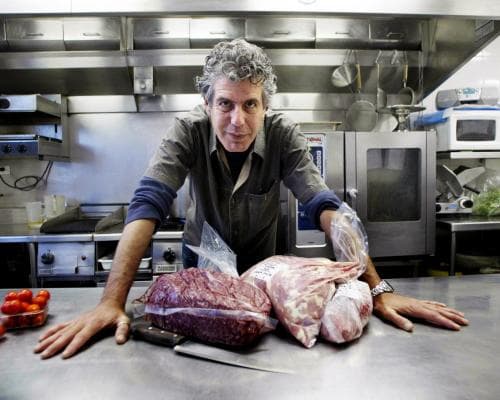
Every great fortune hides a scandal. Every iconic name carries a whisper of rebellion. But few have turned that rebellion into a legacy as intoxicating as Anthony Bourdain did. In the rarefied world of private chefs, Michelin stars, and members-only dining clubs, Bourdain's myth has become the ultimate currency—not of cash, but of credibility. He was the bad boy who made chaos look like a privilege, and in doing so, he gave the ultra-wealthy a new kind of status: the freedom to be unpolished, unapologetic, and utterly authentic. This is the story of how a dishwasher from Provincetown became the patron saint of the world's most exclusive tables.
Bourdain's origin story is not a tale of rags to riches, but of rebellion to reverence. At 19, he landed a job washing dishes in a Provincetown restaurant, a world he described as "a subculture whose centuries-old militaristic hierarchy and ethos of 'rum, buggery and the lash' make for a mix of unwavering order and nerve-shattering chaos." It was here, among the delinquents and drug-fueled line cooks, that he found his tribe. But it wasn't until 2000, with the publication of Kitchen Confidential, that he immortalized that world. The book didn't just expose the gritty underbelly of restaurant life; it created a prototype for a certain kind of masculinity—angry, performative, and magnetic. As the director of the new biopic Tony notes, it's about "a magical world where nothing can go wrong and a young man who's angry about it." That anger, however, was never real. It was a costume, a performance. Bourdain himself admitted, "I believe in vendetta," while his friend Eric Ripert "believes in karma." The myth was the message.
For the ultra-wealthy, Bourdain's allure lies not in the drugs or the chaos, but in the rarity of his authenticity. In a world where every experience is curated, every meal is plated, and every image is filtered, Bourdain offered something money can't buy: genuine grit. His kitchens were not marble countertops and sous-vide machines; they were sweaty, loud, and dangerous. Yet, that very rawness became a luxury. Today, the most exclusive dining experiences are not in Michelin-starred temples but in underground supper clubs and chef's tables where the chef tells stories of the old days. Bourdain's legacy is the ultimate flex—proof that you can have it all and still be a little bit dirty. It's the same appeal as a vintage Rolex with a scratched crystal or a first-edition Hemingway with coffee stains.
What does Bourdain's myth signal about the state of luxury? It signals a shift from polish to personality. The new status symbol isn't a private jet; it's a chef who can quote Bourdain while flipping a perfect omelet. It's the ability to say, "My body is not a temple, it's an amusement park," and actually mean it. The wealthy are no longer content with passive consumption; they want to be part of the story. They want the "live and let live" energy, but with a hint of danger. Bourdain's performative anger, his "vendetta" philosophy, gives them a script to play by—a way to be edgy without losing their seat at the table. As the journalist Diana Henry, who conducted one of Bourdain's best late-era interviews, put it, his book described "a world we didn't have an in on, and suddenly we did." That's the essence of luxury: access to something exclusive, and Bourdain provided the key.
As we look forward, Bourdain's myth will only grow more powerful. In an era of AI-generated content and influencer perfection, his raw, unfiltered voice becomes a rare commodity. The next generation of wealth won't just buy yachts; they'll buy experiences that feel dangerous, authentic, and unscripted. They'll seek out chefs who embody that "rum, buggery and the lash" ethos, even if it's just for a night. The biopic Tony will only cement his status, turning his early years into a pilgrimage for the curious and the bold. For those who can afford it, the ultimate luxury is not a product but a story—and Bourdain's is the one everyone wants to tell. So, raise a glass to the bad boy who taught us that the best things in life are a little bit messy, and that true wealth is the freedom to be yourself, even if that self is a myth.
The Experience
To channel Bourdain's spirit, book a private chef's table at a hidden speakeasy in Manhattan or Provincetown, where the kitchen still hums with his ghost. Ask for the chef's tasting menu—and don't be afraid to get your hands dirty.