The $500 Galette: Why the World’s Most Demanding Palates Are Falling for a Rustic Tart
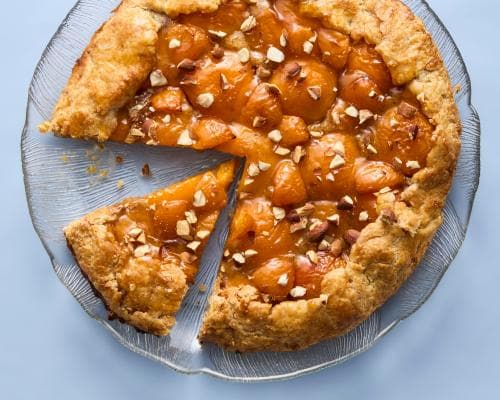
There is a quiet revolution happening in the kitchens of the world’s most discerning hosts. It isn’t a new caviar service or a gold-leafed truffle. It’s a humble, free-form tart that looks like a pebble—flat, round, and gloriously uneven. The galette, as it’s called, has become the secret handshake of those who know that true luxury isn’t about ornamentation; it’s about restraint. And this summer, the apricot galette is the only dessert that matters. Why? Because it’s impossible to fake. You can buy a perfect soufflé, but you cannot buy a galette that tastes like it was made by hands that understand the poetry of butter and fruit. That kind of authenticity is the new currency.
Let’s start with the name. It comes from the French word for pebble, and as culinary legend Elizabeth David noted, it takes many forms—all of them round and flat. For a Breton, it’s a buckwheat pancake. For a Parisian, it’s the frangipane-stuffed puff pastry of Epiphany. But for the English-speaking world, and for the ultra-wealthy, it’s the rustic, free-form tart that doesn’t need a tin. The credit for popularizing this incarnation goes to Alice Waters, whose daily seasonal galette at Chez Panisse in Berkeley became a pilgrimage for food lovers in the 1970s. She didn’t invent it, but she turned it into a symbol of a certain kind of California cool—the kind that says, “I have nothing to prove.” And that, of course, is the most expensive statement of all.
The galette is a masterclass in the art of the simple. The pastry is where the real money is. You have two choices: a rich shortcrust or a rough puff. The rough puff, championed by bakers like Louis Thompson and Nicole Rucker, is a study in layers—butter and flour folded into shattering crispness, reminiscent of the end of a croissant. Then there’s the cream cheese camp, led by Rose Levy Beranbaum, who swaps some butter for cream cheese and heavy cream, yielding a softer, slightly savory crust that whispers “I’ve been to pastry school.” And then there’s the Ottolenghi approach—a rich shortcrust with more fat than flour, which sounds decadent but is actually the ultimate test of a baker’s nerve. For my money, the flaky shortcrust is the way to go: it’s rich enough to hold its own against juicy apricots, but not so fussy that it requires a day of folding. It’s the difference between a bespoke suit and a couture gown—both are fine, but one you can wear to lunch.
But the galette isn’t just about technique; it’s about taste. The apricot, with its short, fleeting season and its balance of honeyed sweetness and sharp acidity, is the perfect canvas. It doesn’t need much—a little sugar, a splash of lemon, maybe a whisper of almond. The best versions let the fruit speak, and that’s the real luxury. In a world of over-engineered desserts, the galette is a statement of confidence. It says you don’t need a chocolate dome or a gold leaf to impress; you need a perfect apricot and a pastry that doesn’t leak. It’s the culinary equivalent of a vintage Rolex—understated, but unmistakably expensive.
For the ultra-wealthy, the galette signals a shift in taste. It’s not about the most expensive ingredient; it’s about the most honest one. It’s the dessert you serve after a long lunch in Provence, or as the finale to a dinner where the conversation was better than the wine. It’s the kind of thing that makes your guests lean in and ask, “Who made this?” And that’s the point. The galette is a status symbol for those who have nothing left to prove. It’s a quiet flex, a nod to the fact that you’ve traveled, you’ve read Elizabeth David, and you know that the best things in life are often the simplest.
So what’s next? This summer, the apricot galette will be on every serious host’s menu—from the Hamptons to the Côte d’Azur. But the true connoisseur will go further. They’ll source apricots from a single orchard in Armenia, or have their pastry chef develop a version with a touch of smoked butter. The galette is a canvas, and the wealthy are the artists. The only rule is that it must look effortless. Because in the world of the ultra-rich, effort is the one thing you never want to show. And that, my friends, is the ultimate luxury.
The Experience
Want to taste the galette that’s taking over private dining? Book a table at Chez Panisse for a seasonal slice, or commission a private pastry chef to craft a bespoke version for your next dinner party.