BP's North Sea Exit: The $10 Billion Question Mark Over Britain's Energy Future
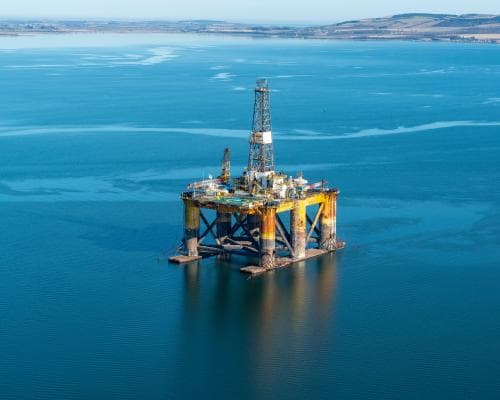
The North Sea has been Britain's oil engine for half a century, pumping out billions of barrels and lining the Treasury's pockets. Now, BP is quietly walking away. The FTSE 100 giant confirmed it will sell its entire North Sea business, a portfolio of platforms, pipelines, and fields that still produces enough to power millions of homes. But in the cold arithmetic of capital allocation, those assets no longer make the cut. Under new American CEO Meg O'Neill, BP is choosing to spend its billions elsewhere — and that decision speaks volumes about where the world's smartest energy money is heading.
This isn't a fire sale; it's a strategic repositioning. BP said the North Sea business will be "better positioned as part of another company," a polite way of saying the assets are worth more to someone else than to them. The company wants to funnel the heavy maintenance and decommissioning costs into higher-return projects — think deepwater Gulf of Mexico, or fast-growing renewables. The sale is part of a broader portfolio review launched by O'Neill, who took the helm in December after a chaotic stretch that saw three CEOs in three years. She's under pressure to restore investor confidence, and offloading a mature, high-cost basin is a classic first move.
The numbers tell the story. The North Sea is no longer the cash cow it once was. Production has fallen by roughly 40% over the past decade, and operating costs are among the highest in the world. Decommissioning liabilities alone are estimated at £20 billion ($25 billion) across the industry. For BP, the North Sea unit likely contributes less than 5% of global output — yet it demands outsized management attention and regulatory scrutiny. Selling it frees up capital and management bandwidth. But the bigger question is: who would buy it? Private equity firms and smaller independents like Harbour Energy or Ithaca Energy are the usual suspects. They can squeeze more value from mature fields, but they also carry higher risk profiles. And with the UK government's windfall tax on energy profits now at 38%, the economics are tightening.
This is where the politics get messy. The Labour government, led by Prime Minister Andy Burnham, has signalled openness to "more extraction" in the North Sea — but hasn't clarified if that means new licences or just expanded use of existing wells. Environmental campaigners are furious, and the tension is palpable. For BP, the sale is a way to sidestep that political quagmire. The company can claim it's still committed to the UK (it will retain its London headquarters and other operations) while quietly exiting the most controversial part of its business. It's a smart PR move, but it also underscores a deeper truth: the North Sea is no longer a growth story. It's a cash-out story.
For wealth builders, this is a signal worth reading carefully. When a supermajor like BP walks away from a basin, it's rarely just about one company's strategy. It's a verdict on the entire investment climate. The UK's energy sector has been battered by policy uncertainty, windfall taxes, and regulatory delays. The result? Capital is fleeing to more predictable jurisdictions — the US, the Middle East, or offshore Brazil. That's a sobering thought for anyone holding UK energy stocks or considering exposure to the region. But it's also an opportunity. The buyers who step in — likely private equity with a longer time horizon and lower cost base — could generate outsized returns if they can optimize operations and ride out the political noise.
Looking ahead, the BP sale is a test case. If it attracts a solid bidder at a fair price, it could trigger a wave of similar divestments from other majors like Shell or TotalEnergies. If it drags on or fetches a lowball offer, it will confirm that the North Sea is a stranded asset in slow decline. Either way, the message is clear: the era of easy North Sea money is over. The next chapter belongs to whoever can wring value from a mature basin while the world transitions to cleaner energy. For investors, the play is to watch who buys, at what price, and what they do next. That's where the smart capital is heading — and it's not back to Aberdeen.