The 100-Year Archive That Rewrote History: Inside the Schomburg Center’s Unrivaled Collection of Black Genius
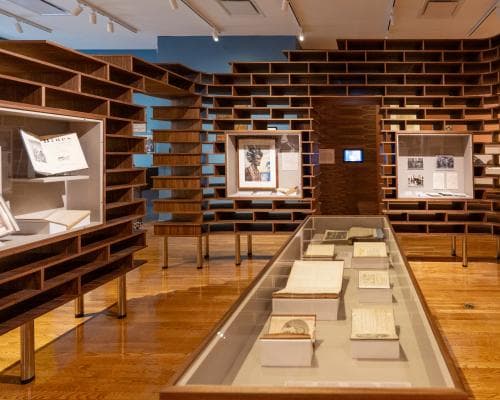
Imagine being told, as a boy, that your people had no history worth recording. That was the haunting lesson Arturo Alfonso Schomburg received from a teacher in late-19th-century Puerto Rico. He didn’t argue. He collected. For the next six decades, Schomburg quietly amassed a personal library of 4,600 pamphlets, artworks, and rare books—a defiant, physical rebuttal to that lie. Today, that collection has swelled into the Schomburg Center for Research in Black Culture, a New York Public Library research center holding more than 11 million items. And as America marks its 250th anniversary, the Schomburg celebrates its own centennial: 100 years of proving that the most exclusive archives are not just about ownership, but about rewriting the narrative of status itself.
For the ultra-wealthy, history is often a trophy—a first-edition Shakespeare, a signed Lincoln letter. But the Schomburg offers something rarer: a complete counter-narrative of the African diaspora, gathered with the precision of a connoisseur who saw value where others saw nothing. Schomburg arrived in New York at 17, later becoming a towering intellectual of the Harlem Renaissance. He wrote for *Negro World* and built a collection that curator Barrye Brown describes as “global, multilingual, and full of so many different experiences.” In 1926, the New York Public Library purchased his entire library. Now, as Harlem’s population became primarily Black in the 1920s, the center became a magnet for materials that documented both injustice and triumph. The current staff—mostly women of color—carry forward his mission. “Seeing value where others did not,” says Brown, “I’m very proud to continue that tradition during our centennial.”
What makes this archive a luxury asset is not its size but its texture. Here, you don’t just read history; you touch it. Last month, assistant curator Kassidi Jones handled an early manuscript of Maya Angelou’s *I Know Why the Caged Bird Sings*—handwritten on yellow paper, each sentence “ruminated over, passed over again and again until it sounded exactly the way she wanted.” The Schomburg now holds more than 840 boxes of Angelou’s manuscripts and personal items, including her Smith Corona typewriter. Alongside sits an 1861 copy of *Incidents in the Life of a Slave Girl* by Harriet Jacobs, a revolutionary work that appealed to white northern women to support abolition. These are not just documents; they are the raw material of genius, preserved in acid-free boxes and climate-controlled vaults. The craftsmanship is in the curation—the curators’ ability to see a lineage between a Harlem Renaissance sculptor like Augusta Savage and a contemporary poet, connecting dots that most museums miss.
For those who collect at the highest level, the Schomburg signals a shift in taste. The old guard bought paintings. The new guard buys context. A first-edition Angelou gains meaning when you know it was typed on that very machine, in that very room, with those yellow pages. The center’s centennial is a quiet rebuke to the idea that wealth is about accumulation. Real status is about stewardship—protecting stories that challenge the dominant narrative. The Schomburg is a reminder that the most valuable collections are not the ones that sit in a penthouse, but those that are shared with the world. It’s why the world’s most discerning philanthropists are turning their attention to cultural institutions that preserve marginalized histories. This is not charity; it’s legacy-making.
Looking forward, the Schomburg is poised to become an even more essential destination for the global elite. As America’s 250th anniversary sparks a reckoning with whose stories get told, the center stands as a model of what a private collection can become when it enters the public trust. For the collector who has everything, the next frontier is meaning. And the Schomburg—with its 11 million pieces of evidence that Black history is world history—offers the most exclusive membership of all: a front-row seat to the story of human resilience. One hundred years in, Schomburg’s vision is no longer a counter-narrative. It is the narrative.
The Experience
Arrange a private, curator-led tour of the Schomburg Center’s vaults and manuscript room—contact the New York Public Library’s development office for access to collections not open to the general public.
More in ENTERTAINMENT