The Pacific's New Wake: China's Missile Test as a Signal for Superyacht Routes
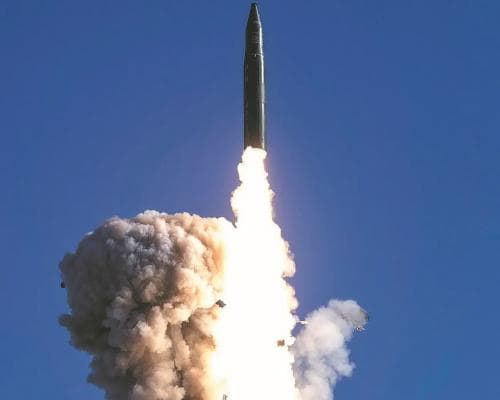
The phone call came at 3 a.m. from the captain of a 72-metre Feadship anchored near Palau. “We’ve been advised to reroute,” he said, his voice calm but clipped. The news had broken hours earlier: China’s dummy warhead had landed in a designated patch of the Pacific, a routine test, Beijing insisted, but one that sent a very different signal to the community of ultra-high-net-worth individuals who treat the world’s most remote waters as their private playground. For them, the Pacific is not a geopolitical chessboard. It is the last great horizon—a place where the only traffic jams involve manta rays and the only deadlines are sunset cocktails. But on that Monday morning, the horizon suddenly felt narrower.
This missile test, conducted by China’s military as part of its annual training schedule, was described by state media as a “routine arrangement” with prior notification to relevant countries. Yet Australia’s foreign affairs minister, Penny Wong, called it “lacking in the transparency and reassurance as to intent that the region expects.” For the yachting elite, that language translates directly into insurance premiums, itinerary planning, and the delicate calculus of where to drop anchor when the world’s second-largest economy is flexing its reach. The designated waters—precise coordinates known only to a few—are now a mental no-go zone for anyone who values both discretion and safety.
Consider the geography. The Pacific’s most coveted cruising grounds—French Polynesia, the Solomon Islands, Fiji, the Marshall Islands—are scattered across a vast blue expanse that suddenly feels less like a sanctuary and more like a shooting gallery. A dummy warhead today; what tomorrow? The superyacht industry, which has long marketed the South Pacific as the ultimate escape from the noise of civilisation, now must contend with the fact that civilisation’s noise has a longer reach than ever. The vessels that glide through these waters are not just toys; they are floating statements of sovereignty, each one a private nation with a helipad. And when real nations start testing their boundaries, the statement becomes more complicated.
For collectors and charter brokers, the immediate effect is a quiet recalibration. Routes that once hugged the equator are being pushed south or east, adding days to passages and forcing owners to reconsider the trade-off between remoteness and risk. The market for expedition yachts—those hardy, ice-class explorers capable of venturing to Antarctica or the Aleutians—has seen a subtle uptick in inquiries. “People want to be able to go where the headlines don’t follow,” one Monaco-based broker told me, speaking on condition of anonymity. “The Pacific was supposed to be that place. Now it’s part of the story.”
What this signals about luxury taste is a shift from pure escapism to informed, strategic mobility. The ultra-wealthy have always valued access—to private islands, hidden coves, exclusive anchorages. But access now requires a new kind of intelligence: geopolitical literacy. The owner who once chose a route based solely on prevailing winds and the nearest Nobu outpost now asks about territorial waters, military exercise zones, and the diplomatic posture of island nations. It is a subtle but profound evolution, turning the yacht from a symbol of leisure into a tool of acute situational awareness.
Looking ahead, the Pacific will not lose its allure. The water is still impossibly blue, the sunsets still undefeated. But the wake of that missile test will ripple through every charter contract and insurance binder for years to come. The most discerning owners will adapt—not by retreating, but by navigating with a sharper eye on the horizon. In a world where the ultra-wealthy can go anywhere, the true luxury is knowing where not to go, and why.