The Rolling Stones’ Next Curated Chapter: Inside the Making of ‘Foreign Tongues’
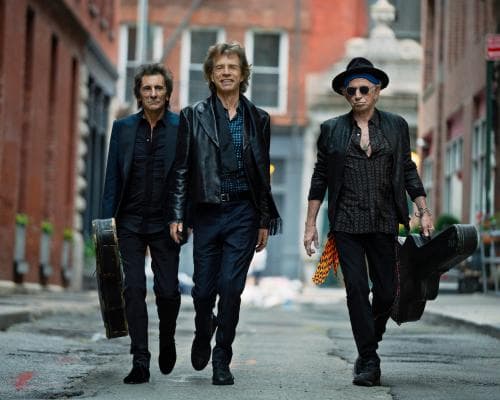
A drum kit sits silent. The studio air is thick with memory. For the Rolling Stones, the death of Charlie Watts in 2021 wasn’t just a loss — it was a seismic shift in the band’s gravitational field. Yet here they are, Mick, Keith, and Ronnie, back in the room, tracking a new album. And now, for the first time, they’re letting us listen in. Not through a concert stream or a glossy documentary, but through a podcast. A podcast that feels less like promotion and more like a private evening in the control room.
‘Speaking in Tongues’ is the official Rolling Stones podcast, hosted by the impossibly cool Norah Jones — a woman who knows a thing or two about quiet authority. Released across six weekly episodes, each chapter charts the making of the band’s forthcoming studio album, ‘Foreign Tongues’. Think of it as a sonic blueprint, a collector’s item in audio form. For those who already own the first pressings, the tour lithographs, the signed setlists, this is the next tier of Stones memorabilia: the story behind the story, told in their own weathered voices.
The first episode is a masterclass in restraint and reverence. It opens not with a riff, but with a silence. A pause. Then, slowly, the conversation turns to how the band reconvened after Watts’s passing. There’s no melodrama, no forced sentiment — just three men who have spent six decades making music together, figuring out how to do it without their anchor. It’s a tribute that never says ‘tribute’. It’s a recording session that becomes a séance. The production is polished, yes — this is a PR exercise for one of the world’s biggest acts, as the source notes — but it’s a PR exercise executed with the kind of taste you’d expect from a house that has been curating its own mythology since 1962.
But what makes this podcast genuinely compelling for the luxury audience is its rarity. The Rolling Stones don’t do ‘behind the scenes’. They do ‘on stage’. They do ‘in the press’. But a podcast — a serialized, chaptered, intimate audio diary — is a new medium for them. It’s the equivalent of a private dinner with the band, where the wine is poured and the stories spill out between takes. For collectors, this is the ultimate ephemera: a document of creation that will never be repeated. The episodes are released weekly, which only heightens the sense of anticipation. This is not a binge. This is a ritual.
In the world of high-end collectibles, provenance is everything. A guitar played by Keith Richards at Altamont is worth more than one that sat in a shop. A first-edition ‘Exile on Main St.’ with a misprint is worth more than a clean copy. This podcast is provenance for the digital age: the recorded evidence of how ‘Foreign Tongues’ came to be, in the band’s own words, with the ghost of Charlie Watts hovering over every track. For the ultra-wealthy listener who already has everything — the cars, the houses, the watches — this is the kind of intangible asset that money can’t easily buy, but that a good Wi-Fi signal and a pair of Focal Utopia headphones can deliver.
What does this say about luxury taste in 2025? It says that the most coveted experiences are no longer just objects. They are stories. They are access. They are the feeling of being let into a room where history is being made. The Rolling Stones have always understood that their brand is not just music — it’s a lifestyle, a lineage, a badge of rebellion worn by people who can afford anything but choose to wear leather. ‘Speaking in Tongues’ is the latest iteration of that ethos. It’s a podcast, yes. But it’s also a key. To a vault. To a moment. To a band that refuses to stop moving forward, even as they carry the weight of their past.
As the final episode airs, expect the chatter to shift from ‘did you hear that riff?’ to ‘did you hear that story?’. Collectors will archive these episodes, rip them to FLAC, store them on encrypted drives alongside their first-gen iPhone and their signed copy of ‘Life’. Because in the end, the Rolling Stones don’t just make music. They make artifacts. And this podcast is the newest, most intimate artifact in a very long, very expensive, very beautiful collection.