The New Chip Chessboard: Why the Ultra-Wealthy Are Watching Beijing's Silicon Gambit
Last week, the world's most valuable companies lost a combined trillion dollars in market cap before breakfast. The trigger wasn't a war or a pandemic—it was a memory chip maker from Shanghai and a rumor about a laser. For anyone with serious money in tech, it felt like the ground shifted. And it did. The AI economy has always been a black box, but last week's chaos pulled back the curtain, revealing a fragile, opaque system where fortunes are made and unmade by a single factory in a distant province.
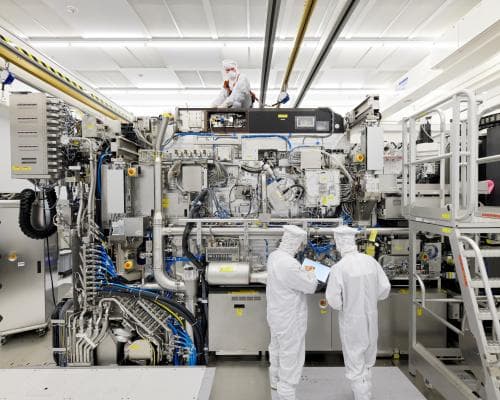
Let's set the scene. On Monday, CXMT—China's largest DRAM producer—listed on the Shanghai Stock Exchange and promptly tripled in value, then quadrupled, then quintupled. By close, it was worth 3.3 trillion yuan, roughly £365 billion. That's a company with no global brand recognition, no Western market share, and no GPUs to its name, suddenly worth more than most of the West's blue-chip tech giants. The same day, reports emerged that China had developed its own deep-ultraviolet lithography tools—the ultra-precise lasers that etch the world's thinnest lines into silicon wafers, a domain where the Dutch firm ASML had held a near-total monopoly for decades. The market's response was swift and brutal. South Korea's Kospi plunged 11.5% on Tuesday and another 6% on Wednesday, dragged down by SK Hynix and Samsung Electronics. The Nasdaq fell into correction territory on Thursday, and Nvidia—the undisputed king of AI chips—lost over 5% in a single day, ceding its crown as the world's most valuable company to Apple. Then, on Friday, a rebound: Amazon and Microsoft's strong earnings calmed the herd, and the Kospi jumped nearly 20%. But the damage was done. October 2008's ghost was invoked in the financial press.
Now, let's talk about what this actually means for the discerning investor. CXMT makes DRAM—dynamic random-access memory—the workhorse chips that store data for AI systems to crunch. They are not GPUs, the 'brains' of AI. So CXMT is not a direct threat to Nvidia; it's a complementary player in a global shortage that analysts expect to last until 2030. The real threat—and the real story—is the lithography news. If China can now produce its own deep-UV lithography tools, it could, in theory, manufacture GPUs that rival Nvidia's. That would upend the entire AI supply chain, which currently runs through Taiwan and South Korea. But here's the nuance: the reports are unconfirmed, and even if true, China's tools are likely years behind ASML's cutting-edge EUV machines. The sell-off, as Forrester analyst Alvin Nguyen put it, was an 'overreaction.' The global memory chip shortage is real, and SK Hynix and Micron can't produce enough to meet demand. So while the headlines screamed 'China's chip breakthrough,' the reality is more measured: a new player in a hungry market, not a coup.
For the ultra-wealthy, this week was a masterclass in how the AI economy really works—and how little we truly know. The opacity is the point. Investors are flying blind, reacting to headlines and whispers, not fundamentals. That's both a risk and an opportunity. The smart money is now asking: who are the real gatekeepers? ASML, with its lithography monopoly, is the ultimate toll booth. Nvidia, with its GPU dominance, is the only player actually making a profit on AI. And now, the memory chip makers are the new bottleneck. The lesson is not to panic-sell but to understand the layers. Wealth is no longer just about owning the right stocks; it's about owning the right infrastructure—the picks and shovels of the AI gold rush.
Looking ahead, this week's volatility is a preview of a more volatile decade. The AI economy is young, and its supply chains are brittle. China's advances, whether real or exaggerated, signal a multipolar future where no single company—or country—holds all the keys. For the discerning collector of assets, this means diversification beyond the usual tech giants. Think: private equity in semiconductor fabs, stakes in ASML's suppliers, or even physical gold as a hedge against market whiplash. The next great wealth shift will not be linear. It will be jagged, unpredictable, and full of moments like last week. The question is not whether you can predict the next crash, but whether you can afford to be wrong. For those with the means, the answer is to stay liquid, stay informed, and never underestimate the power of a laser in the wrong hands.
The Experience
For a private briefing on navigating AI-driven market shifts, consider a bespoke session with a global macro strategist at your family office. Alternatively, join an exclusive investor tour of semiconductor hubs in Taiwan and South Korea, where you'll meet the executives behind the chips.