War Economy Watch: The Chancellor's Price-Gouging Warning Signals a New Era of Energy-Driven State Intervention
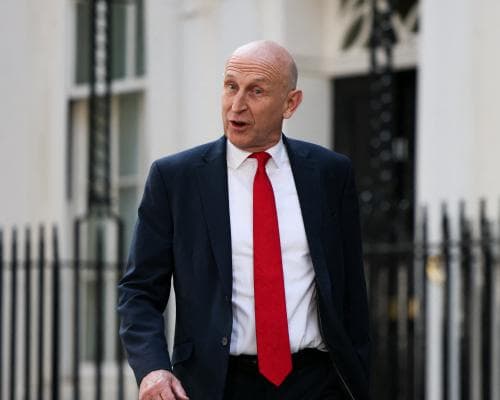
The chancellor's weekend column was a masterclass in political signaling, a carefully calibrated threat that landed like a warning shot across the bows of Britain's supermarket and fuel giants. John Healey's message was simple: the state is watching, and it will not tolerate war-driven profiteering at the pump or the till. But beneath the rhetoric lies a more profound shift—the recognition that energy shocks, once viewed as temporary market disruptions, are now structural features of a world where conflict is a constant.
This is not just about price caps or windfall taxes. It's about the reassertion of state power over the energy economy, a trend that will define the next decade. Healey's words echo a broader global movement: governments from Berlin to Washington are no longer content to let markets alone determine the cost of survival. The Iran war, now months old, has driven inflation forecasts above 4% for next year, according to the Bank of England, which held rates steady last week in a tacit admission that the crisis is beyond monetary control.
The timing is deliberate. With the cost of living crisis reignited, Healey is positioning Labour as the protector of the public against corporate excess. His reference to "no significant evidence" of price gouging is a politician's hedge, but the threat of intervention is real. Earlier this year, Rachel Reeves floated the idea of food price caps, only to retreat after a backlash from supermarket chiefs like M&S's Stuart Machin, who called the plan "completely preposterous." Now, Healey is reviving that specter with a sharper edge: not a cap, but a watchful eye.
For investors, this is a seismic signal. The days of passive energy exposure are over. The intersection of geopolitics, inflation, and state intervention is creating a new risk premium across oil, gas, and food supply chains. But it's also opening opportunities in resilience technologies—from grid-scale battery storage to vertical farming and AI-driven supply chain optimization. The chancellor's warning is, in effect, a call to innovate, to build systems that can withstand both war and regulation.
The competitive landscape is shifting. British retailers, already squeezed by the energy crisis, now face the prospect of state-imposed margins. This could accelerate consolidation, with smaller players unable to absorb regulatory shocks. Meanwhile, energy producers are watching closely: if the state can cap food prices, it can cap fuel prices, and that changes the calculus for every oil major and renewable developer. The clean energy transition, ironically, becomes a hedge against geopolitical volatility—a way to escape the pump, the till, and the chancellor's gaze.
What Healey is really signaling is a new social contract: in times of conflict, the market will be subordinated to the state's duty to protect citizens. This is not socialism; it's pragmatic survivalism. For the deep-tech world, it means that innovation must align with national resilience. Startups working on energy independence, local food production, and decentralized power grids will find a more receptive policy environment than ever before.
As the war grinds on, expect more of this. The chancellor's warning is not a one-off; it's the opening salvo in a prolonged campaign to manage the economic fallout of a multi-front conflict. The question is no longer whether governments will intervene, but how far they will go. For the billionaires and elite capital that fuel our innovation economy, the message is clear: the next great fortunes will be built not by exploiting crises, but by solving them. The state is watching, and so is the market.