The Divine Playhouse: A Sacred Reckoning in Sydney’s Cultural Quarter
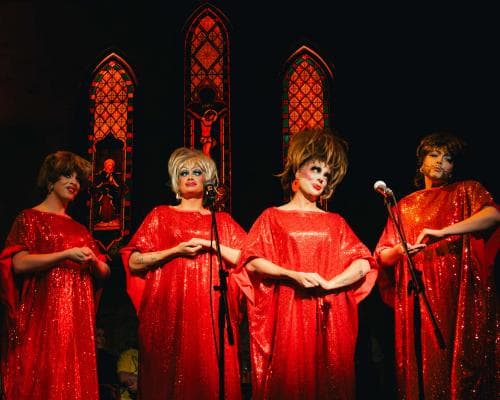
The best parties always happen in places that weren’t meant for them. A former church in Sydney’s central business district, its sandstone walls still warm from a century and a half of whispered prayers and children’s chalk, was transformed last week into something entirely new: the Divine Playhouse, a safe and inclusive space for queer artists and audiences. For exactly one night, it was glorious. Then the landlord sent a notice of breach, citing “offensive trade.” The Instagram accounts vanished. The weekend events were cancelled. And a $100,000 government arts grant suddenly felt like a lightning rod.
This is not a story about a nightclub. It is a story about what happens when a building’s history refuses to stay buried—and when the people who own the walls decide they own the soul, too. The Divine Playhouse occupies a deconsecrated church that stopped being a place of worship in the 1930s. Since then, it has been a school, a theatre, and, briefly, a venue called Unholy Playhouse—a name its organisers changed at the last minute after complaints from the Christian community. Even that concession wasn’t enough. On opening night, about 70 supporters of the Catholic men’s group Fit for the Kingdom and the Christian brotherhood Prodigal Sons rallied outside, demanding the NSW government withdraw its grant. The next day, the landlord—who had previously seemed amenable—sent a two-day cease-and-desist.
The craftsmanship here is not in wood or stone, but in the careful, fragile architecture of community. The venue’s organiser, Heaps Gay Events, had spent months turning the space into a “safe and inclusive space for artists to work and connect.” The irony is thick: a building designed for sanctuary was being used for sanctuary again, just of a different kind. The notice of breach, seen by Guardian Australia, claims the trade carried on by Heaps Gay “insulted and mocked the sincerely held religious beliefs of millions of Christian Australians.” But the building was deconsecrated nine decades ago. The pews are long gone. The only altar now is a stage.
For collectors of rare experiences—and let’s be honest, the ultra-wealthy collect experiences as voraciously as they collect cars or wine—the Divine Playhouse represents a new kind of trophy: the contested cultural asset. Think of it as the real-estate equivalent of a Rothko that sparks a lawsuit, or a vineyard whose terroir is fought over in court. The value is not in the square footage, but in the story. And this story has everything: a historic building, a moral flashpoint, a government grant, and a landlord caught between faith and finance. The asking price? Nothing is for sale. But the cultural capital is immense.
What does this signal about luxury taste in 2025? That the most covetable address in Sydney is no longer a harbourside penthouse or a Palm Beach retreat. It is a deconsecrated church on a quiet CBD street, where the neighbours are angels and activists, and where the lease comes with a side of existential drama. The ultra-wealthy have long understood that scarcity drives desire. But the Divine Playhouse offers a new kind of scarcity: the space that cannot be bought, only borrowed, and only for as long as the landlord’s conscience allows.
As I write this, the venue’s future remains uncertain. The Instagram accounts are down. The grant hangs in the balance. But the building is still there, its sandstone warm in the afternoon sun, waiting. The Divine Playhouse may not survive this month. But it has already achieved what the best luxury objects do: it has made us talk about what we value, and why. For a certain kind of collector, that is worth more than any price tag.