The Semi-Final That Decides More Than a Trophy
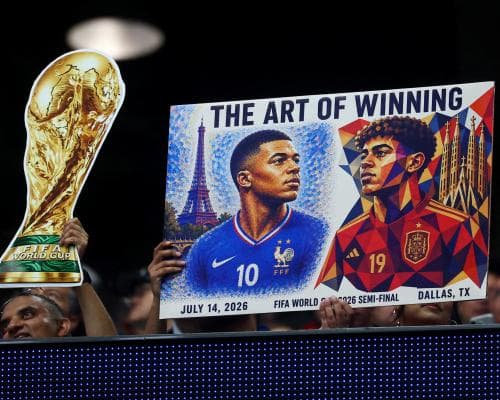
Imagine the scene: a stadium humming with the kind of tension that only a World Cup semi-final can generate. The air smells of fresh-cut grass, expensive cologne, and the quiet desperation of billionaires who have flown in on private jets to see history made. This is not just a football match. It is a living gallery of the world’s most refined athletic craftsmanship—a contest between two teams that have, as one astute observer put it, exerted “near total control of every game they’ve played.”
For the connoisseur of elite performance, France and Spain represent two distinct philosophies of excellence. Spain, with the prodigious Lamine Yamal and the metronomic Rodri, embodies precision and patience—a possession-based artistry that feels like watching a master watchmaker assemble a chronograph. France, meanwhile, is raw power and flair, a team that delights even the most jaded follower of the beautiful game. As one reader noted, “No other team has delighted me as much as this French team.” When a side boasting Yamal and Rodri is considered an underdog, you know you are witnessing something extraordinary.
The craftsmanship on display is staggering. Consider Lucas Digne, who was “unjustly ridden out of town on a rail” by a former manager, yet now starts a World Cup semi-final at 32. His ability to deliver a “pinpoint cross into the box whenever he wants” is not luck—it is the result of years of obsessive refinement, the kind of dedication that separates a bespoke suit from off-the-rack. These players are not athletes; they are artisans, honing their craft in the crucible of the world’s most demanding tournament.
For collectors of rare experiences, this match is a blue-chip asset. The semi-final winners, as one keen observer pointed out, have historically gone on to claim the ultimate prize—the World Cup or European Championship. “The winners of men’s and women’s World Cups and Euros always come from the first semi-final,” wrote David Wall, citing an extra day of recovery as the subtle advantage. In the world of luxury, where every detail matters, that extra day is the difference between a good vintage and a legendary one.
The market for such moments is insatiable. Tickets to this semi-final are among the most coveted in sport, with secondary-market prices rivaling those of a rare Patek Philippe or a first-edition Ferrari. The ultra-wealthy do not just watch; they curate. They track the form lines, the tactical nuances, the psychological edges. They know that England and Argentina, by contrast, have been “taken to hell and back” in earlier rounds. This semi-final is the purest expression of dominance—a clean, unblemished path to glory.
What does this say about luxury taste today? It signals a shift from passive consumption to active connoisseurship. The wealthy no longer merely own things; they invest in narratives. They want to be part of the story, to say they were in the room when France and Spain rewrote the script. This match is not about who scores the winning goal; it is about who curates the winning legacy. As one observer mused, “It is difficult to envision either of Argentina or England beating Spain or France based on current form.” The implication is clear: this semi-final is the real final.
Looking forward, the winners of tonight’s clash will carry an aura that no amount of money can buy. They will enter the final not as contenders, but as custodians of a standard that others can only aspire to. For the ultra-wealthy, that is the ultimate prize: not the trophy itself, but the knowledge that they backed the right horse, the right team, the right moment in history. In the end, this is not about football. It is about the art of choosing wisely—and the quiet satisfaction of knowing you saw it first.