The $2,000 Dress That Might Not Fit: How GLP-1s Are Rewriting Bridal Couture
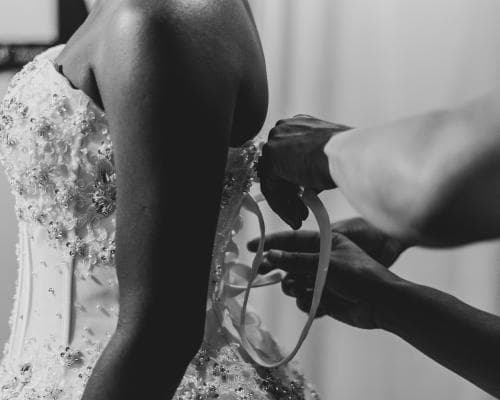
The first sign of trouble arrives in the fitting room. A bride steps into a gown of French lace and hand-sewn pearls—a dress that took six months to source, pattern, and stitch. She looks radiant. Then she turns to the sales assistant and says, almost casually: “I’m on semaglutide. I’ll probably drop two sizes before the wedding.”
That sentence is now the most expensive thing a bride can say. In bridal salons from Manhattan to Milan, a new question is being whispered behind silk-draped curtains: “How much weight are you planning to lose—really?” The answer, increasingly, is a lot. According to a recent survey by the wedding planning platform Zola, 10% of engaged couples are now using GLP-1 drugs like Ozempic and Wegovy. Nearly half of all couples say these medications have made them feel pressured to “look a certain way” on their big day. And for the designers, ateliers, and alteration specialists who build the dresses, that pressure has become a logistical and financial earthquake.
The numbers tell the story. Kelly Cook, CEO of David’s Bridal—which moves roughly two million units a year across its 200 US stores—noticed a “significant shift” late last year. Brides were coming in earlier than ever, trying on gowns with anxious eyes, asking about alterations, but hesitating to buy. The traditional 18-month planning timeline had collapsed. Women were waiting until month 12 or even month 10 to commit. In response, David’s Bridal launched a “fit guarantee”: if the dress doesn’t fit by the wedding day, they swap it for a new one, no questions asked. For a company selling gowns from $500 to $2,000, that’s a calculated risk. For a small atelier crafting one-of-a-kind couture pieces, it’s a recipe for bankruptcy.
So the boutique houses are fighting back—with paper. Jarithza Carlson, the Atlanta-based domestic production director for the luxury bridal house Anne Barge, has rewritten her contracts for the Ozempic era. The new language is direct: if a bride plans to lose more than three dress sizes, she must inform the team before the gown is even manufactured. If the dress ends up too big, she may be required to purchase an entirely new one. Sales staff are now trained to raise the topic in the very first conversation—not to be rude, but to protect a business that cannot afford to scrap a $5,000 hand-beaded bodice. “We’re trying to catch potential issues before gowns are even made,” Carlson explains.
And if the gown is already made? That’s where the real artistry—and expense—kicks in. Melissa Lynn Oddo, a master alterations specialist who works with high-end bridal clients, says taking a dress down more than two sizes is not a simple nip and tuck. “What we’re really doing is creating a custom piece, taking apart every single seam and proportioning it down,” she says. The cost for such a transformation easily reaches $1,500—often more than the dress itself. For a bride who has already spent $8,000 on her gown, that’s an unwelcome surprise. For the atelier, it’s a reminder that the dream of a perfect fit is now a moving target.
This shift signals something deeper about wealth and taste in the GLP-1 age. The ultra-wealthy have always commissioned custom garments. But now, the very definition of “custom” is being rewritten. A dress is no longer a fixed object; it is a fluid promise, one that may need to be remade twice before the first dance. The old status symbol was a dress that fit like a glove. The new status symbol is the flexibility—and the bank account—to afford the alterations when the glove no longer fits. For the truly discerning bride, the real luxury is not the dress itself, but the guarantee that someone will rebuild it, seam by seam, as her body changes.
Looking ahead, the bridal industry is bracing for a permanent transformation. Designers like Rebecca Schoneveld, who runs a size-inclusive house, note that brides have always said they plan to lose weight. “In the past, that would not happen,” she says. “Or they would lose an inch or three.” Now, the weight loss is dramatic—and predictable. The smartest houses are already planning for a future where every gown is built with a second life in mind: modular seams, adjustable corsetry, and alteration allowances baked into the price. The wedding dress of tomorrow may not be a single garment but a system—one that adapts as the bride does. For the woman who wants everything to be perfect, and who has the resources to make it so, that is the ultimate expression of control. And in the age of the miracle drug, control is the rarest luxury of all.
The Experience
To secure a gown that evolves with you, book a private consultation with a master tailor who specializes in GLP-1-ready designs—where your dress is guaranteed to fit, no matter which version of you walks down the aisle.