The Strait of Hormuz: When a Yachting Paradise Becomes a Naval Chessboard
Imagine waking up on the aft deck of your 80-meter Feadship, coffee in hand, as the first light catches the pale limestone cliffs of Iran’s Greater Tunb Island. The sea is glass. The air smells of salt and jasmine. Then, a Hellfire missile slices into the smokestack of an unladen oil tanker a mile off your starboard bow. This is not a scene from a Tom Clancy novel. It is the new reality of the Strait of Hormuz, where the world’s most exclusive maritime playground has become a live-fire range.
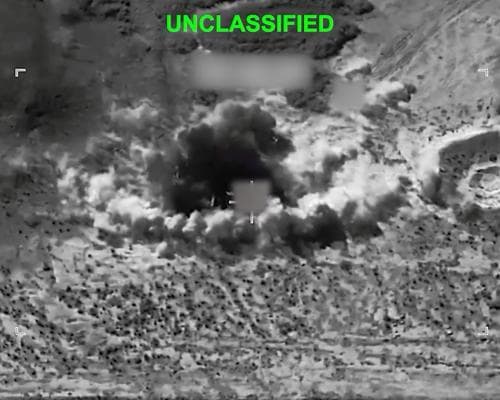
For the past five days, the US military has conducted strikes against Iranian coastal defenses, missile sites, and naval facilities—most notably in Bandar Abbas, home to the Iranian navy and Revolutionary Guards’ key installations. On Thursday morning, US Central Command confirmed it had disabled an oil tanker attempting to reach Kharg Island after multiple warnings were ignored. The message is clear: the blockade is real, and no vessel—commercial or private—is immune. For the ultra-wealthy whose summer itineraries include a leisurely transit from Dubai to the Maldives, this stretch of water has transformed from a scenic shortcut into a high-stakes corridor.
The strategic significance of Kharg Island cannot be overstated. It handles roughly 90 percent of Iran’s crude oil exports, making it the country’s economic jugular. But for the yachting set, the island is also a notorious navigational hazard—shallow waters, heavy tanker traffic, and now, a no-go zone patrolled by warships armed with precision munitions. The US strikes on Greater Tunb Island targeted cruise missile storage and launch sites, while overnight raids reached as far north as Tehran itself—the first time the capital has been hit in this campaign. State media reported air defenses engaging targets over the city, a sound that echoes not just in military bunkers but in the hushed salons of superyachts anchored in Dubai Marina.
This is not merely a geopolitical update. It is a recalibration of risk for the billionaires who treat the Persian Gulf as their private lake. The region’s allure has always been its blend of ancient mystique and hyper-modern luxury—the Burj Al Arab, the pearl-diving heritage of Qatar, the untouched beaches of Oman’s Musandam Peninsula. But when the US Navy fires Hellfire missiles into a tanker’s smokestack, the message to any captain on the VHF is unambiguous: deviate from the transit corridor at your own peril. The cost of a single 50-meter motoryacht can exceed $50 million; the cost of a miscalculated passage could be far higher.
Collectors and charter clients are already asking the quiet question: is the Gulf still worth it? For the past decade, the region has been a favored wintering ground for vessels like the 95-meter Dilbar or the 88-meter Oceanco Jubilee. But insurance premiums for Gulf transits have reportedly spiked by 300 percent in the past week. Lloyd’s of London has quietly reclassified the Strait of Hormuz as a “high-risk zone,” a designation that typically triggers force majeure clauses in charter contracts. The smart money is repositioning to the Red Sea or the Seychelles. The smarter money is watching the wind patterns and waiting.
What this crisis reveals is a deeper truth about luxury in the 21st century: the world’s most beautiful places are often the world’s most contested. The same waters that host a $200,000-a-week charter for a tech billionaire also host the Fifth Fleet. The same islands that offer secluded anchorages for the discerning few also bristle with missile batteries. The ultra-wealthy have always navigated geopolitical turbulence—they simply do it from a climate-controlled bridge, with a chilled Sancerre in hand and a security consultant on speed dial.
Looking ahead, the Strait of Hormuz will not be closed forever. But the memory of this week will linger. For those who collect experiences as carefully as they collect art, this is a moment to study the charts—not just the nautical ones, but the geopolitical ones. The next great yachting frontier may not be a new coastline. It may be the wisdom to know when to sail on, and when to stay put.