The 1-Gigawatt Mirage: Inside the Scottish AI Datacentre That Promised the Impossible
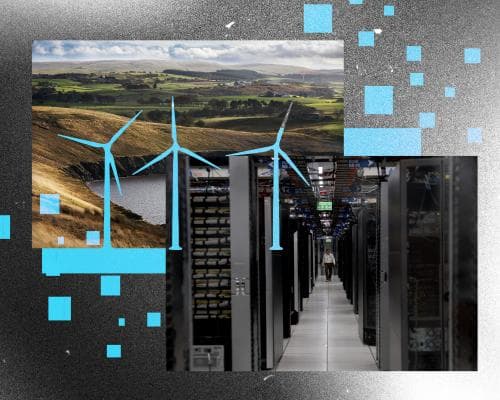
Imagine writing a cheque for £8.2 billion on a promise that the lights won’t work. That, in essence, is the story unfolding in rural Lanarkshire, where a landmark AI datacentre complex—billed as Britain’s answer to the global AI race—has quietly admitted it cannot power itself. For the ultra-wealthy, this isn’t just a Scottish planning saga. It is a bellwether. A reminder that the most expensive bet of the century—artificial intelligence—rests on a foundation of silicon, copper, and, above all, electricity. And right now, that foundation is cracking.
The numbers were always meant to dazzle. Eight-point-two billion pounds. One gigawatt of power—the equivalent of a nuclear reactor. A datacentre complex in Lanarkshire, built by US firm CoreWeave and Scottish partner DataVita, that would run entirely on on-site renewables. The UK government stood beside the developers in January, promising jobs, prosperity, and a clean-energy marvel. But documents obtained through freedom of information requests tell a different story. Behind the press releases, internal correspondence reveals a stark admission: the site has an “issue” with “power provision.” The promised on-site renewables are not happening. Instead, the complex will connect to the national grid—a grid already facing an eight-to-ten-year queue for new connections. The question is no longer whether this project will be built by 2030. The question is whether it can be built at all.
Let’s talk about what a gigawatt actually means. A datacentre is, at its core, a warehouse full of specialised silicon chips. Each chip runs hot. Each rack needs cooling. Multiply that by thousands of racks, and you need the kind of power that can light a small city. The world’s biggest tech companies are now ploughing hundreds of billions into this infrastructure, betting that AI will transform the global economy. But that bet is only as good as the grid that supports it. In Lanarkshire, the developers privately acknowledged the problem while publicly promising “new energy infrastructure.” The government now says the site’s needs will be met “overwhelmingly” with renewables—but that’s a phrase that means little when the grid itself is coal-and-gas-backed and chronically congested. For the ultra-wealthy, the lesson is clear: the AI boom is only as real as the power that fuels it.
This isn’t the first phantom investment to surface in Britain’s datacentre industry. Earlier this year, the Guardian reported that a series of high-profile projects were effectively “phantom investments”—announced with fanfare, but with no scrutiny of job creation or multibillion-pound sums. The Lanarkshire complex is the most expensive mirage yet. And it raises a critical question for those who write the cheques: how do you value a datacentre that cannot guarantee its own power? In a market where electricity costs more than anywhere else in Europe, and where the queue for grid connection stretches a decade, the premium is no longer just on the chips. It is on the kilowatt. The true luxury asset of the AI age may not be the algorithm. It may be the transformer substation.
What does this signal about wealth and taste in the luxury market? It signals a shift. For decades, status was about owning the rarest watch or the fastest car. Now, it is about owning the rarest resource: reliable, abundant energy. The ultra-wealthy who understand this are already diversifying—not into art or real estate, but into private power infrastructure. They are buying data centres with guaranteed grid connections. They are investing in nuclear small modular reactors. They are treating energy as the ultimate luxury good, because without it, the AI revolution is just a very expensive PowerPoint slide. The Lanarkshire story is a cautionary tale for anyone who thought the future would be easy. It won’t be. But for those with the foresight to secure power, the future is still theirs to command.
Looking forward, the Lanarkshire complex will either join the queue or be expedited ahead of hundreds of other projects—hospitals, homes, and factories all vying for the same scarce electrons. The government insists the site’s needs will be met “overwhelmingly” with renewables, but that word—“overwhelmingly”—is doing a lot of work. For the ultra-wealthy, the takeaway is simple: the AI buildout is real, but it is fragile. The next great fortune will not be made by those who build the smartest model. It will be made by those who build the power plant behind it. And in Lanarkshire, that plant hasn’t been built yet.
The Experience
For those who see the future in infrastructure, a private briefing on energy-secure datacentre investments is available through select family offices. Contact our concierge for an introduction.