The Five-Hour Welcome: Why Europe’s New Digital Gate Is the Ultimate Test of Patience and Privilege
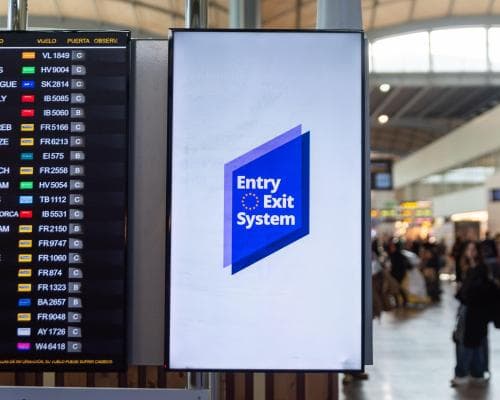
Picture this: you’ve just stepped off a private Gulfstream at Rome Fiumicino, the leather still warm from the tarmac. Your driver waits beyond customs. Your suite at the Hotel de Russie is ready. But instead of a swift nod from an officer, you’re staring at a self-service kiosk that wants your fingerprints, your face, and your patience. The queue snakes for an hour. Then two. This is the new reality of entering Europe’s Schengen zone—a digital entry-exit system (EES) that launched last October and has quietly become the most exclusive bottleneck on the continent.
The numbers are staggering. Since full rollout in April, non-EU travellers—including Britons, Americans, and most global citizens—must register biometric data at the border. Airports from Lisbon to Milan have seen queues of up to five hours. In Lisbon, the system was suspended after seven-hour waits. In Milan, a flight to Manchester left without 100 passengers who were still trapped in line. Last week, travel industry groups sent an open letter to European Commission president Ursula von der Leyen, calling the situation “critical.” The head of Rome’s airports has pleaded for a summer suspension, warning of “disaster.” This is not a glitch. It is a gatekeeper with a grudge.
What is this system, exactly? Think of it as a digital velvet rope that never lifts. The EES replaces the old passport stamp with a biometric check: your face is photographed, your fingerprints scanned, and your name, passport details, and entry-exit dates logged into a central database. For those crossing via Dover, the Eurotunnel, or St Pancras, checks happen before you leave the UK. In theory, repeat travellers get a faster pass. In practice, the technology stumbles, staffing lags, and you may be asked to record your data again. It is efficiency sold as progress, delivered as friction.
For the ultra-wealthy, this is not merely an inconvenience—it is a status signal. When a five-hour queue separates you from your villa in Tuscany or your meeting in Geneva, money can no longer buy a shortcut. First-class lounges and fast-track lanes are useless if the biometric kiosk freezes. The system treats a sovereign-wealth fund manager and a backpacker with identical suspicion. That is the great equaliser no one asked for. The true luxury now is not a private jet—it is a passport from a country that has negotiated an exemption. Ireland and Cyprus are out. The 29 Schengen states are in. Everyone else waits.
What does this mean for the luxury market? It signals a shift in how the affluent move. The days of breezing into St. Tropez for a weekend are numbered. Those who can are already investing in second homes in non-Schengen EU territories, or chartering helicopters from airports with dedicated biometric lanes. The real prize, though, is time—and the ability to outsource it. Private client offices are now adding “border logistics” to their concierge services. The next Hermès Birkin might be less coveted than a guaranteed 15-minute clearance at Nice Airport. Rarity has a new name: efficiency.
Looking ahead, the summer of 2025 will be the proving ground. If the system is not suspended, expect scenes of chaos that will redefine “peak season.” The wise will plan around it—flying into non-Schengen hubs like Dublin or Nicosia, then connecting privately. Or they will simply stay longer, turning a weekend into a month, because the cost of leaving is now measured in hours, not euros. The EES is a reminder that even the most carefully curated life can be derailed by a government database. The only cure is to move differently—or to move less. In a world where time is the ultimate currency, Europe has just made it a little more expensive.
The Experience
For a seamless European summer, consider a private-jet itinerary routed through non-Schengen gateways like Dublin or Nicosia, paired with a dedicated concierge who handles biometric pre-clearance. Contact your lifestyle manager to arrange a bespoke border-fast pass.