The Closet’s Most Coveted Key: A Coming-of-Age in Ultra-Rare Cinema
In the rarefied circles where private screenings are curated by personal archivists and film reels are acquired at Sotheby’s for six figures, the true currency is not celluloid but the permission to feel. For the ultra-wealthy, whose lives are often a symphony of curated appearances—from the penthouse view to the provenance of a vintage Hermès—the most elusive acquisition is an unguarded moment of truth. This is the story of how one film, a 2006 arthouse phenomenon that premiered at Venice before becoming a cultural watershed, became the most expensive ticket a 14-year-old ever bought: the price of self-hatred, paid in full before the closing credits.
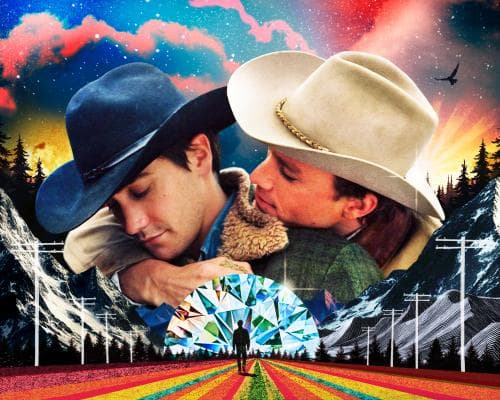
The facts are as indelible as a bespoke suit’s label. In 2006, a mother rented Brokeback Mountain from a now-extinct video store, intending a ‘special’ evening for her son. The film’s 134 minutes chronicle the doomed love of Ennis Del Mar and Jack Twist, sheep herders in Wyoming whose passion is crushed by the weight of masculinity and homophobic violence. The climax—Jack’s ambiguous death, likely a hate crime—left the boy burning with shame. His mother’s well-meaning question, “Is there anything you want to say?” was met with a silent retreat. He was gay, but the film’s message, as he absorbed it, was binary: a life of misery or an early grave. The cost of that lesson was six more years in the closet, a period when the rhetoric around Canada’s same-sex marriage legalization had turned schoolyards into battlegrounds of “unnatural” jeers.
What makes this narrative a luxury-market parable is the craftsmanship of the object itself. Brokeback Mountain is not merely a film; it is a relic of a pre-streaming era when a single Blockbuster cassette could become a sacred object. Directed by Ang Lee, it won three Oscars and a Golden Lion, but its true rarity lies in its emotional architecture. The haunting guitar score by Gustavo Santaolalla, the sweeping Wyoming landscapes shot by Rodrigo Prieto, and the raw performances of Heath Ledger and Jake Gyllenhaal—these are elements that cannot be replicated. Today, a pristine 35mm print of the film might trade among private collectors for sums that rival a limited-edition Patek Philippe. Yet the price paid by that 14-year-old was far steeper: he internalized Jack’s line, “I wish I knew how to quit you,” as a directive to quit himself. The film’s heritage is not just cinematic but psychological—a mirror that, for some, reflects only what they fear to see.
For the connoisseur of status, this story signals a seismic shift in the luxury of identity. In 2006, the closet was the ultimate bespoke accessory: handcrafted from shame, lined with silence, and locked with a deadbolt of societal expectation. The boy’s journey—from that first viewing to a 2018 Pride screening where the film finally felt like “a long overdue release”—maps the evolution of taste itself. The ultra-wealthy now curate their lives not just with objects but with narratives of liberation. A private jet is no longer just a conveyance; it is a vessel for the freedom to land anywhere, including one’s own truth. The Harvey Milk biopic, Glee, Janet Mock’s memoir—these became the new signifiers of a portfolio of self. Brokeback Mountain, once a symbol of suffocation, was reframed as a masterwork of empathy, its value appreciating only after the holder had done the work of unlearning.
What does this mean for the market? The future of luxury lies in experiences that demand courage to consume. The same collector who bids on a first-edition copy of James Baldwin’s Giovanni’s Room or a signed print of Robert Mapplethorpe’s self-portraits now understands that the most exclusive item is a clear conscience. The 2018 screening, surrounded by a community that had paid their own emotional dues, transformed the film from a burden into a badge. For the ultra-wealthy, the ultimate status symbol is no longer a yacht or a diamond—it is the ability to say, without shame, “I am that boy, and I survived.” Brokeback Mountain remains a cornerstone of queer cinema, but its greatest legacy is the lesson that the most precious thing you can own is the permission to live your story out loud.
The Experience
For those ready to curate their own cinematic liberation, contact our concierge for a private screening of Brokeback Mountain in a salon that honors the film’s emotional provenance—complete with a post-film discussion led by a cultural historian.