The Billionaire’s Fallow: Why the World’s Most Exclusive Culture Demands a Pause
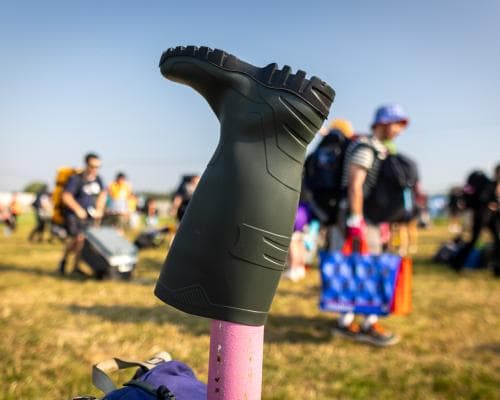
In the rarefied orbit of the ultra-wealthy, the most coveted asset is rarely a thing at all—it is absence. The empty calendar slot, the silent yacht, the shuttered gallery. This year, that principle has been elevated to a global stage as Glastonbury, the festival that has long been the unofficial cultural coronation of the British summer, takes a deliberate fallow year. For the first time since the pandemic, the hallowed grounds of Worthy Farm will not thrum with the bass of a hundred thousand revelers. Instead, the dairy pasture will lie fallow, its soil allowed to breathe, its grass to recover from half a decade of trampling. To the connoisseur of status, this is not a cancellation—it is a masterstroke of curation.
The decision, rooted in agricultural necessity and organizational wisdom, carries a resonance that transcends music. Glastonbury’s fallow years—last observed in 2018—are a rare act of strategic restraint in an era of perpetual content. The numbers tell a story of deliberate scarcity: a festival that could sell out its 200,000 tickets in under an hour chooses to vanish for a season. Its organizers, the Eavis family, use this window to recharge, to plan, to reimagine. The result is a return that is invariably more potent—new stages, stronger lineups, a re-energized brand. For the billionaires who attend via private helicopter or luxury glamping pods, this pause is the ultimate signal of exclusivity: you cannot buy a ticket to a year that does not exist.
The craftsmanship of the fallow year is its own kind of luxury. It mirrors the ethos of a bespoke atelier that closes for a month to perfect a single stitch, or a vineyard that lets a vintage rest for a decade. The festival’s dairy-farm setting, a working landscape that produces milk and cheese when not hosting the world’s largest greenfield party, is a reminder that true rarity requires patience. The financial cost is immense—lost revenue, idle infrastructure, staff on hiatus—yet the long-term value compounds. In luxury markets, absence creates desire. A fallow Glastonbury is a Birkin bag that is not offered for sale, a Patek Philippe that is not produced for a season. It is the ultimate hedge against fatigue, a refusal to dilute the brand.
This strategic pause signals a profound shift in how the ultra-wealthy consume culture. The era of relentless access—private jets to every opening, front-row seats at every premiere—is giving way to a hunger for the unreachable. Glastonbury’s fallow year is a mirror for the billionaire’s own portfolio: knowing when to exit, when to let assets rest, when to create artificial scarcity. The festival’s detractors, who annually declare lineups “the worst ever,” are silenced by absence. The heatwave that would have scorched the 2026 edition becomes a bullet dodged, a testament to foresight. For the elite, this is a lesson in power: to control the calendar is to control the narrative.
Looking forward, the fallow year may become the ultimate luxury accessory for cultural institutions. Eurovision, flatlining in ratings and mired in political controversy, could benefit from a year of diplomatic recalibration. Star Wars, suffocating under its own galaxy of content, might find that a pause rekindles the myth. Even pop’s reigning sovereigns—Taylor Swift, Charli xcx—could learn from Adele’s commercial and personal wisdom of receding from the spotlight. For the billionaire who has everything, the fallow year offers something rarer still: the anticipation of a return. Glastonbury will be back in 2027, re-energized, its grass greener, its legend intact. The most exclusive ticket in the world will be the one that does not exist—until it does.
The Experience
For those who wish to experience the art of strategic absence, consider a private consultation with the Eavis family’s estate team for future fallow-year access to Worthy Farm’s exclusive glamping enclaves.