The Last Drive: Joanna Pettet’s Unseen Bond with a Lost Era of Hollywood
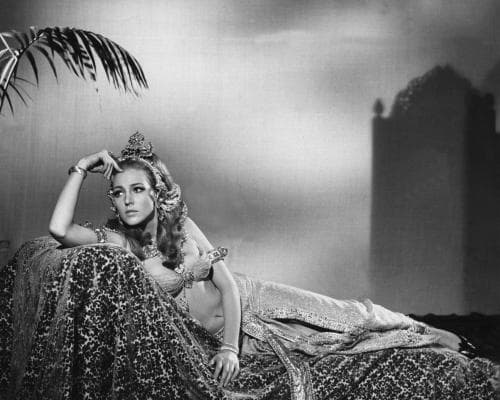
She was the car you didn’t know you wanted until you saw it glide past: Joanna Pettet, a British-born, Canadian-raised actress who, in 1967, drove straight into the heart of Hollywood’s most deliciously ridiculous heist. That year, she starred in *Casino Royale*, a James Bond spoof so gloriously overstuffed that it required five directors to steer it to the screen. The reviews were lukewarm, but the box office roared like a V12. Pettet, playing Mata Bond—the illegitimate daughter of Mata Hari and a retired Sir James Bond (David Niven)—delivered a performance that was equal parts champagne fizz and razor wit. “Do I get an exploding briefcase and a secret transmitter?” she asked, her voice a perfect blend of innocence and mischief. It was camp, yes, but the kind of camp that only the truly confident can pull off—a convertible top-down, wind-in-the-hair sort of confidence that the ultra-wealthy recognize as the hallmark of a rare find.
Pettet’s career was a limited-edition run: three films in 1967, each a different shade of intrigue. In *The Night of the Generals*, a World War II murder mystery shot in Paris, she played the daughter of a Nazi officer suspected of killing a sex worker. The role demanded a humanity that Pettet brought with the same quiet grace she’d later apply to her real-life role as a witness to history. She was, in many ways, the automotive equivalent of a coachbuilt grand tourer—elegant, capable, and destined to be remembered not for its sales figures but for the stories it carried. Her performance in *Casino Royale* remains a collector’s item: a piece of 1960s pop culture that, like a vintage Ferrari 250 GT, is more valuable for its provenance than its original price tag.
But Pettet’s true rarity lies in what happened off-screen. In August 1969, she was one of the last people to see Sharon Tate alive. They lunched at Tate’s Los Angeles home, a house that would soon become the site of one of the most infamous crimes of the century. Pettet’s presence at that table—along with others who would later appear in Quentin Tarantino’s *Once Upon a Time … in Hollywood*—anchored the film’s fictional elements to a reality that still haunts the collective imagination. In Tarantino’s retelling, Pettet is played by Rumer Willis, a detail that elevates the story from mere gossip to a piece of automotive-grade engineering: every bolt, every weld, every memory, precisely placed. For collectors of Hollywood ephemera, Pettet is the original owner’s manual for an era that no longer exists—a time when stars drove to lunch in open-top cars, wore silk scarves, and laughed without knowing the road ahead would be so dark.
From a market perspective, Pettet’s legacy is a niche but appreciating asset. Her *Casino Royale* memorabilia—costumes, scripts, stills—has become a quiet favorite among serious collectors who prize the intersection of camp and tragedy. A single signed photograph from that film recently fetched several thousand dollars at auction, a price that reflects not just her beauty but the story it carries. She is not a household name like Bond himself, but she is the secret compartment in the dashboard: overlooked by most, yet deeply valued by those who know. The ultra-wealthy, after all, don’t just collect objects; they collect narratives. Pettet’s narrative is one of near-misses and indelible impressions—a car that never quite won the race but left tire marks on the asphalt of cultural history.
What Pettet’s story signals about luxury taste today is a shift toward the oblique. The connoisseur no longer wants the obvious trophy—the gold-plated Rolex, the latest Bugatti. They want the thing that requires a story to explain its value. Pettet is that story. She is the rare book on a shelf of bestsellers, the single-malt whisky that doesn’t advertise but is whispered about in private clubs. Her life reminds us that the most compelling luxury is often the one that doesn’t scream for attention. It waits, like a perfectly preserved 1967 Maserati Ghibli in a climate-controlled garage, for someone to appreciate its lines.
As we look forward, Pettet’s legacy will likely be rediscovered by a new generation of tastemakers—curators, filmmakers, and collectors who understand that the past is not a museum but a racetrack. Her obituary is not an end but a pit stop. The car is still running. The story is still being written. For those who can afford the time and the patience to listen, Joanna Pettet remains a drive worth taking.