The 1,842-Mile Commute: Inside England’s Relentless World Cup Itinerary
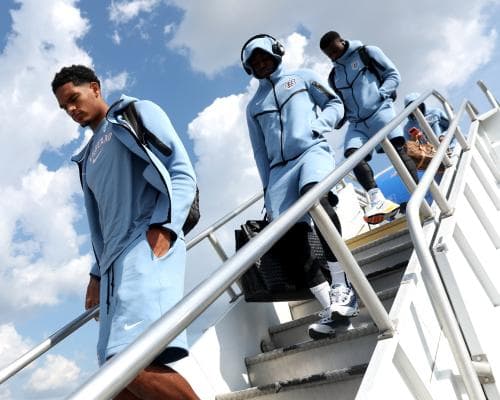
Picture this: you wake up in Kansas City, board a private jet, fly 1,100 miles to Mexico City, play a high-stakes match at 7,200 feet of altitude, then fly straight back to the same hotel in Missouri. Do that five times. That is the reality for England’s squad at this World Cup — a cumulative travel distance that would make even the most seasoned globetrotter wince.
The Football Association’s decision to base the team in Kansas City was a calculated gamble: a central location, they reasoned, would minimise flight times for any given fixture. Instead, it has produced the most punishing itinerary of any team in the tournament. England have flown an average of 1,842 miles per round trip — roughly the distance from London to Lisbon and back. Their shortest return journey was longer than the total distance France have travelled for the entire competition. By the time they face Norway in Miami Gardens, they will have played all six matches in different cities, never once sleeping in the same place for two consecutive games.
For the luxury traveller, this is not a complaint — it is a revelation. The England camp has turned logistical chaos into a finely tuned ritual. The squad travels on charter aircraft configured for rest and recovery, with lie-flat seats, tailored meal service, and a medical team that monitors fatigue in real time. Their base hotel in Kansas City is a private, members-only property that offers the kind of discretion and service that the ultra-wealthy expect: a dedicated concierge, a private chef, and a spa that operates exclusively for the team. Every detail, from the blackout curtains to the temperature of the recovery pools, is calibrated for one purpose: to make 1,842 miles feel like a short hop.
This is where the story gets interesting for those who follow the elite travel circuit. The England squad’s itinerary is, in essence, a private-jet odyssey — the kind of trip that would cost a civilian upwards of $150,000 to replicate. But the real luxury is not the aircraft; it is the precision. The FA has negotiated priority landing slots at every airport, bypassing commercial queues. The team’s logistics team coordinates with local authorities to ensure that the bus from tarmac to hotel never hits traffic. For the players, the journey is invisible: they board, sleep, eat, and arrive. The miles vanish into a seamless blur of service.
What this signals about the future of luxury travel is profound. The England camp is a case study in how the super-wealthy are increasingly thinking about distance. It is not about avoiding travel; it is about making travel frictionless. The same principles that govern a World Cup campaign — centralised base, private aviation, hyper-personalised ground transport, and a team of people whose only job is to eliminate inconvenience — are now being applied to private family holidays, corporate retreats, and expedition travel. The new luxury is not a destination; it is the absence of hassle.
Where do the wealthy go next? They follow the England squad’s lead: they choose a base and fly out for the day. The Maldives to Dubai for lunch. Aspen to Telluride for an afternoon ski. It is the ultimate expression of freedom — the ability to treat a 1,100-mile flight as a commute. England’s players may be exhausted, but they are also pioneers of a new travel paradigm. The miles are not a burden; they are a badge of access. And for those who can afford it, the world is no longer a map of distances. It is a collection of points connected by a private jet, a seamless handoff, and a perfectly chilled glass of water waiting at the other end.