The Drought Trade: How Britain's Water Crisis Is Reshaping the Economics of Everything
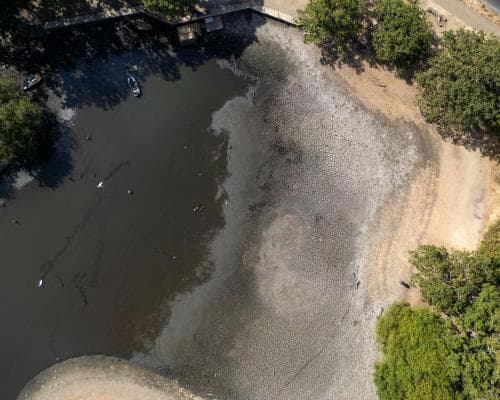
Britain is burning, and the smart money is already pricing it in. Almost three-quarters of England is now officially in drought — the third in five years — and the UK's Environment Agency has quietly triggered the kind of cascading economic effects that usually take markets by surprise. But they shouldn't. This isn't a weather anomaly; it's a structural shift in how capital must be deployed when water becomes a scarce asset.
Forget the amber heat alerts and the 36°C forecasts for a moment. The real story is in the numbers coming out of the National Drought Group meeting: July rainfall across England ranged from just 1% to 26% of expected averages. That's not a dry spell; that's a balance sheet event. When rain becomes a missing asset, everything downstream — agriculture, energy, real estate, insurance — reprices. The National Farmers' Union is already warning of a 'brutal harvest' and livestock feed shortages, which means the cost of your next meal is about to rise, and the inflation print next quarter will show it.
Here's the mechanics most people miss. The drought isn't just about parched lawns and hosepipe bans — it's about the 27 million people now under water use restrictions, a figure that dwarfs any single corporate default. The UK Health Security Agency's amber alerts across nine regions, from Yorkshire to London, are the visible tip of a hidden iceberg. For wealth builders, the play isn't in bottled water stocks; it's in the infrastructure that moves and stores the stuff. The Environment Agency's drought status is effectively a government-backed signal that water utilities will need billions in capital expenditure — think reservoirs, desalination plants, and leaky pipe replacements — and that's a capex cycle that will hit regulated returns, but also create opportunities in construction, engineering, and water-tech startups.
The third drought in five years is the tell. This is no longer an event risk; it's a regime shift. For the ultra-wealthy, that means rethinking every asset class. Agricultural land in the south-east of England, once a staple of aristocratic portfolios, now carries a hidden climate liability — but also a potential premium if it has water rights. Meanwhile, the New Forest fire, with 120 firefighters battling to protect internationally protected heathland, is a vivid reminder that natural capital is fragile and under-priced. Rare species like the Dartford warbler and all six native reptiles are at risk, but the market hasn't yet priced in the loss of ecosystem services that these habitats provide — from carbon sequestration to flood mitigation.
What does this mean for the markets? First, watch the UK's gilt curve. The government will likely need to backstop water infrastructure spending, which could widen the fiscal deficit and put upward pressure on yields. Second, insurance premiums in drought-prone regions are already climbing, and this will accelerate — a direct hit to real estate valuations in affected areas. Third, the food supply chain is about to see margin compression, and that will show up in supermarket earnings and consumer price indices. For the wealthy, this is a moment to reallocate toward water-efficient technologies, drought-resistant crops, and companies that own or manage water rights — think of it as the new 'gold' of the climate era.
But there's a deeper angle here that most financial commentary misses. The drought is a preview of the coming 'climate fiscal' — the point where governments, corporations, and households all face the bill for decades of underinvestment in resilience. The UK's Environment Agency has been clear: this is the third drought in five years, and the trend is up. For the smartest capital, the play isn't to bet against the weather; it's to bet on the adaptation. That means infrastructure funds with a water thesis, private equity in water recycling, and even long-dated bonds tied to climate-resilient projects. The window is open, but it won't stay open forever.
So, as temperatures peak on Thursday and the heathlands smolder, remember this: the markets are watching, and the smartest money is already moving. The drought isn't just a weather story — it's a wealth story. The question is whether you're positioned for the repricing or caught off guard by it. In a world where water becomes the new oil, the ultimate hedge isn't a commodity — it's foresight.