The Special One's Brand Problem: Why Mourinho's Docuseries Is a Masterclass in Reputation Management
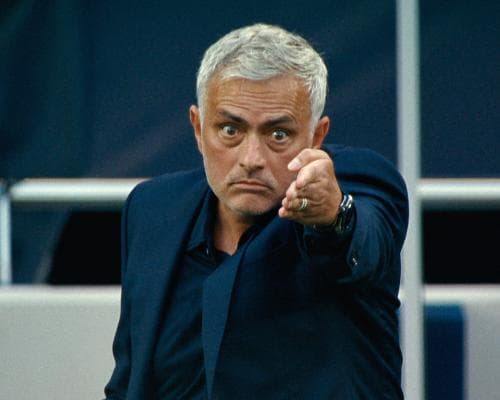
There is a moment in the final episode of José Mourinho's new docuseries where the most decorated manager of his generation looks straight into the camera and confesses, "You are pushing me to speak about myself. And I don't want to." It is a staggering admission — not because it's surprising, but because it's the entire premise of the show. Why would a man who so fiercely guards his inner life volunteer for a three-part deep dive? The answer, as with most things in the rarefied world of elite wealth and power, comes down to control. This isn't a documentary. It's a carefully engineered asset revaluation.
The financial stakes here are invisible but enormous. Mourinho isn't just a football manager; he's a one-man conglomerate. His career earnings from contracts at Porto, Chelsea, Inter Milan, Real Madrid, Manchester United, Tottenham, and now Fenerbahçe are estimated well north of £200 million. But that's just the base salary. The real money — the endorsements, the speaking fees, the media rights, the future legacy deals — flows from the brand. And a brand is nothing but a narrative that the public accepts as truth. For two decades, Mourinho's narrative was written by others: the press, the pundits, the rival managers, the players who felt slighted. His nickname, "The Special One," was supposedly a self-coronation, a piece of arrogance that defined him. In the docuseries, he pushes back with a pedant's fury: "The Special One is some special shit some guys in England thought up for me." He insists he only ever said "a special one" — a subtle distinction that, to him, changes everything. This is a man fighting for the nuance of his own biography.
The mechanics of this reputational pivot are fascinating when you view them through a capital lens. The documentary, helmed by Joe Pearlman — the director behind the wildly successful Bros documentary — is a deliberate attempt to reposition an asset. Pearlman's previous work succeeded because his subjects were hilariously unaware of how they came across. Mourinho is the opposite: hyper-aware, armored, and constantly calculating. He knows the camera is there, and he uses it. The result is a tension that defines the entire project. He wants to set the record straight, but he refuses to give the audience the emotional access that modern storytelling demands. It's like watching a CEO sit for an earnings call while revealing none of the actual numbers. The market — the fans, the future employers — is left to interpret the silence.
This is where the rarity and heritage angle comes into play. Mourinho is not a distressed asset. He is a blue-chip with a volatile earnings history. His recent stints at Manchester United and Tottenham were, in financial terms, underperformers — massive payoffs but diminishing returns on the brand's core value: winning. The documentary is a bid to reframe the narrative from "has-been" to "misunderstood genius." It's a classic contrarian play. When the market is pricing you down, you buy back your own stock. By positioning himself as a victim of misrepresentation, he's signaling to future buyers — the next big club, the next national team, the next lucrative broadcast deal — that the underlying fundamentals are sound. The "closed book" persona isn't a flaw; it's a scarcity tactic. If he were an open book, he'd be common. By refusing to reveal himself, he maintains the mystique that commands premium fees.
What does this signal for the world of the wealthy? It's a reminder that reputation is the only illiquid asset that can be actively managed without dilution. For the ultra-wealthy, a docuseries is rarely about transparency. It's about control of the distribution channel. Mourinho's project is a masterclass in how to manage your own narrative without surrendering the core asset: your mystique. The smartest capital isn't just deployed in markets; it's deployed in stories. And the best stories are the ones that leave the most to the imagination.
Looking forward, the real test isn't whether the documentary is good. It's whether it changes the price of the next contract. Mourinho is 61, but his brand still commands global attention. If this series successfully rehabilitates his image as a tragic, misunderstood genius — rather than a fading, combustible force — it could unlock a final, massive payday. The lesson for investors and wealth builders is simple: sometimes the best move in a down market is to buy back your own narrative. Just don't expect the protagonist to tell you the whole story. He doesn't want to. And that, paradoxically, is exactly what makes the asset so valuable.