The Gentleman Who Gave Everything: Sam Neill’s Quiet Legacy of Kindness
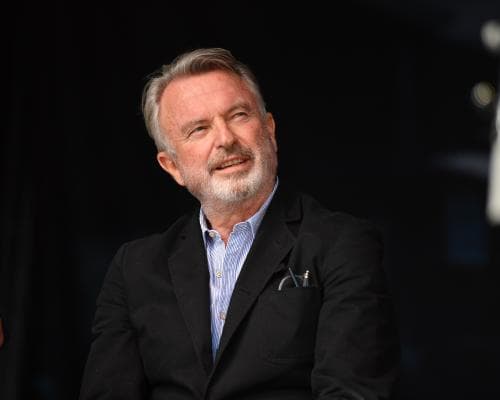
Sam Neill’s sudden death at 78 hit like a wave no one saw coming. Friends, peers, and admirers rushed to pay tribute — not just to the actor who brought Jurassic Park’s Dr. Alan Grant to life, but to something rarer. A man who, as Australian director Phillip Noyce put it, was “perhaps the most gentlemanly actor I ever encountered. Level-headed and sincere in a show business world of crazy egos.” That word — gentleman — echoes through every memory shared this week. But what does it mean when an entire industry stops to call someone a gentleman? It means Neill gave away something more valuable than money: his integrity.
Born in Northern Ireland and raised in New Zealand, Sam Neill built a career spanning five decades, from the psychological terror of Dead Calm to the warmth of The Piano. But his greatest role wasn’t on screen. It was as a quiet anchor for people around him. Noyce revealed that Neill personally vouched for him to a skeptical American producer, Mace Neufeld, when rumors swirled that George Miller had secretly directed Dead Calm. That single act of trust — Neill’s word as his contract — launched Noyce’s Hollywood career, leading to Patriot Games with Harrison Ford. Neill didn’t write a check. He gave his reputation. In an industry built on handshakes and whispers, that’s a fortune.
Magda Szubanski, a friend so close that Neill once named a duck after her, described her shock: “When I spoke to him not long ago, he was cancer-free and really happy and excited about life, so this is just devastating.” Neill had been battling blood cancer, but he faced it with what many called “dignity, humour and conviction.” Australian Prime Minister Anthony Albanese captured that public grace, writing, “Sam fought illness with the same dignity, humour and conviction that gave strength to his every performance.” But the private grace was even bigger. Actor David Wenham called him “the kindest, cheekiest, most generous and supportive friend going around.” Novelist Kathy Lette simply said his unexpected death was “heartbreaking.”
What made Neill’s giving so powerful was its invisibility. He didn’t launch a foundation or lend his name to a gala. He gave time, attention, and loyalty. He mentored without fanfare. He showed up. When a young actor needed a recommendation, Neill wrote it. When a director needed a defender, Neill stood up. He understood something fundamental about philanthropy: that the most impactful gifts are often the ones nobody sees. In a culture obsessed with billion-dollar pledges and branded charities, Neill’s legacy is a reminder that generosity isn’t measured in tax deductions. It’s measured in the careers you lift, the people you trust, and the ducks you name after your friends.
This is a story about culture, not capital. Neill’s philanthropy was woven into his daily life — a word kept, a friend supported, a fight faced with grace. For the charities and causes he quietly supported over the years, his death leaves a void. But for the broader culture of giving, his life offers a blueprint: be kind, be reliable, be the person others can count on. That’s not a press release. That’s a legacy. And as the tributes pour in from prime ministers to novelists, one thing is clear: Sam Neill gave the world something no billionaire can buy — a reputation so solid it outlasts him.
More in PHILANTHROPY