The Debt Trap That’s Starving Schools: How 113 Nations Are Paying Banks Before Children
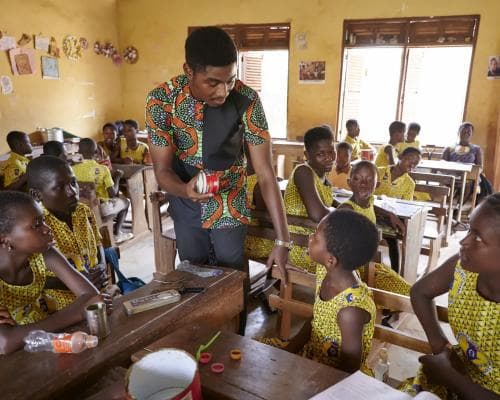
Picture a classroom in sub-Saharan Africa. No desks. No textbooks. Maybe not even a roof. Now picture the same country’s finance minister wiring three and a half times that entire education budget to foreign creditors. That’s not a hypothetical. That’s 2025.
According to a devastating new report from Unesco, 113 developing nations spent more last year servicing foreign debt than they did educating their children. In sub-Saharan Africa, the ratio is a staggering 3.6 to one. Eighteen of the most indebted countries poured five times more into debt payments than into classrooms. Sri Lanka? Sixteen times more. This isn’t a budgeting quirk. It’s a structural trap—and it’s tightening by the day.
Min Jeong Kim, director of Unesco’s education division, puts it bluntly: “Current approaches really keep the countries trapped in a cycle of austerity, underinvestment and stalled development.” She’s right. When a nation spends more on interest payments than on its future workforce, it’s not just cutting costs. It’s cutting its own throat. The report shows that low- and lower-middle-income countries have already lost 21% of the education aid they received in 2023, and could lose up to 30% by 2027. Afghanistan, Mali, Niger and Liberia have seen cuts of over 40% in just three years.
But here’s where the story turns from grim to quietly heroic. Enter the campaigners at Debt Justice, a UK-based group that has been tracking this crisis for years. Their policy director, Tim Jones, explains the mechanics: “Countries’ debt payments have ballooned following a series of shocks from Covid, energy price and interest rate rises and climate disasters.” Debt Justice isn’t a billionaire’s foundation. It’s a scrappy coalition of economists, activists and ordinary people who believe that a child’s right to learn shouldn’t be sacrificed on the altar of a banker’s quarterly report. They’ve been lobbying governments, publishing data, and pushing for debt cancellation—not as charity, but as justice.
The mechanics of this crisis are brutally simple. When a country like Zambia or Ghana borrows money—often at high interest rates from private creditors—the repayment terms are rigid. Miss a payment, and credit ratings collapse, making future borrowing even more expensive. So these nations cut the softest line item on the budget: education. Teachers go unpaid. Schools close. Girls especially drop out. And the cycle deepens. Unesco warns that global aid to education could decline by up to 30% by 2027, meaning even the patchwork of international support is fraying.
Yet there is a counter-movement, and it’s growing. Philanthropic actors—from the Open Society Foundations to grassroots organizers in Nairobi and Jakarta—are funding alternative models: community-run schools, digital learning hubs, and legal clinics that help countries renegotiate debt terms. The impact isn’t just measured in dollars. It’s measured in futures. Every child who stays in school because a debt payment was restructured is a living argument that the system can change. The broader lesson? Generosity isn’t always about writing a check. Sometimes it’s about demanding that the check be rewritten.
What this means for the culture of giving is profound. We’re used to stories of billionaires funding libraries or scholarships. But the Unesco report reveals a deeper rot: no amount of classroom philanthropy can outpace a debt payment that’s 16 times larger. The real philanthropic act here might be the unglamorous work of policy advocacy—showing up at IMF meetings, filing reports, and telling the truth about where the money goes. As Jones says, “In the worst-affected countries, this is leading to cuts in essential services such as health and education.” The antidote isn’t a check. It’s a reckoning.