The £4.4 Billion Summer: How Heat Became the Ultimate Status Test
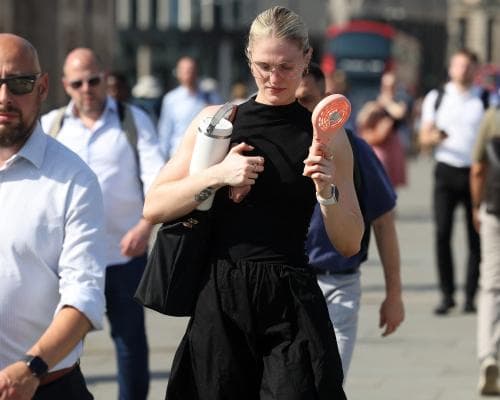
There is a new currency in Britain this summer, and it isn’t the pound. It’s shade. As the country swelters through its hottest season on record, the thermometer has become the ultimate arbiter of privilege. The heat isn’t just uncomfortable—it’s expensive. New analysis from the green think tank Verdant puts the cost of this year’s repeated heatwaves at £4.4 billion in lost economic output by the end of July. That’s not a rounding error. That’s a serious dent in the national ledger, and it’s only going to grow. But for those with the means, this isn’t just a statistic. It’s a signal. The ability to step out of the heat—literally and financially—has become the new marker of wealth.
The numbers are stark. June’s unseasonal blast alone cost £2.36 billion, and July added another £2 billion on top. The culprit? Productivity. When the mercury climbs past 30°C, workers’ output drops by about 3% for every additional degree, according to insurer Allianz’s cross-European estimates. That means fewer deals closed, fewer goods moved, fewer services rendered. The pain is concentrated in London and the southeast, where temperatures have been highest and where the economy is most densely packed. The London School of Economics’ Grantham Research Institute found that during one June week, 3.6% of workers didn’t show up at all, and 87% reported at least one heat-related health issue—from sleepless nights to dizziness. The cost isn’t just in lost wages; it’s in the quiet friction of a nation slowing down.
For the ultra-wealthy, this summer has been a masterclass in adaptation. While the rest of the country battles with overcrowded trains and overheating offices, the elite have simply relocated their work to cooler climes—a private estate in the Cotswolds, a yacht off the Cornish coast, or a penthouse with triple-glazed, solar-reflective glass. The craftsmanship of cooling has become a luxury in itself. Think bespoke climate-control systems that whisper rather than hum, gardens designed with ancient trees for natural shade, and architects who treat thermal mass as a design feature, not an afterthought. This isn’t about mere comfort; it’s about maintaining peak performance when the environment turns hostile. The rarity is not the money—it’s the foresight to have built a life that doesn’t flinch when the amber warning flashes.
This heatwave is also rewriting the rules of what wealth signals. A Rolex or a Birkin is still nice, but a private retreat with a microclimate—now that’s the true flex. The luxury market has quietly pivoted to climate-proofing. High-net-worth individuals are investing in properties with passive cooling, in vineyards that can withstand drought, in art collections stored in climate-controlled vaults that are now more essential than the art itself. The £4.4 billion loss is a warning shot: the old economy was built on the assumption of stable weather. The new economy rewards those who can insulate themselves from volatility—literally and figuratively. Sadiq Khan, the London mayor, has pointed to the broader impact, and the government is under pressure to set a maximum working temperature. But for the elite, the response is personal, not political.
Looking ahead, the cost curve is terrifying. Verdant projects that if heatwaves intensify at the same rate as the last decade, the annual economic hit could exceed £25 billion by 2030. That’s a world where the haves and have-nots are divided by access to cool air, clean water, and green space. For the luxury sector, this is the ultimate growth opportunity. Expect to see more private members’ clubs with underground lounges, more exclusive resorts in northern latitudes, and more high-end insurance products that cover weather-related losses. The smart money is already moving—not just to hedge funds, but to hedge climates. The question isn’t whether you can afford to adapt. It’s whether you can afford not to.
The Experience
To experience this new luxury, consider a private retreat in the Scottish Highlands, where temperatures rarely breach 20°C, or consult a climate-risk advisor to future-proof your portfolio and property.
Explore