The New English Summer: When 38°C Becomes the Ultimate Luxury Test
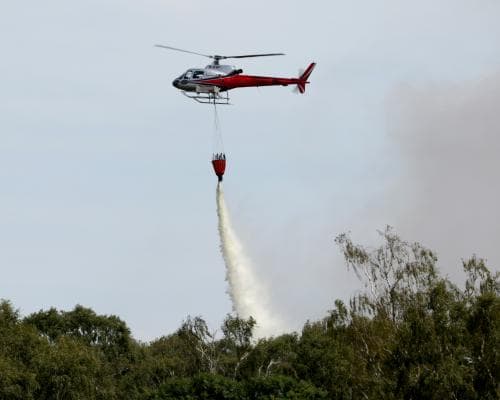
There is a moment, just after the first heat-blast of the afternoon, when the manicured lawns of the Cotswolds turn from emerald to a brittle, straw-gold. It is a colour that used to signal a particularly good vintage photograph; now it signals something far more urgent. As Andy Burnham convenes an emergency Cobra meeting to address wildfires and drought, the British countryside is no longer just a pastoral idyll—it is a frontline. For those who own a slice of it, the question is no longer about which hedge fund performed best, but whether their estate can survive the summer.
The numbers are stark, and the cognoscenti are taking note. Thirty-five days above 30°C in a single year—a record that quietly toppled the 34-day benchmark set in 1995—has transformed the English garden from a place of quiet contemplation into a feat of engineering. The 'fire wave' sweeping across the country is the most widespread ever recorded, with wet winters and prolonged heatwaves conspiring to turn tinder-dry bracken and heather into a ticking clock. For the owners of sprawling country piles, the emergency meetings in Whitehall are not abstract news; they are a direct threat to the very fabric of their weekend retreats.
This is where luxury meets logistics. The discerning estate owner is no longer asking for a new orangery or a heated plunge pool. They are commissioning underground reservoirs, boreholes that can draw from ancient aquifers, and sophisticated irrigation systems that deliver water drop by drop to heritage oaks. Landscape architects who once specialised in parterres and topiary now spend their days designing 'fire breaks'—strategically planted belts of low-flammability species that can slow a blaze. The cost? A single borehole can run to £50,000, and a full estate-scale water management system can easily exceed half a million. But for those who measure their wealth in acreage, it is the only insurance that matters.
The market has responded with characteristic quiet agility. Estate agents in the Home Counties report that 'water security' is now a buzzword in viewings, ranking alongside 'original features' and 'far-reaching views'. A property with a private lake or a natural spring is commanding premiums of 10 to 15 percent over comparable dry-land estates. Meanwhile, the National Fire Chiefs Council has begun offering bespoke advice to large landowners, and some of the most forward-thinking estates have hired their own fire consultants—retired brigade officers who map risk zones and train staff in controlled burns. It is a new kind of domestic staff, as essential as the butler or the head gardener.
For the ultra-wealthy, this summer has also accelerated a shift in what constitutes a 'second home'. The Mediterranean, once the default escape, now feels like a cautionary tale of water shortages and heat advisories. Instead, the smart money is turning to the northern British coast—Northumberland, the Scottish Borders, even the Hebrides—where temperatures remain milder and the air carries a salt-tanged coolness. Private islands, long the preserve of the eccentric billionaire, are being re-evaluated as climate refuges. One agent told me that a client recently enquired about a small isle off the west coast of Scotland, not for the fishing, but because 'it has its own spring and a 300-year-old stone house that stays cool without air conditioning.'
Yet there is a deeper, more subtle shift occurring in the corridors of power and the drawing rooms of the elite. The Cobra meeting, chaired by Burnham, is a recognition that extreme weather is no longer a 'global south' problem. It is here, in the green and pleasant land, and it is disrupting the very notion of the English summer. For the luxury market, this means that the ultimate status symbol is no longer a vintage car or a rare whisky—it is resilience. An estate that can feed itself, water itself, and withstand a wildfire is worth more than any painting on its walls. The new collectors are not buying art; they are buying survival, and they are doing it with the same quiet, determined taste they once reserved for a first-growth Bordeaux.
Looking ahead, the forward-thinking owner is already planning for next summer. They are planting drought-resistant lawns—fescues and bentgrasses that stay green with half the water—and installing smart sensors that detect heat signatures before a fire takes hold. They are lobbying local councils for better access to fire roads and building 'safe rooms' with their own air filtration systems. The emergency Cobra meeting may pass, but the changes it heralds will not. The English summer has entered a new era, and for those who own its landscape, the most luxurious thing you can own is a plan.