The Empty Seats at Birmingham's Finest Sporting Stage
There is a particular kind of silence that descends on a stadium when a champion is about to strike. It is not the hush of anticipation, but the quiet of absence. On Monday night, as Amy Hunt blazed to 100m gold, the Alexander Stadium in Birmingham was officially more than 13,000 strong — but to the naked eye, it looked barely half full. The 23,000-capacity arena, dressed in its finest lights and freshly laid track, seemed to be holding its breath for an audience that never quite arrived.
This is the paradox of modern sporting luxury. The European Athletics Championships — a showcase of human speed, strength, and grace — has become a private viewing for those willing to pay for the privilege. A seat on the home straight will set you back £110 this evening, down from £150 last night. There are no junior prices in that prime section, which means the next generation of fans — the ones who would fill these seats with dreams — are priced out before they even begin. The barbecue pork roll costs £18.50, a bratwurst hot dog £15, and a bottle of water £3.95. This is not a day out; it is an investment.
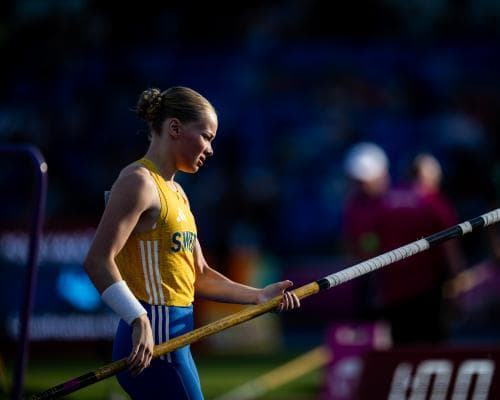
The irony is that the performances deserve better. Hungary's Bence Halasz opened the men's hammer final with a throw of 80.96m, a statement of intent that echoed around the half-empty stands. Britain's Jake Norris sits fifth on 74.61m, a respectable showing but not one to set the pulse racing. In the women's pole vault, Gemma Tutton of Britain is among six athletes to have cleared the first height of 4.10m, a small but significant step in a competition that will surely produce moments of airborne brilliance. These are athletes at the peak of their powers, executing feats of precision and power that most of us can only marvel at from a distance — if we can afford the ticket.
Yet the conversation this morning is not about the athletes. It is about the empty seats. Keely Hodgkinson's coach and BBC commentator Steve Cram have led a chorus of concern, noting that high prices are driving fans away. The timing is awkward, to say the least. London's bid team for the 2029 World Athletics Championships is due to make its final presentation on Friday, and this is not the image they would want to project. Birmingham city centre shows little sign that a prestigious event is even taking place — no banners, no buzz, just the quiet hum of a city going about its business.
For the ultra-wealthy, this is not a problem. They are used to exclusive experiences, to paying a premium for the privilege of being in the room — or the stadium — when history is made. But for the rest of us, the question is whether the price of admission is worth the view. A £110 ticket to see Jakob Ingebrigtsen run is not just a purchase; it is a statement. It says you value excellence, that you are willing to invest in witnessing greatness. And yet, as the empty seats in the £60 and £40 areas suggest, even the middle tiers are struggling to fill.
This is the new reality of elite sport: it has become a luxury good, like a rare whisky or a limited-edition timepiece. The scarcity is not in the product but in the access. And as the stadium empties, the few who remain are left with something even more precious — the feeling of being part of an exclusive club, watching the world's best perform in near solitude. It is a strange kind of intimacy, one that money can buy but that few are willing to pay for.
As the championships continue, the hope is that the crowds will return, that the price will be adjusted, and that the event will once again feel like a celebration rather than a private viewing. But for now, the empty seats are a reminder that even the most magnificent spectacles can be diminished by the cost of entry. The athletes will keep running, throwing, and vaulting. The question is whether we, the audience, can afford to watch.