The Summer Slowdown: What July's Jobs Report Signals for the New Gilded Age
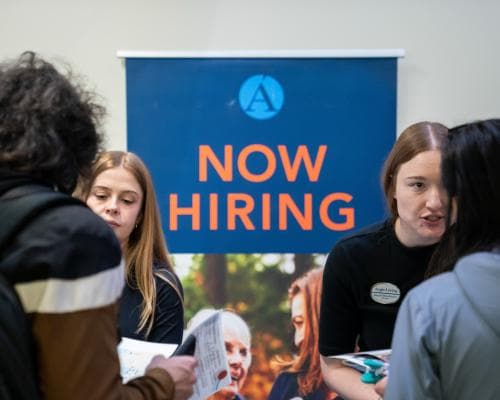
There's a moment in every great boardroom drama when the numbers on the screen tell a story no one saw coming. July delivered exactly that—a quiet bombshell that rippled through corner offices and private dining rooms from Manhattan to Monaco. The U.S. labor market, that great barometer of economic confidence, unexpectedly shed 23,000 jobs, while the previous two months' gains were slashed by a combined 103,000. For those who watch the tape closely, this wasn't just a blip. It was a seismic shift in the narrative of American prosperity.
Let's get the raw numbers out of the way, because the wealthy don't flinch at data—they devour it. The unemployment rate held steady at 4.1%, a figure that sounds benign until you realize economists had bet on 83,000 new jobs. Instead, we got a contraction. The losses were concentrated in local government education (50,000) and retail (19,000), while the private sector squeaked out a 30,000 gain, propped up by healthcare. But here's the twist that should make every portfolio manager lean forward: May and June were revised down by a staggering 103,000 jobs. The labor market isn't just slowing; it's been slowing for months, and we were all reading the wrong tea leaves.
For the ultra-wealthy, this report is less about the headline and more about what it unlocks. The Federal Reserve has been whispering about rate hikes to tame inflation, but this data slams the door on that conversation. Rate hikes are now off the table, and the smart money is already pricing in a pause—or even a cut. That's the kind of shift that moves markets, revalues assets, and separates the shrewd from the stagnant. When the Fed blinks, real estate yields, bond ladders, and private equity multiples all recalibrate. The old guard who locked in fixed-income positions last year are suddenly looking like geniuses, while the leveraged crowd is quietly sweating.
But let's talk about what this means for taste and status, because that's where the real story lives. The labor market is in a 'low-hire, low-fire' state—a term economists use, but I prefer to call it the 'quiet luxury' of employment. Layoffs plunged to a two-year low, with just 33,500 announced cuts in July. That's not chaos; that's consolidation. The workforce is shrinking not because of panic, but because of choice. Immigration has slowed to a trickle, and the labor force is growing at a glacial pace. For the top 1%, this is the economic equivalent of a perfectly aged Bordeaux: rare, stable, and increasingly exclusive. The masses may fret about wage growth (up 3.2% year-over-year, barely keeping pace with inflation), but the cognoscenti see a market that rewards patience and precision over volume.
Here's the deeper signal, the one that whispers to those who own the skyline rather than rent it. Consumer spending rose 0.3% in June, but the personal savings rate hit a four-year low at 2.7%. That's a paradox—spending persists, but the buffer is gone. For the wealthy, this is the moment to lean into assets that don't blink: hard assets, fine art, and experiences that hold value precisely because they can't be mass-produced. The healthcare sector's continued job growth (the only real winner here) is a reminder that longevity is the ultimate luxury. Meanwhile, job openings fell by 178,000 to 7.4 million, a sign that even employers are holding their breath. This isn't a recession; it's a recalibration.
What does the next quarter hold? The consumer price index next week will be the next chess move, but the board is already set. For those with capital, this is the time to move quietly—acquire, diversify, and appreciate the art of the long game. The labor market's summer slump is not a tragedy; it's an invitation. An invitation to buy when others hesitate, to invest in the timeless over the trendy, and to recognize that true wealth is not in the numbers on a payroll report, but in the freedom to read them without flinching.
The Experience
To navigate these shifting tides, consider a private consultation with a wealth strategist who specializes in labor-market-hedged portfolios—or charter a yacht in the Mediterranean where the only numbers that matter are the waves.