Telstra’s Outage Hits Small Business Cash Flow — Where’s the Billion-Dollar Backstop?
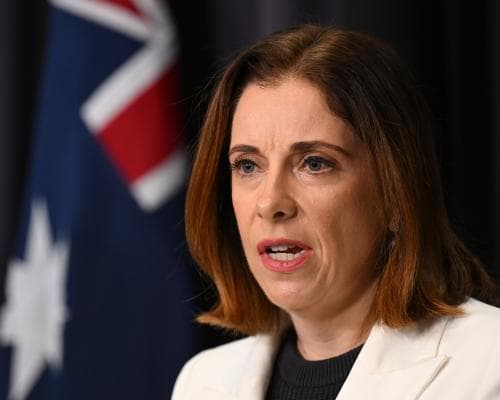
Imagine your payment terminal goes dark for hours. Your online orders vanish. Your customers walk out. That wasn't a nightmare for thousands of Australian small business owners this week — it was real. A Telstra outage swept the country, and the minister for small business, Anne Aly, is now demanding the company “face the music.” But for the investors and entrepreneurs who watch how capital moves, this isn't just a service failure. It's a $30-billion company showing exactly how fragile the revenue streams of smaller players can be.
This was no minor glitch. The outage hit point-of-sale systems, cloud-based invoicing, and customer communications — the digital arteries of modern small business. Aly told ABC’s Afternoon Briefing that she met with state small business ministers to discuss the fallout. Her message was blunt: keep records, file claims, and demand clarity. Telstra’s CEO apologized, but Aly called for a concrete compensation scheme. For small businesses already squeezed by inflation and tight margins, a day of lost transactions isn't an inconvenience — it's a cash flow crisis. Some may never recover that revenue.
The mechanics here are brutal. Small businesses often run on razor-thin operating cash reserves. A single day without payment processing can mean missed supplier payments, bounced checks, or overdraft fees. Telstra, by contrast, reported over $18 billion in annual revenue last year and has a market cap north of $30 billion. The asymmetry is staggering. Aly hasn't yet received data on exactly how many businesses were affected, but the Australian Small Business and Family Enterprise Ombudsman estimates there are over 2.5 million small businesses in the country. Even a fraction of that number suffering losses represents a significant wealth transfer — from the many to the one.
This is where the wealth angle sharpens. Telstra is a dividend darling for many Australian portfolios. Its reliable payout has long been a staple for income-seeking investors. But this outage reveals a hidden risk: infrastructure concentration. When a single provider controls a massive share of the nation's telecommunications backbone, its failures become systemic. For family offices and high-net-worth individuals who allocate capital to infrastructure plays, this is a reminder that monopoly-like assets carry operational tail risks. The cost of a compensation scheme — even a generous one — would be a rounding error for Telstra. But the reputational damage and regulatory scrutiny could weigh on its valuation.
The rarity of this event makes it more striking. Telstra's network is usually rock-solid. That's why investors pay a premium for its stability. But when the rock cracks, the small businesses underneath feel the quake. Aly's call for a “compensation scheme that works for them” signals that the government is watching. For the wealthy, this is a signal to diversify exposure to single-point-of-failure infrastructure. No asset is too big to fail — or too big to cause collateral damage.
What does this mean for markets and the wealthy? First, expect regulatory pressure on telecom giants to increase. Second, watch for a potential shift in small business insurance products — business interruption coverage for network outages could become a growth niche. Third, for those building portfolios, this is a reminder that cash flow resilience at the small business level is a macroeconomic indicator. When the little guys bleed, consumer spending slows, and that ripples up to large-cap earnings. Telstra will survive. The question is whether the small businesses it serves will be made whole — and whether the next outage will be the one that breaks the system's trust for good.
More in MONEY