Reform UK's Billionaire Backers: A £100K Cap Would Slash Their War Chest by 85%
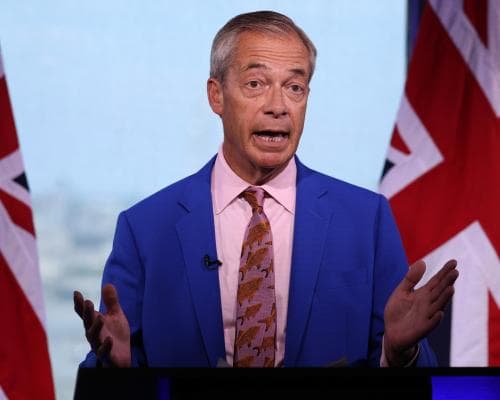
Imagine building a political movement on the backs of just a handful of billionaires—and then imagine a rule that makes that model illegal. That's exactly the scenario unfolding in Britain right now. New analysis shared with The Guardian shows that if a proposed £100,000 annual cap on political donations had been in place last year, Reform UK would have kept only 15% of the £26.7 million it raised. That's a staggering 85% haircut. The party's average donation was £137,496—nearly six times Labour's average and 30 times the Liberal Democrats'. This isn't just a political story. It's a wealth story.
Let's talk numbers, because they tell the real tale. Reform UK registered £26.7 million in donations between April 2025 and March 2026. Under a £100,000 cap—with union affiliation payments exempted, as recommended by the Phillips review—that haul would have collapsed to just £4.1 million. Compare that to Labour, which would have kept about three-quarters of its donations (£8.1 million instead of £10.8 million). The Tories would have held just over half (£8.3 million versus £15.5 million). The Lib Dems? They'd have kept 90% of theirs. The Greens would have been completely unaffected. Under the cap, Reform would no longer be Britain's best-funded party. Labour, the Tories, and the Lib Dems would all have raised more.
The mechanics here are brutally simple: Reform UK is a donor-dependent machine, and its donors are not a broad base. They are a narrow elite. The party's reliance on a handful of wealthy backers—some of whom have made fortunes in finance, crypto, and property—is now laid bare. The average donation size tells you everything: £137,496 per donation. That's not a grassroots movement. That's a VIP club. And the proposed cap, which Labour MP Stella Creasy is expected to table as an amendment to the Representation of the People Bill, would effectively break that model. For the wealthy individuals writing those cheques, this is a direct threat to their ability to shape political outcomes with cash.
But here's the deeper angle for anyone who builds or protects capital: political donations are just one form of influence. The ultra-wealthy have long used campaign contributions as a lever—a way to buy access, shape policy, and protect their interests. A £100,000 cap doesn't just crimp Reform's style. It sends a signal to every high-net-worth individual who has ever written a six-figure cheque to a party or candidate. The message is clear: your money may soon have a ceiling. And if Britain moves in this direction, other markets may follow. The US, for all its Super PAC chaos, is already watching. The EU has flirted with donation limits for years. This could be a watershed moment for political finance globally.
What does this mean for the wealthy? First, it means diversification of influence strategies. If you can't write a £500,000 cheque to a party, you might shift to think tanks, advocacy groups, or direct lobbying. Second, it means regulatory risk is real. The wealthy who have built political war chests as part of their broader capital deployment should be watching this amendment closely. If it passes, the cost of political influence just went up—not in cash, but in complexity. Third, it's a reminder that wealth in the public square is increasingly scrutinized. The days of anonymous, unlimited donations are numbered in more jurisdictions than you think.
For now, the showdown is in Westminster. Creasy's amendment is a live grenade. Reform UK will fight it tooth and nail. But the analysis is already out there, and it's damning. The party that positioned itself as the voice of the people turns out to be funded by a very small group of very rich people. That's not a scandal—it's just how the game is played. But if the rules change, the game changes. For the billionaires and millionaires backing Reform, the question is simple: what's Plan B? For everyone else building and protecting capital, the lesson is equally simple: political risk is now a line item in your portfolio. Pay attention.