The Premier League's Crypto Casino Problem: How Offshore Money Is Kicking Regulation Into Touch
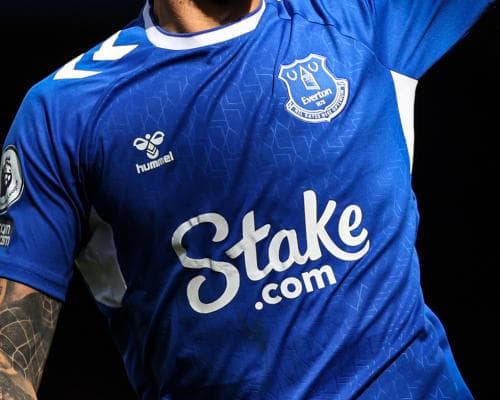
Imagine your prime minister pulling on a football shirt that doubles as a billboard for an unregulated crypto casino. That is the scenario now facing the UK, after Everton FC signed a three-year sleeve sponsorship with Stake.com — an offshore gambling platform that effectively surrendered its British licence last year amid regulatory scrutiny.
The deal is a masterclass in regulatory arbitrage. And it has exposed a dangerous gap in the UK's approach to sports sponsorship that ministers are only now scrambling to close.
Here is the money story. In February, the Department for Culture, Media and Sport promised to launch a review of unlicensed gambling operators sponsoring British sports teams. That review was supposed to start in spring. It is now September. During that delay, Everton — a Premier League club with global reach — locked in a sponsorship with Stake.com, a crypto casino that the Gambling Commission had explicitly warned clubs to think twice about. The deal was signed in June, just weeks after Stella David, CEO of Ladbrokes owner Entain, wrote to gambling minister Baroness Twycross warning that such agreements were “surely now being finalised.” She was right.
The financial mechanics are straightforward but revealing. Offshore operators like Stake.com pay top dollar for Premier League visibility because it gives them access to a massive, relatively unregulated audience. Unlike licensed UK operators such as Entain or Flutter Entertainment, these firms do not pay UK gambling taxes, do not comply with British advertising standards, and do not contribute to the voluntary levy that funds problem gambling treatment. They get the brand exposure without the regulatory cost. That is a structural advantage that traditional operators — and their shareholders — cannot easily match.
For wealth builders, this is not just a moral question. It is a capital allocation signal. The Premier League's global appeal makes it a prime target for capital flows from jurisdictions that operate outside Western regulatory frameworks. Crypto casinos, Middle Eastern sovereign wealth funds, and Asian betting syndicates all see English football as an efficient marketing channel. The Everton-Stake deal shows that when regulation is slow, capital moves fast.
A senior industry source pointed out the irony: Andy Burnham, the Greater Manchester mayor and lifelong Everton fan who has become one of Britain's most vocal anti-gambling politicians, has been silent on his own club's deal. “Burnham became stridently anti-gambling when he became mayor of Manchester, but his own football club is taking money from an unregulated gambling company,” the source said. “We face the prospect of our prime minister wearing an Everton shirt and becoming a billboard for a crypto casino.”
The government's consultation, finally launching this week, is supposed to address this. But the damage is done. The delay created a window — and capital rushed through it. For investors, the lesson is clear: regulatory gaps in sports sponsorship are not just a compliance headache for clubs. They are a signal of where unregulated capital is flowing, and where traditional operators like Entain face an uneven playing field. If the UK wants to protect its licensed gambling industry and its tax base, it needs to move faster than a crypto casino's legal team. Right now, it is losing.