The 83-Year-Old Custodian of a Canal: How One Man’s Daily Ritual Redefines Legacy for the Ultra-Wealthy
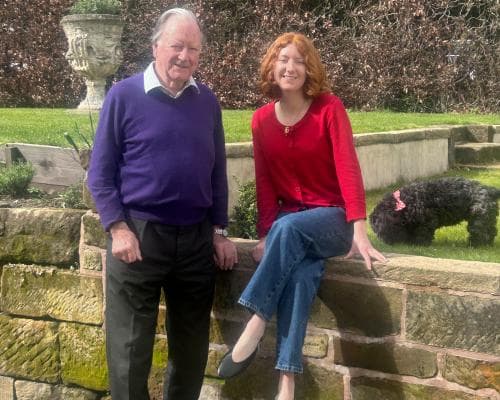
In the lexicon of true wealth, there is a distinction between the merely affluent and those who understand that legacy is not measured in square footage or carat weight, but in the stewardship of something larger than oneself. For the ultra-wealthy, the ultimate luxury has always been the freedom to choose how one spends time—and, increasingly, that time is being invested in acts of quiet, uncompromising curation. Consider Nicholas, an 83-year-old resident of Staffordshire, who has turned a seemingly mundane activity into a daily ritual of extreme dedication: he spends an hour each day litter-picking along a local canal, often at genuine physical risk. This is not a story about environmentalism in the populist sense; it is a case study in the kind of obsessive, hands-on perfectionism that defines the world’s most exclusive craftsmen, private collectors, and family offices.
Nicholas’s practice began organically, as the best rituals do. He lives in a village where he could easily have delegated this task to municipal services or simply ignored the detritus that accumulates along the water’s edge. Instead, he chose to act. Each day, armed with a litter picker and a bag, he navigates treacherous ditches, clambers into bogs for discarded Pot Noodle containers, and scales trees to retrieve dog waste bags left dangling like grotesque ornaments. He has braved thorn thickets for beer cans and, during a recent storm, spent half an hour straightening wind-bent saplings alongside his grandson. The numbers are unremarkable by commercial metrics—a few bags of rubbish, a handful of straightened trees—but the ethos is anything but. This is a man who treats a half-mile stretch of canal as though it were a private gallery, and every piece of litter an intrusion on his personal aesthetic.
The craftsmanship angle here is not about the object itself but the method. Nicholas’s technique is born of decades of tacit knowledge: how to balance on a muddy bank, which branch will hold his weight, when to abandon a retrieval to avoid a fall into the cold canal. There is no formal training, no certificate of excellence—only the accumulated wisdom of 83 years of living in place. The rarity is in the commitment. How many individuals, at any age, would voluntarily spend 365 hours a year picking up other people’s trash? The price is not monetary; it is the opportunity cost of time that could be spent in leisure, travel, or rest. For Nicholas, that price is negligible because the return is intangible: the satisfaction of a perfectly restored environment, the quiet pride of a job done without applause. This is the kind of heritage that cannot be bought—only inherited through example, as his grandson has now adopted the same practice.
What does this signal about wealth, taste, and the luxury market? It suggests that the next frontier of status is not acquisition but maintenance. The ultra-wealthy are increasingly turning away from conspicuous consumption and toward what might be called “conspicuous stewardship.” A private jet is no longer the ultimate symbol; it is the private restoration of a historic waterway, the personal curation of a public space, the funding of a micro-ecosystem that would otherwise be neglected. Nicholas’s actions echo the philosophy of the world’s most discerning collectors: the true value of a thing is not in its purchase but in its preservation. For those who can afford to hire an army of groundskeepers, choosing to do the work oneself becomes the ultimate sign of genuine taste—a rejection of delegation in favor of direct, tactile engagement with the world.
Looking forward, the Nicholas model offers a blueprint for a new kind of luxury experience: the bespoke stewardship retreat. Imagine a week spent on a private estate in the Cotswolds, where the daily itinerary includes not spa treatments but the hands-on restoration of a historic canal, guided by a master who has spent decades perfecting the art. The cost? A seven-figure donation to a land trust, with the promise of a documentary crew to capture the transformation. For the billionaire who has everything, the chance to leave a place cleaner than they found it—and to teach their children the same—may become the most coveted status symbol of the next decade. Nicholas may never own a yacht or a penthouse, but his legacy is carved into the canal banks of Staffordshire, and it is worth more than any asset on a balance sheet.
The Experience
For those inspired to curate their own legacy of stewardship, consider arranging a private consultation with our heritage-lifestyle concierge, who can design a bespoke multi-day immersion in countryside restoration, complete with master-level guidance and exclusive access to Britain’s most storied waterways.
Explore